
Intel Patents a Fix for the Clock Drift That Breaks Data Center Debugging
When something goes wrong in a data center, engineers need logs from dozens of devices to tell the same time story — but today, those clocks are often subtly out of sync. Intel's new patent tries to fix that at the nanosecond level.
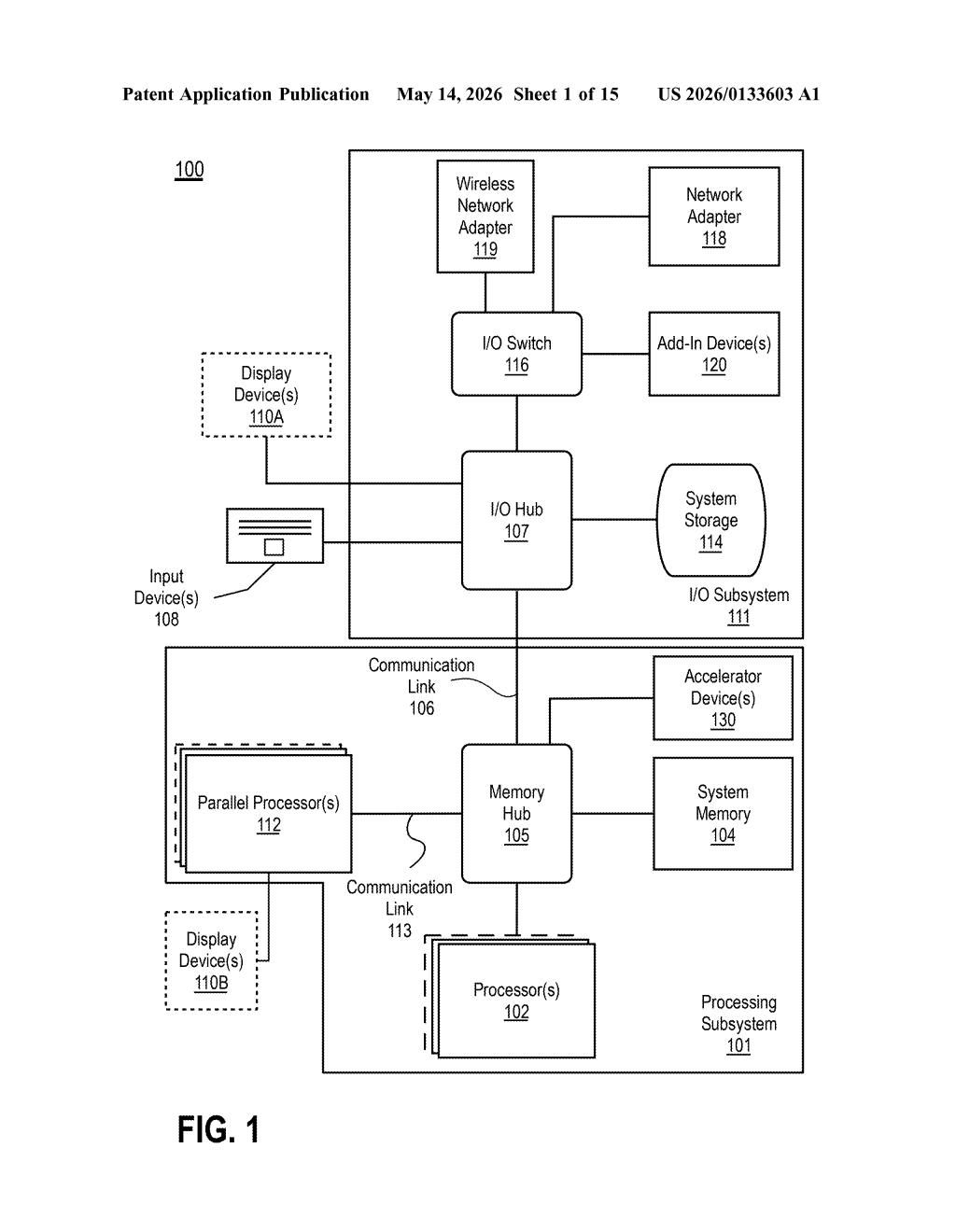
What Intel's synchronized telemetry system actually does
Imagine you're a detective trying to piece together a crime from witness statements, but every witness has a slightly different clock. One says the event happened at 2:00:01, another says 2:00:03 — and at scale, those tiny gaps make it nearly impossible to reconstruct what really happened.
That's the problem Intel is solving here. In a modern data center, your server's CPU, memory, and network card all generate logs and performance data — called telemetry — constantly. But the clocks on those different components often drift apart, even by just a few milliseconds. When you're trying to diagnose a network hiccup or a performance bottleneck, those mismatches can hide the real cause.
Intel's patent describes a single device — essentially a smart network card — that acts as a universal timekeeper. It pushes a common, nanosecond-accurate clock signal out to everything connected to it, so every piece of telemetry gets a timestamp you can actually trust and compare.
How Intel's physical function bridges two clock protocols
The patented device sits at the intersection of the network and the host machine, acting as both a network interface card (NIC) and a telemetry aggregator. It has three main components: a network interface (talking to switches and other servers), packet processing circuitry, and a host interface (talking to the CPU and software on the same machine).
The key innovation is a physical function — a hardware-level access point — that runs two different time synchronization protocols simultaneously. On the network side, it uses a protocol like PTP (Precision Time Protocol, IEEE 1588), which is designed for LAN-level clock synchronization. On the host side, it uses a different protocol suited for the CPU-to-NIC bus (think PCIe). The device translates between these two worlds so both sides share one coherent reference clock.
- The device transmits time-sync data outward to network peers via the first protocol
- It also pushes time-sync data inward to the host CPU and software via the second protocol
- It then collects telemetry back from both sides — each timestamped against the same common clock
- Finally, it aggregates all of that telemetry into a unified, synchronized stream
The result is that a packet drop event logged by the NIC hardware and a CPU stall logged by the operating system can be correlated with nanosecond-level precision — something that's genuinely difficult to achieve today across heterogeneous components.
Why nanosecond timing matters for data center debugging
Data centers at hyperscale — think the clusters running AI training jobs or large distributed databases — are increasingly sensitive to timing. A few microseconds of latency jitter can cascade into visible performance degradation, and pinpointing the source requires trustworthy timestamps across every layer of the stack. Right now, operators often stitch together logs from components with independent clocks, and the seams show.
For Intel, this fits neatly into its broader strategy around smart NICs and infrastructure processing units (IPUs) — devices that offload networking and telemetry work from the main CPU. If your network card is already the timing authority for everything connected to it, that's a compelling reason to buy Intel's silicon rather than a competitor's.
This is unglamorous plumbing work, but it's exactly the kind of plumbing that matters in serious infrastructure. Synchronized telemetry at nanosecond precision is a real, unsolved pain point for data center operators — Intel is filing this for a reason, and that reason is probably named after a rack-scale IPU product.
There are more where this came from
We read every patent application Big Tech publishes and send you the ones worth knowing. Plain English, free, every week.
Want this weekly breakdown for a company we don't cover? Patentlyze Pro →