
Samsung Patents an AI Assistant That Adjusts Its Speaking Pace to Match the Server
When an AI assistant gets a slow answer from its server, it tends to sound choppy or rushed. Samsung's new patent aims to fix that by making the assistant's voice automatically match the pace at which the response actually arrives.
What Samsung's server-speed voice trick actually does
Every time you ask your phone's AI assistant a question, it fires that question off to a distant server and waits for an answer to come back. Sometimes that answer streams back quickly; sometimes it trickles in word by word depending on network conditions or how busy the server is.
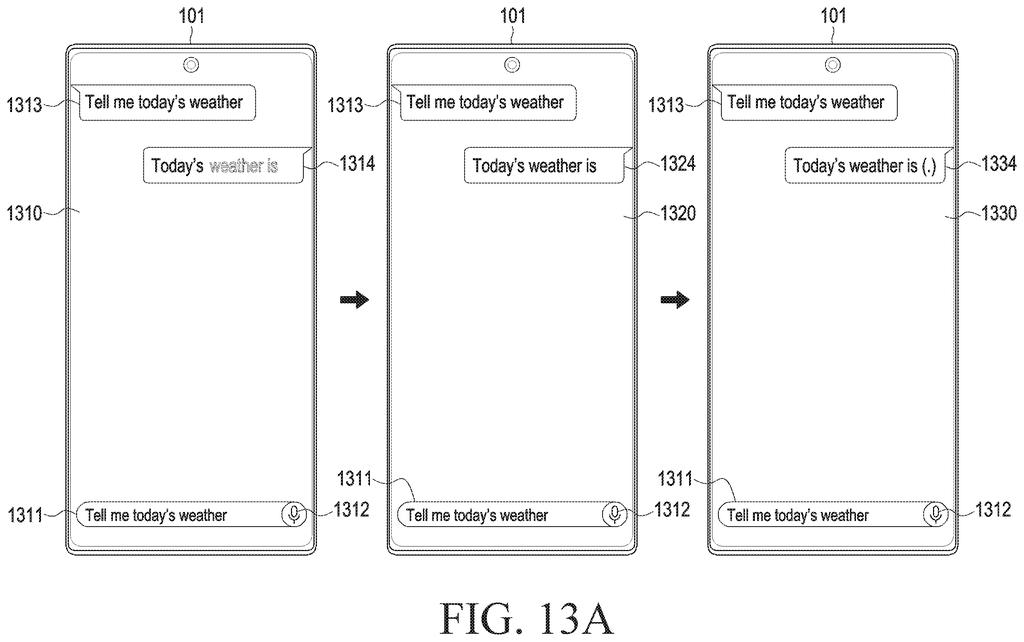
Samsung's patent describes a system that watches how fast the response text arrives and then adjusts the assistant's voice to match. If the text is coming in slowly, the voice can speak more slowly or shift its tone so the whole reply sounds natural rather than awkward and stuttering. If the text arrives fast, the voice can move at a brisk, confident pace.
The result, in theory, is an AI assistant that sounds composed and deliberate no matter what your Wi-Fi or data connection is doing behind the scenes. Instead of you noticing a weird pause or a clipped delivery, the voice just sounds right.
… identify a reception speed of the response text, based on the reception speed, determine an attribute of a response speech corresponding to the response text …
Translation: The device figures out how fast the server sent the reply to decide how the assistant should sound.
How reception speed maps to voice pitch and tempo
The patent describes an electronic device, think a phone, tablet, or smart speaker, that sends a user's typed or spoken query to a server as text. The server generates a reply using an AI language model and sends that reply back as text.
The key step is measuring the reception speed of that incoming text, essentially how many characters or tokens are arriving per second. The device then uses that speed measurement to set the attributes of the response voice before or as it speaks. Those attributes include things like:
- Speaking rate (words per minute)
- Pitch (how high or low the voice sounds)
- Possibly pausing behavior between sentences
If the server is streaming text back slowly, the device's text-to-speech engine adjusts so the spoken output doesn't race ahead of the arriving words or produce awkward silences. If text arrives in a fast burst, the voice can speak at a natural, energetic tempo.
This is a client-side fix, meaning all the adaptation happens on the device itself, not on the server. The server just generates text as it normally would; the phone figures out how to speak it well.
… output a voice signal corresponding to the response text via the speaker on the basis of the attribute of the response voice …
Translation: The assistant then speaks the answer out loud using the newly adjusted pace.
What this means for AI assistant voice quality
For everyday users, this matters because AI assistant voice output today can sound inconsistent, overly hesitant one moment and rushed the next, and most people instinctively blame the assistant rather than their network connection. A system that automatically calibrates speaking style to match data flow could make AI assistants feel noticeably more polished without any changes to the underlying language model.
For Samsung, it also represents a software-only improvement that could ship to existing Galaxy devices through a firmware update, since no new hardware is required. Readers tracking the broader trend of AI companies competing on voice quality and personality, not just answer accuracy, will find relevant context in Big Tech patent news, where filings on AI voice assistants and on-device speech processing have been accelerating across the industry.
This is the 30th Samsung filing we've tracked in Voice & speech AI since May, adding to work like topic detection and pre-screening answers.
The hardware required here already lives in every modern Samsung phone: a processor, a speaker, and a network connection. The entire idea is software logic layered on top of what ships today, which means the road from patent to product is unusually short.
The real work is in the tuning. When a response streams in slowly because of a weak signal, the phone would adjust how the voice sounds, perhaps speaking more deliberately, to avoid awkward silences or choppy playback. Whether that feels natural or just strange depends on calibration that a patent cannot settle.
The goal is modest and clear: make an AI assistant sound composed even when the network is not cooperating. That is a small fix for a real frustration, and small fixes that actually ship tend to matter more than ambitious ones that do not.
Get our take in your Top Stories
Liked this breakdown? Add Patentlyze as a preferred source on Google, and our plain-English take shows up more often in your Top Stories the next time Samsung patent news breaks.
There are more where this came from
We read every patent application Big Tech publishes and send you the ones worth knowing. Plain English, free, every week.
The drawings
16 drawing sheets from US 2026/0253576 A1 · click any drawing to enlarge


Want this weekly breakdown for a company we don't cover? Patentlyze Pro →
Be the first to weigh in