
Adobe Patents an AI That Figures Out What You Actually Meant Before Searching Your Documents
Most AI search tools take your question at face value and hope for the best. Adobe's new patent describes a system that pauses to map out every plausible meaning of your question before it ever goes looking for an answer.
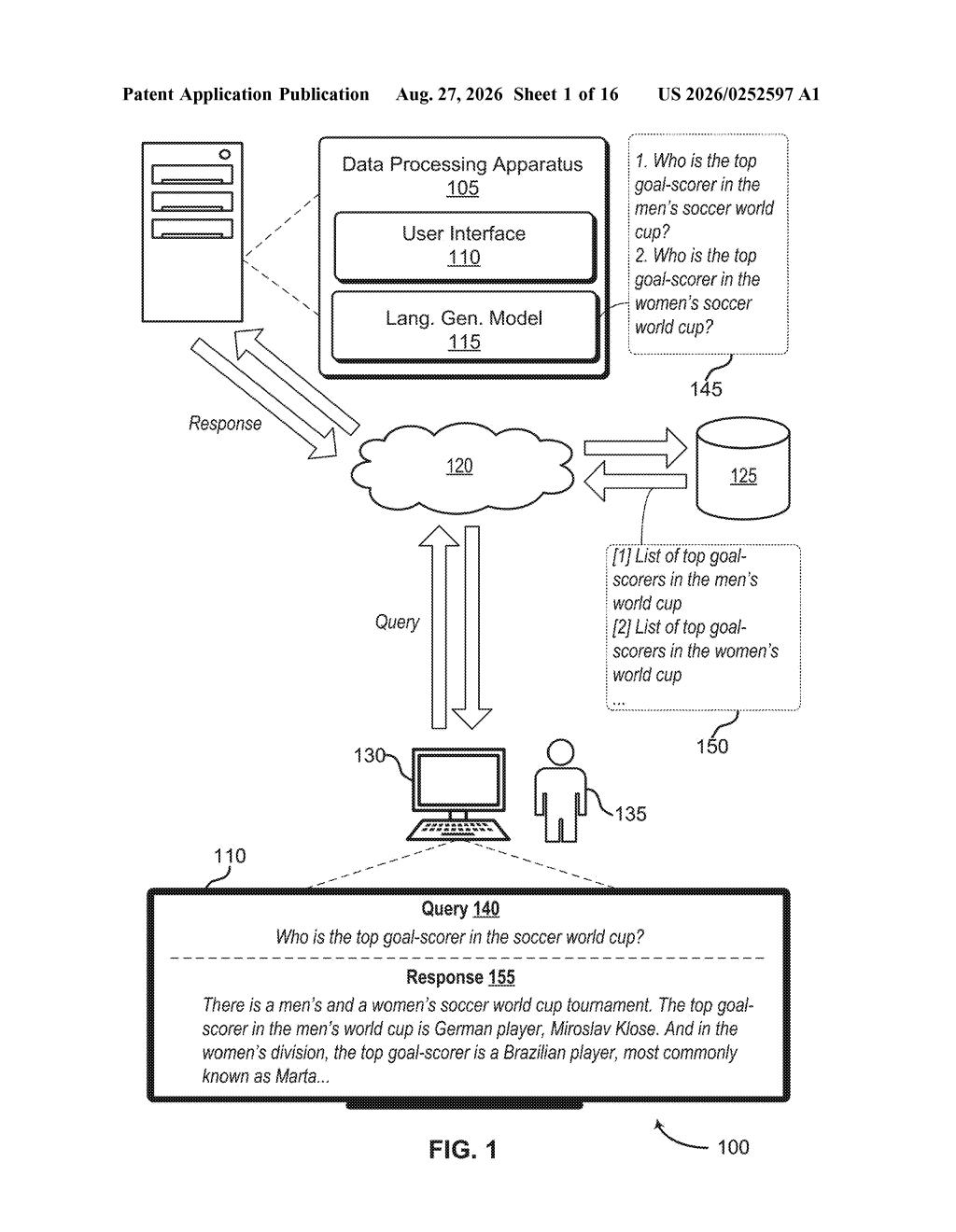
What Adobe's ambiguity-first document search actually does
Every time you ask a document search tool a question, the tool makes a quiet assumption: that it knows exactly what you meant. When the question is vague or could mean two different things, that assumption falls apart and you get an answer that technically fits the words but misses the point.
Adobe's patent describes a different approach. Before the AI searches your documents, it generates a short explanation of why your question is ambiguous. It then spins out several different interpretations of what you might have meant. It uses all of those interpretations to pull relevant passages from your documents, then assembles a single response that covers the actual range of what you were asking.
The practical upside: if you ask something like "What is our return policy?" and that phrase means different things for different product lines, the system finds passages covering each case rather than picking one at random. You get a more complete answer without having to ask the same question five different ways.
… generating, using a language generation model, an intermediate response based on a first input to the language generation model, wherein the intermediate response describes an ambiguity of the query …
Translation: The AI first checks your search terms to figure out what is unclear or missing.
How the model rewrites a vague query before retrieving text
The patent describes a three-stage pipeline, all driven by the same language generation model (an AI trained to read and write text).
- Stage 1, Ambiguity detection: The model receives your original query and produces an intermediate response that explicitly describes what is unclear about it. Think of this as the AI writing a note to itself: "This question could refer to X or Y."
- Stage 2, Interpretation generation: The model receives the original query plus that ambiguity note and generates several distinct restatements of the question, each capturing a different plausible meaning. These are the "first interpretations" the patent refers to.
- Stage 3, Retrieval and synthesis: Each interpretation is used independently to retrieve relevant text passages from the document set (a technique called retrieval-augmented generation, or RAG, which grounds AI answers in real source text rather than memory). All retrieved passages are then fed into a final model call that produces one consolidated answer.
The key architectural choice is keeping the ambiguity step explicit and intermediate: instead of bundling disambiguation silently into a single prompt, the system surfaces it as a named artifact that shapes every downstream step. That intermediate output is passed as a formal input to the next stage, making the reasoning chain inspectable rather than buried inside one black-box call.
… generating a plurality of first interpretations of the query, retrieving a plurality of text passages from the set of documents based on the plurality of first interpretations …
Translation: It then creates multiple possible meanings and searches your files using all of them.
What this means for AI tools that search company documents
For anyone who uses AI tools to search through long contracts, policy manuals, research archives, or customer records, query ambiguity is the main reason answers go wrong. A system that deliberately maps the ambiguity before searching is more likely to surface the passages that cover the full scope of what was asked, and less likely to confidently return the wrong thing.
Adobe already sells document and content management products where this kind of search matters directly. The patent fits a broader wave of enterprise AI filings aimed at making document question-answering reliable enough to trust in a professional setting. Patentlyze's plain-English patent summaries track that wave across major tech companies as they work out what "accurate AI search" actually requires at the engineering level.
That makes this Adobe's 13th filing we've tracked in AI vision since May, a count that includes one on themed design from text and one on multi-level object cutouts.
Before Adobe's system answers a question, it pauses to consider multiple readings of what that question might mean. That pause costs time, and for anyone who expects a search to feel instant, the delay is the whole experience, regardless of how much better the answer turns out to be.
The trade reads as worth it in high-stakes settings where a wrong answer carries real consequences, like legal review or compliance work, where accuracy outweighs speed. It reads as a poor fit for casual, everyday searching, where users will feel the friction and never benefit from the added precision.
The design's most defensible feature is that its reasoning process leaves a readable record rather than disappearing behind the scenes. That trail can be reviewed, explained, or used to improve future results, which matters most to organizations that have to justify how they reached a conclusion.
Get our take in your Top Stories
Liked this breakdown? Add Patentlyze as a preferred source on Google, and our plain-English take shows up more often in your Top Stories the next time Adobe patent news breaks.
There are more where this came from
We read every patent application Big Tech publishes and send you the ones worth knowing. Plain English, free, every week.
The drawings
16 drawing sheets from US 2026/0252597 A1 · click any drawing to enlarge


Want this weekly breakdown for a company we don't cover? Patentlyze Pro →
Be the first to weigh in