
Adobe Patents an Auto White Balance System That Recognizes What's in the Photo
White balance has always been one of photography's most finicky corrections. Adobe's new patent wants to let the software figure it out by recognizing what's actually in the frame, not just averaging the pixels.
How Adobe's object-aware white balance actually works
You're color-correcting a portrait and the subject's skin looks faintly green under office fluorescents. You drag sliders around for ten minutes, second-guessing every tweak, and the result still looks off. Adobe's new patent would let the software do that work by asking a simpler question: what object is in this photo, and what color should it be?
The system identifies a recognizable object in your image, like a human face or a patch of grass, then compares your image's actual pixel colors against a stored database of what that object type normally looks like. It calculates a correction that closes the gap between what it sees and what it expects, then applies that as your white balance setting.
The practical upside is that instead of guessing from the whole image, the software anchors its correction to something it actually understands. If you shoot a portrait under three different light sources, the system focuses on what the skin should look like rather than averaging a confusing mix of colors from the background.
… identifying, in the input image, pixels associated with an object of interest; selecting, from a plurality of reference color distributions for different object types, a reference color distribution for an object type of the object of interest …
Translation: The software detects specific items in your photo and compares their colors against a database of what those items should look like.
How the algorithm matches pixels to reference color data
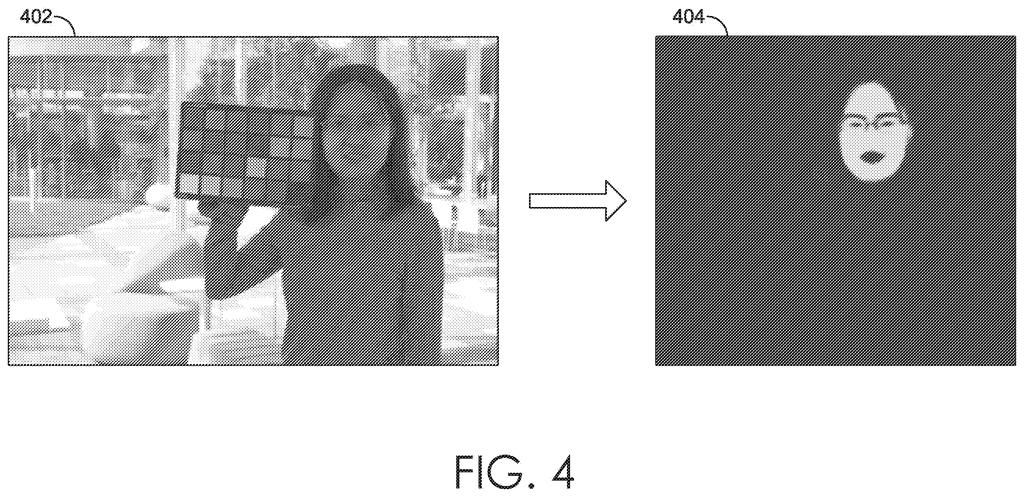
The patent describes a pipeline with four main steps. First, the system receives an input image and uses an object-detection process to identify specific pixels belonging to a target object, such as a face, a piece of foliage, or a known product color.
Second, it selects from a library of reference color distributions matched to different object types. A color distribution here means a statistical profile of what pixel values a given object type typically has across a wide range of correctly lit reference images. Think of it as a lookup table that says: healthy human skin, under neutral light, should cluster within these color ranges.
Third, the system uses an objective function (a mathematical formula that measures the size of an error) to calculate how far the target object's actual pixel values deviate from that reference distribution. It then finds white-balance image processing parameters, adjustments to color temperature and tint, that minimize that deviation.
Finally, those parameters are applied to the entire input image to produce the corrected output. The claim is written broadly enough to cover this approach whether the underlying detection is done by a neural network, classical segmentation, or any other method.
One or more image processing settings are determined that, when applied to the input image, minimize a difference in values between pixels of the target object and the reference color distribution.
Translation: The system adjusts the photo settings until the colors of the identified object match the expected standard.
What this means for photographers and video editors
For working photographers and video colorists, white balance errors on skin tones are among the most time-consuming corrections to fix by hand. A system that anchors corrections to a semantically meaningful region, rather than a neutral gray card or a full-scene average, could reduce that manual labor significantly and produce more consistent results across a batch of images shot in mixed lighting.
The broader picture is that Adobe is building object-level awareness into what has historically been a pixel-level problem. That direction shows up across new Big Tech patents in the image-processing space, where semantic understanding is increasingly doing the work that manual slider adjustments used to require.
Claim 1 is written broadly enough to cover any system that identifies an object, picks a reference color distribution for that object type, and uses an objective function to close the gap. That scope is wide. Any competitor building object-guided white balance into a photo app would have to work around this claim if it were granted, regardless of the specific detection method or the size of the reference library they use. The claim does not require a neural network, a particular color space, or even a specific type of object, which makes it difficult to design around without abandoning the core approach. For a feature area that practically every camera app and RAW editor is pushing toward, that potential breadth matters.
There are more where this came from
We read every patent application Big Tech publishes and send you the ones worth knowing. Plain English, free, every week.
The drawings
8 drawing sheets from US 2026/0237036 A1 · click any drawing to enlarge


Want this weekly breakdown for a company we don't cover? Patentlyze Pro →
Be the first to weigh in