
Samsung Patents a Camera That Shows You the Full Scene and a Zoomed-In Subject at Once
Samsung is patenting a camera system that can simultaneously show you the full frame of a scene and a tightly cropped close-up of the person or object it detects, no switching, no zooming, both views on screen at the same time.
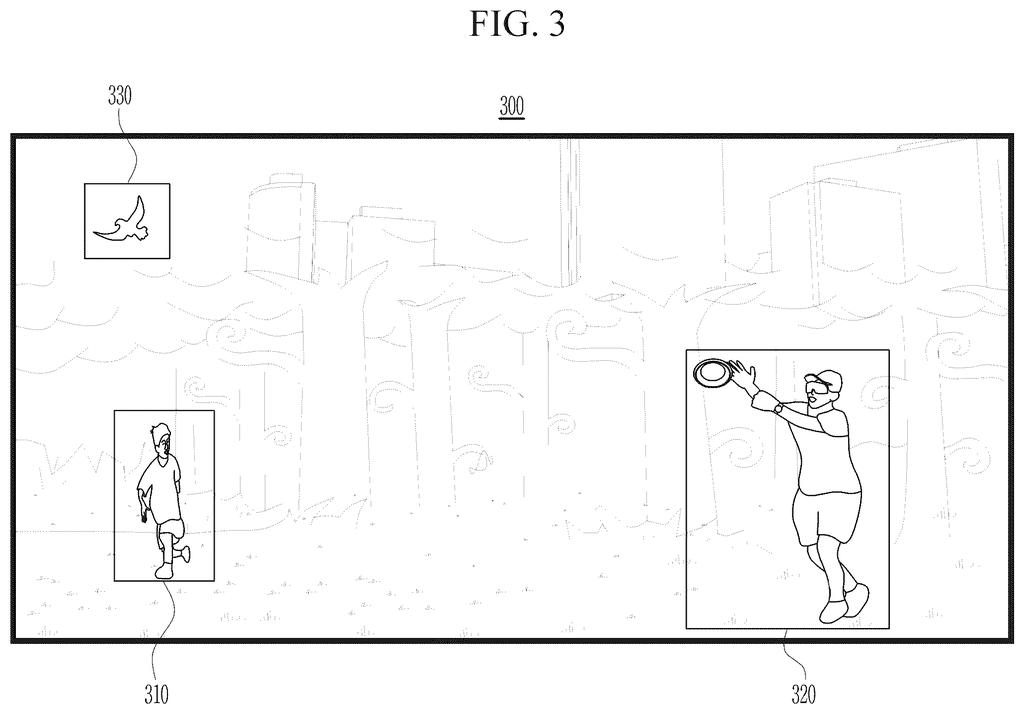
What Samsung's dual-view camera display actually does
Imagine you're filming a child's soccer game from the sidelines. You want to capture the whole field, but you also don't want to lose your kid in a crowd of jerseys. Right now, you have to choose between a wide shot and a zoomed-in one.
Samsung's patent describes a system that does both at once. The camera reads each frame, identifies subjects worth focusing on, and automatically generates a second, cropped version of the image centered on that subject. Both the wide view and the close-up appear on your display at the same time.
You don't press any extra buttons. The device figures out where in the full image the subject sits, calculates the distance from the center of the frame, and uses that to produce a second image. Think of it as a built-in picture-in-picture that follows the action for you.
… an image signal processor configured to generate a first image based on the raw image signal, and generate a second image based on the region of interest signal, wherein the region of interest signal includes offset information, and the offset information is a distance from a center region of the first image to the at least one region of interest candidate …
Translation: The camera processor creates a wide view and a zoomed view by calculating exactly how far the subject is from the center.
How the chip picks a subject and builds two images
The system has four main components working in sequence:
- Camera device: captures a raw image signal frame by frame, as any camera does.
- Subject identification circuit: analyzes each raw frame to find a group of candidate subjects, things or people the camera considers worth highlighting. It then picks at least one and generates a signal describing it.
- Image signal processor: takes that signal, which includes offset information (basically the pixel coordinates telling the processor how far the subject is from the center of the full frame), and uses it to produce two separate images: a first image from the full raw frame, and a second image built around the detected subject.
- Display panel: shows both images simultaneously.
The offset information is the clever part. Rather than just cropping blindly, the system encodes the spatial relationship between the center of the full scene and the detected subject. That lets the image processor build the second image accurately without needing to re-analyze the whole frame.
The patent doesn't specify one type of subject. The candidate-selection approach means the system could, in principle, be tuned to flag faces, moving objects, or anything the subject identification circuit is trained to recognize.
… a subject identification circuit that determines information on a group of region of interest candidates based on the raw image signal and generates a region of interest signal indicating at least one region of interest candidate among a plurality of region of interest candidates included in the information on the group of region of interest candidates …
Translation: The device automatically scans the scene to identify multiple potential subjects before choosing which one to zoom in on.
What this means for Samsung phone and tablet cameras
For anyone who shoots video of fast-moving subjects, this kind of automatic dual view could reduce the frustrating trade-off between context and detail. A phone or tablet running this system could keep the wide shot for sharing and the close-up for the moment that matters, all without any manual cropping after the fact.
Samsung's imaging hardware group has been pushing real-time on-device processing for several generations of its flagship phones, and this patent fits that pattern. The latest Big Tech patents in mobile imaging show a clear push toward chips doing more compositional work on the device itself, and this filing is part of that same wave.
That makes this Samsung's 99th filing we've tracked since May in our camera sensor push, adding to work like the AI photo mapping one and the shorter chip signal path one.
The camera, the screen, and the chip that handles image processing all already exist in Samsung phones. What this patent adds is a small dedicated circuit that spots subjects in a scene and packages a precise location measurement directly into the camera's signal, before any app or software ever touches it. That narrow addition is what makes this closer to shippable than most patent filings.
The heavy infrastructure is already in place, and the new piece is specific enough to prototype on current hardware without waiting for a new generation of chips. The one open question is what the user actually sees, since the patent describes the signal architecture in detail but says nothing about how the two resulting images are displayed together.
That is a design decision still to be made, but it sits downstream of the hard engineering, which this document suggests is largely solved.
Get our take in your Top Stories
Liked this breakdown? Add Patentlyze as a preferred source on Google, and our plain-English take shows up more often in your Top Stories the next time Samsung patent news breaks.
There are more where this came from
We read every patent application Big Tech publishes and send you the ones worth knowing. Plain English, free, every week.
The drawings
27 drawing sheets from US 2026/0255045 A1 · click any drawing to enlarge


Want this weekly breakdown for a company we don't cover? Patentlyze Pro →
Be the first to weigh in