
Google Patents an Ad-Targeting System That Never Sees Your Full Profile
Google's latest patent describes a way to predict which ads you'll click on without any single computer ever seeing your complete personal profile. The trick is splitting your data in half before it ever leaves your phone.
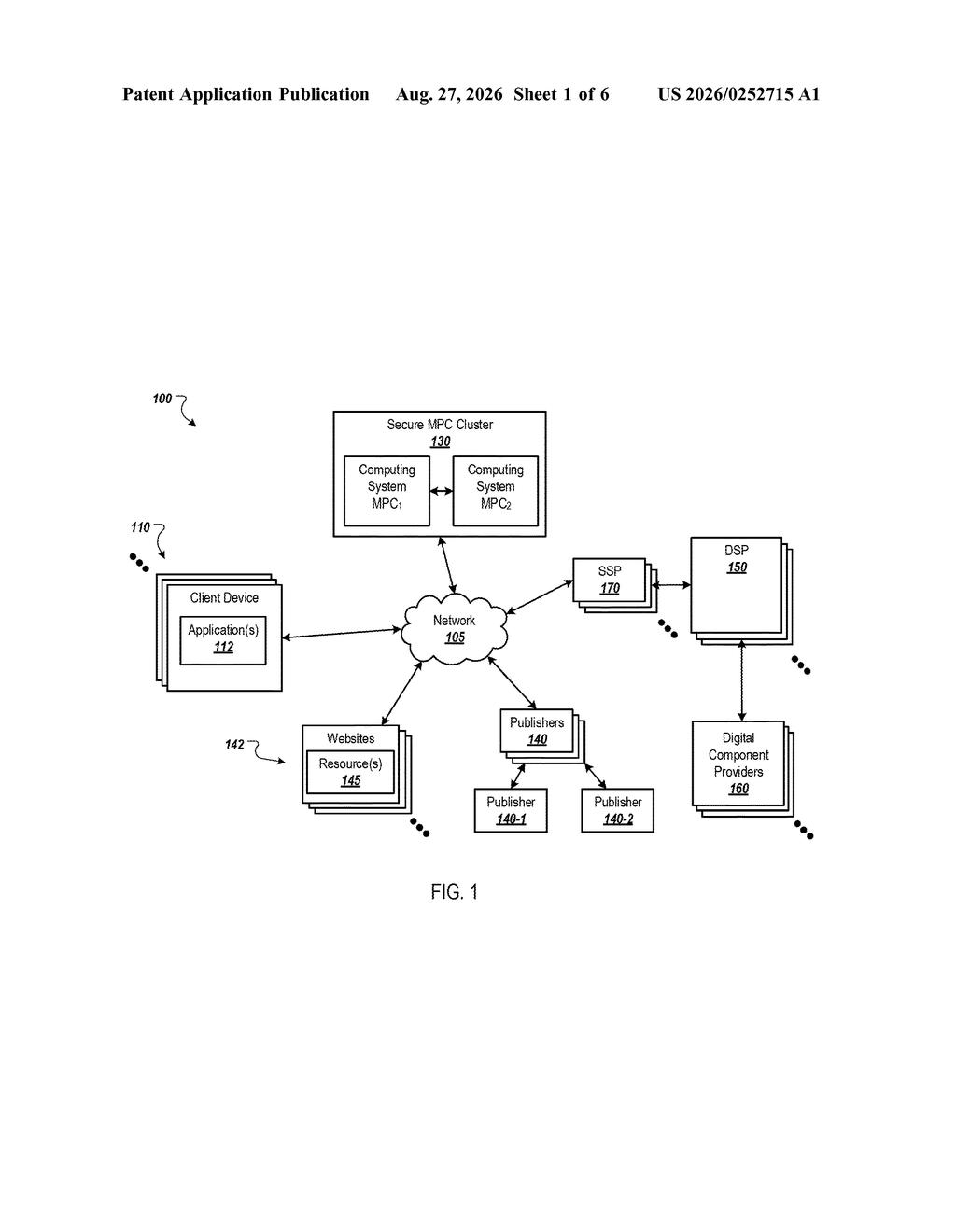
How Google's split-data ad system protects your profile
Ever wondered how an app decides which ad to show you, and who gets to see your data in the process? Right now, ad systems typically send your browsing habits and interests to a server, which reads everything and sends back a recommendation. Your profile sits on someone else's machine, in full.
Google's patent describes a different approach. Your phone splits your personal profile into two scrambled pieces, called secret shares, and sends each piece to a different server. Neither server ever holds enough information to reconstruct who you are or what you like. They work together mathematically to figure out which ad you're most likely to engage with, then send the result back to your phone.
The selection happens on your device, using a score computed by two servers that individually learned nothing about you. It's a meaningful shift in where the privacy risk sits, moving it away from centralized data stores and back toward the user's own device.
… the predicted performance measure is computed by the MPC platform using the first and second secret shares without reconstructing the user profile in cleartext …
Translation: The system calculates which ads you might like without ever actually seeing your personal information.
How the two-server secret-sharing calculation works
The patent describes a multi-party computation (MPC) system for ad selection. MPC is a branch of cryptography that lets multiple computers jointly calculate an answer without any of them seeing the full input data. Think of it like two people adding their salaries together to find the total, without either one revealing their own number.
Here is the sequence the patent lays out:
- A content page loads on your device, along with a set of candidate ads.
- An app on your device splits your user profile into two mathematically linked but individually meaningless pieces (the secret shares).
- Each piece goes to a separate server inside Google's MPC platform.
- The two servers compute a predicted performance measure (essentially a likelihood-to-click score) for each candidate ad, using only their respective shares and never combining them into a readable profile.
- The result, just the scores, comes back to your device, which picks the winning ad locally.
The patent also covers the setup handshake: the app first receives a model identifier, a label that tells it which machine learning model and which characteristics of the ad or page to include in the request. This means the same framework can serve different ad contexts by swapping the model, without changing the privacy architecture.
The application receives a request generated based on the computer-readable instructions to upload a user profile of a user of the client device to a machine learning platform.
Translation: Your phone is programmed to automatically send your personal data to a machine learning system.
What this means for ad tech and browser privacy rules
Ad targeting has long required a trade-off: the more a platform knows about you, the better it can match you to ads, but that knowledge has to live somewhere. Data breaches, regulatory fines, and advertiser scandals have shown how costly centralized profile storage can be, not just for users but for the companies holding the data. Google has faced years of regulatory scrutiny in Europe and the U.S. over exactly this kind of data handling. A system that structurally prevents any single server from reading a user profile is a different kind of answer to that pressure.
For everyday users, the practical question is whether this ever ships and whether it performs as well as conventional targeting. The patent does not guarantee either. What it does show is that Google is investing engineering effort in privacy-preserving ad infrastructure at a time when third-party cookies are being phased out and regulators are tightening rules on personal data. Ad tech is one of the more active areas in new Big Tech patents, and this filing sits squarely at the intersection of machine learning, cryptography, and the future shape of online advertising.
Google's 40th application we've tracked since May in the keeping AI private on devices watch builds on earlier work like ads without exposing location and scrubbing personal data before the cloud.
Storing detailed records on millions of people costs technology companies enormous sums in legal exposure, regulatory fines, and the slow erosion of user trust that follows every publicized breach. Those costs are real and growing, which makes any serious attempt to shrink the underlying problem rather than just manage it worth taking seriously.
Google's approach here splits personal information across two separate servers that are legally and technically barred from combining what they know. Neither server can expose anyone on its own, so the risk gets smaller at the source rather than being shuffled around.
The open question is speed. Showing someone a relevant ad requires a decision in under a second, and coordinating between two isolated servers takes longer than one system would. How well this holds up under real-world timing pressure will determine whether the privacy benefit ever reaches users at scale.
Get our take in your Top Stories
Liked this breakdown? Add Patentlyze as a preferred source on Google, and our plain-English take shows up more often in your Top Stories the next time Google patent news breaks.
There are more where this came from
We read every patent application Big Tech publishes and send you the ones worth knowing. Plain English, free, every week.
The drawings
6 drawing sheets from US 2026/0252715 A1 · click any drawing to enlarge


Want this weekly breakdown for a company we don't cover? Patentlyze Pro →
Be the first to weigh in