
Nvidia
Nvidia · AI / ML · Filed Feb 21, 2025 · USPTO published Aug 27, 2026 · Aug 27 release
Nvidia Patents Technology That Customizes AI Responses in the Cloud, Not on Your Device
Nvidia is patenting a way to serve you a customized AI model without you ever knowing the plumbing behind it. The personalization lives on the server, not your device.
- Publication number
- US 2026/0252948 A1(US20260252948A1)
- Applicant
- NVIDIA Corporation
- Filed · Published
- Feb 21, 2025 · Aug 27, 2026
- Inventors
- Ryan ANGILLY, Jessica BUHL, Hannah ZHANG, Octavian DRULEA
- Status when we published
- Waiting for an examiner
- Document
- 20 claims
- US classification
- 706/12
How Nvidia's server-side AI tuning works for you
You open an AI tool at work, type a question, and get back an answer that feels tuned to your industry and your company's style, even though you didn't configure anything yourself.
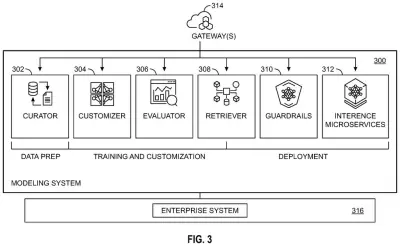
That's the scenario Nvidia's new patent is designed to support. Instead of making every user download or configure a specialized version of an AI model, the company describes a system where the customized model lives on a server. When you send a prompt, the server figures out which version of the model applies to you, loads it, and sends back the result.
The key idea is that the customization (the part that makes a general AI act more like a specialist for your use case) is baked into the model on the server side. You just ask your question. The server does the rest.
receive, via an interface, a prompt and an identifier corresponding to a model instance; obtain, from a data source using the identifier, the model instance, the model instance comprising at least one customization applied to a base artificial intelligence (AI) model …
Translation: The cloud system grabs your personalized AI model version using a special code tied to your request.
Inside Nvidia's model-instance pipeline
The patent describes a pipeline where a server receives a user's prompt alongside an identifier, basically a tag that tells the system which customized version of an AI model to use for that user or session.
The system then fetches a model instance, which is a version of a base AI model that has already been adjusted through a process called prompt-tuning (a technique where the model's internal settings are shifted so it behaves differently, without retraining the whole model from scratch). Think of it like switching from a general-purpose chef to one who specializes in French cuisine, where the specialization is locked in ahead of time.
The key technical claim is that the customization is stored as an update to at least one parameter of the base model. The system applies the user's prompt to that customized instance and returns the output.
- User sends a prompt plus an identifier
- Server retrieves the matching model instance from a data source
- Model instance (which includes pre-applied customizations) processes the prompt
- Output is returned to the user via the interface
The whole loop is designed to run on the server side, so neither the customization logic nor the modified model weights need to exist on the user's device.
The identified model can be deployed for use with customizations relative to a base model. The system can obtain the identified model and apply the prompt as input to the model to generate an output.
Translation: Your specific version of the AI runs in the cloud to create a custom answer for your prompt.
What this means for AI tools built on Nvidia's platform
For companies building AI tools on top of Nvidia's infrastructure, this patent points toward a cleaner way to offer specialized AI experiences to different users or customers. Instead of maintaining dozens of separate models or making users configure anything, a platform could store many model instances centrally and serve the right one on demand. That reduces the overhead of personalization while keeping the experience consistent.
For everyday users, the payoff is an AI assistant that behaves like it knows your context without ever asking you to set it up. The failure this prevents is the opposite: a one-size-fits-all model that gives generic answers when you needed domain-specific ones. AI model infrastructure is one of the steadier categories among the interesting tech patents Nvidia has filed over the past two years, and this one slots into that ongoing effort to make AI deployment more flexible at the server level.
That makes this the fifth Nvidia filing we've tracked in AI recommendation since May, alongside one on merging camera feeds and one on cleaning up audio rooms.
Source: US 2026/0252948 A1 at the USPTO (PDF). Full patent text and figures are in the official publication.
Get our take in your Top Stories
Liked this breakdown? Add Patentlyze as a preferred source on Google, and our plain-English take shows up more often in your Top Stories the next time Nvidia patent news breaks.
Add Patentlyze on Google
One click.
There are more where this came from
We read the new patents from Big Tech, carmakers and more and send you the ones worth knowing. Plain English, free, every week.
The drawings · 8 sheets
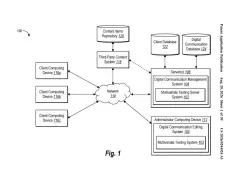
8 drawing sheets from US 2026/0252948 A1 · click any drawing to enlarge


More from Nvidia
All 665 Nvidia patents →
More in AI recommendation
All 91 AI recommendation patents →
Sony
Sony Patent Generates Personalized Store Ads From Your In-Store Movement
Qualcomm
Qualcomm Patents a Way to Ask an On-Device AI About Multiple Parts of a Photo at Once
Google
Google Patents an Ad-Targeting System That Never Sees Your Full Profile
Adobe