
Qualcomm Patents a Way for Wireless Earbuds to Dodge Crowded Radio Traffic
Wireless earbuds lose audio or drop connection most often in exactly the places you need them most, like airports, offices, and gyms packed with Wi-Fi routers and Bluetooth devices. Qualcomm's new patent describes a method that helps one earbud talk to the other by scanning for clean radio channels and deliberately turning down its own power when the airwaves get crowded.
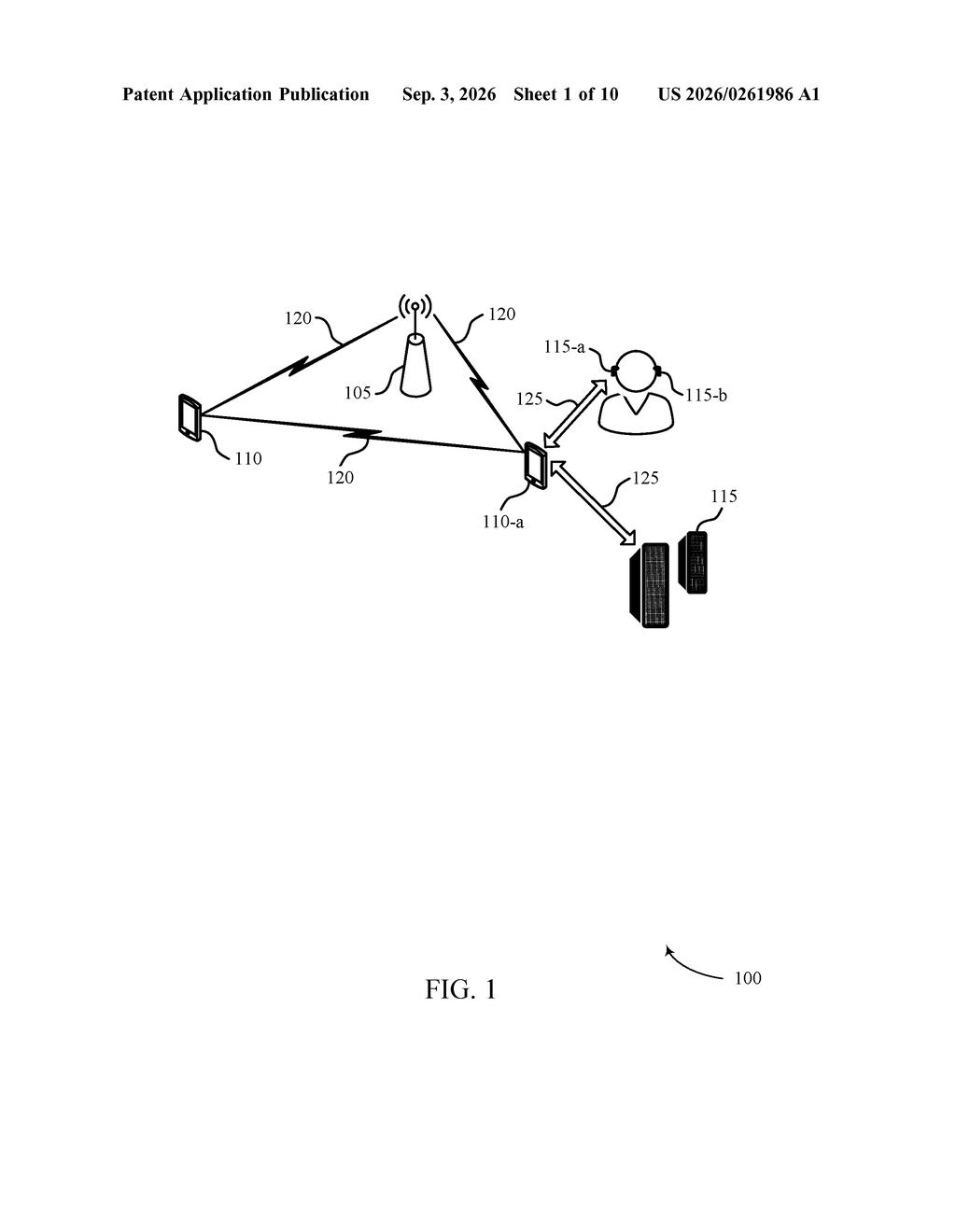
What Qualcomm's interference-dodging earbud system actually does
You're at a busy airport gate, earbuds in, trying to hear your boarding announcement over a podcast, and the audio keeps cutting out. The culprit is almost never your earbuds themselves but the dozens of Wi-Fi routers and Bluetooth devices all broadcasting in the same small space.
Qualcomm's patent tackles this by giving earbuds a way to survey the radio environment around them. If too many of the channels they normally use for talking to each other are clogged with outside signals, the earbuds automatically lower their transmit power and shift to a smaller set of channels that are still clean. The idea is that a lower-power signal hopping across fewer, quieter channels can be more reliable than a louder signal thrashing across channels that are already full of noise.
This matters because the two earbuds in a pair constantly talk to each other, coordinating audio and syncing volume. Any hiccup in that link causes the dropouts, pops, and stereo imbalances that frustrate listeners in crowded spots.
… reduce an upper limit transmit power for the communications between the first wireless earbud and the second wireless earbud in accordance with the one or more interference metrics satisfying the interference criterion …
Translation: The earbuds automatically lower their broadcast power when interference gets too high.
How the earbuds scan channels and decide when to pull back
The patent describes a detection and response system built into a first wireless earbud (one of the pair acting as the primary unit). Here is how the sequence works:
- Channel scan: The earbud measures signal strength across a broad set of available radio channels, looking for signs of outside interference. Think of it as checking which lanes on a highway are moving and which are gridlocked.
- Interference threshold check: If the number of low-interference channels falls below a preset minimum, the earbud treats this as a problem. The minimum channel count is a floor the system normally insists on for stable audio.
- Power reduction: Rather than pushing harder, the earbud lowers its maximum transmit power. Counterintuitively, a quieter signal causes less interference to other devices, and other devices' signals have less relative impact on a link that has been tuned to a cleaner slice of the spectrum.
- Frequency-hop across a smaller channel set: The earbud then communicates with its partner by hopping across only the subset of channels that are still usable, dropping the requirement for the broader original channel pool.
The key term here is frequency hopping, a technique where a radio rapidly switches between channels to avoid staying on any one jammed frequency too long. Bluetooth already uses this, and the patent refines it by dynamically shrinking the hop set when conditions demand it.
… trigger a transmit power reduction and a corresponding reduction in the minimum quantity of channels …
Translation: Lowering the power lets the earbuds drop down to a smaller, cleaner set of radio frequencies.
What this means for earbud reliability in busy public spaces
For consumers, the practical payoff is fewer audio dropouts in exactly the environments where earbuds are most used: open-plan offices, coffee shops, public transit, and arenas. Qualcomm's sustained push into wireless audio chips means improvements like this tend to ship inside the silicon that dozens of headphone brands already buy, so the benefit could spread across many products rather than staying exclusive to one device.
For the industry, a patent that covers the combination of interference detection, automatic power reduction, and dynamic channel-set shrinking could give Qualcomm a licensing position over other chip makers who try to solve the same problem in similar ways. Whether that claim survives examination is a separate question, but the coverage is broad enough to matter.
Qualcomm's fifth battery and power filing we've tracked since June follows work on saving phone state on battery removal and cutting game power without losing frames.
Claim 1 is written at a level of abstraction that covers almost any earbud chip that scans channels, finds interference, cuts power, and hops across a smaller set. That is a fairly wide net. A chip designer who detects interference and reduces output power while narrowing its hop table would have to work carefully around this claim, even if the internal math is completely different.
The practical scope depends heavily on how the patent office interprets "interference criterion" and whether prior Bluetooth specifications already describe this behavior. Frequency hopping with adaptive power control is not a new idea in radio engineering, so the novelty argument Qualcomm will need to make is about the specific combination and the minimum-channel-count logic.
As a product story, this is the kind of quiet infrastructure work that makes consumer electronics feel polished. Listeners will never see a setting that says "interference detected, switching modes," but they will notice that their earbuds stopped cutting out at the gym.
Get our take in your Top Stories
Liked this breakdown? Add Patentlyze as a preferred source on Google, and our plain-English take shows up more often in your Top Stories the next time Qualcomm patent news breaks.
There are more where this came from
We read every patent application Big Tech publishes and send you the ones worth knowing. Plain English, free, every week.
The drawings
10 drawing sheets from US 2026/0261986 A1 · click any drawing to enlarge


Show the other 2 sheets


Want this weekly breakdown for a company we don't cover? Patentlyze Pro →
Be the first to weigh in