
Qualcomm Patents a Method to Cut Battery Drain When Recording Two Videos at Once
Running two video streams at once is a silent battery drain, Qualcomm's new patent tries to fix that by making two processor cores share the load at a carefully chosen power level, rather than letting each one spike on its own.
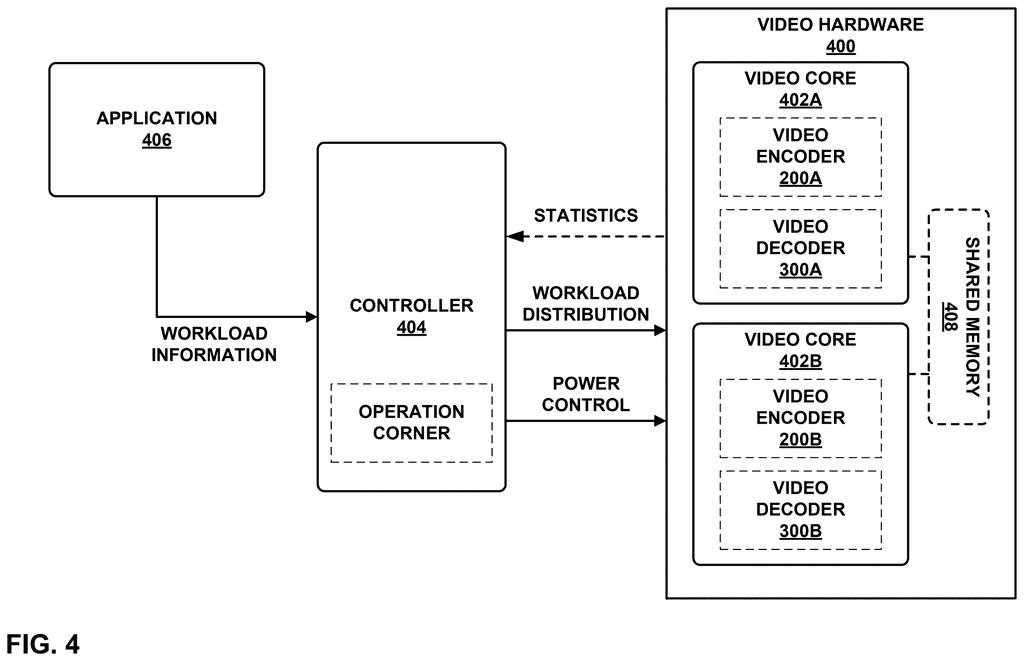
How Qualcomm's dual-core video balancing actually works
You're recording a screen capture while a video call runs in the background, and your phone starts getting warm. That heat, and the battery drain behind it, often comes from two separate video processing jobs each pulling as much power as they want, independently.
Qualcomm's patent describes a controller chip that looks at both video jobs together, calculates a kind of average demand across both, and then sets one shared power level that covers both without over-provisioning. It also chops up each video stream into alternating slices and hands those slices to two separate cores, so neither core sits idle while the other is swamped.
The idea is to keep the chip running steadily at a lower voltage, rather than letting it surge and throttle. For you, that would show up as less heat, longer battery life, and more consistent video quality when your device is juggling more than one camera or encoding job at once.
… determine an average workload requirement for the first coding session and the second coding session; determine an operation corner based on the average workload requirement; operate the first video core and the second video core at a voltage corresponding to the operation corner …
Translation: The system calculates how much power is needed for both videos and adjusts the voltage to the lowest efficient setting.
How the controller picks a voltage and divides the frames
The patent describes a system with two dedicated video-encoding cores and a supervising controller. When two separate video coding sessions start, the controller doesn't just assign one stream to each core and let them run independently. Instead, it takes a different approach.
- Average workload calculation: The controller looks at the expected processing demands of both sessions together and computes a blended average, rather than planning for each session's peak demand individually.
- Operation corner selection: Using that average, it picks an "operation corner" (a chip-design term for a specific combination of voltage and frequency that balances speed against power draw) that is just sufficient for the averaged load.
- Interleaved allocation: Instead of dedicating Core 1 to Stream A and Core 2 to Stream B, the controller alternates. Core 1 gets some frames from Session 1 and some from Session 2; Core 2 gets the remainder of each. This interleaving keeps both cores equally busy.
The practical effect is that the chip avoids the power spikes that happen when one core hits a hard scene (like a fast-moving sports sequence) while the other is coasting. By spreading those spikes across two cores and smoothing the voltage target, the system stays within a tighter, more efficient operating band.
… allocate first interleaved portions of the first coding session and the second coding session to the first video core and to allocate second interleaved portions of the first coding session and the second coding session to the second video core.
Translation: The device splits the data from both video recordings into small pieces and shares the work between two processing units.
What this means for mobile video and chip efficiency
Mobile chips already juggle a lot: camera apps, screen recording, video calls, and background uploads can all run simultaneously on a modern phone. When each of those tasks manages its own power demand without coordination, the chip ends up either running hotter than necessary or throttling video quality to stay cool. A centralized controller that plans across sessions before setting voltage is a more deliberate approach to a problem that gets worse as cameras get more capable and resolutions climb.
This patent sits at the intersection of chip efficiency and video quality, two areas where Qualcomm competes hard, particularly in its Snapdragon lines. The design trade is real: averaging workloads means the system could be caught underpowered if both sessions simultaneously hit their peaks at the same moment, a scenario the patent doesn't fully address. That's a meaningful gap. Still, for the common case of two moderate streams running in parallel, the efficiency gain is likely worth that tail-case risk, and it fits into the broader push in newest Big Tech patents toward chip-level power intelligence for video and imaging workloads.
This is the 50th Qualcomm filing in chip patents we cover since May, a body that includes one on low-power memory sleep mode and one on splitting graphics work across frames.
The core trade here is averaging versus worst-case planning. Traditional chip designers often size power budgets for the hardest possible frame, so they never drop a beat. Qualcomm's approach accepts some theoretical risk at the peak in exchange for lower average power draw. That's a reasonable bet for a phone that spends 95% of its time on ordinary video, not the hardest possible scene in both streams simultaneously.
The interleaved allocation is the more interesting half of the patent. Splitting each stream's work across both cores, rather than assigning one stream per core, means a sudden spike in one session gets absorbed across the full pair of cores instead of overwhelming a single one. That's a smarter buffer strategy than simple partitioning, and it's the part that makes the averaging bet defensible.
The remaining question is whether the controller can react fast enough when both streams go hard at the same moment. The patent describes a static voltage selection based on pre-session information, not a dynamic real-time adjustment. If live conditions diverge sharply from the pre-computed average, the system has limited room to respond. For most everyday use that probably doesn't matter, but it's the one place the design could visibly stumble.
Get our take in your Top Stories
Liked this breakdown? Add Patentlyze as a preferred source on Google, and our plain-English take shows up more often in your Top Stories the next time Qualcomm patent news breaks.
There are more where this came from
We read every patent application Big Tech publishes and send you the ones worth knowing. Plain English, free, every week.
The drawings
10 drawing sheets from US 2026/0254961 A1 · click any drawing to enlarge


Want this weekly breakdown for a company we don't cover? Patentlyze Pro →
Be the first to weigh in