
IBM Patent: Collaborative XR Environments That Automatically Adapt to Real Team Workflows
IBM wants to flip how virtual reality meets work: instead of dropping your team into a generic virtual room, the platform would read what your team actually needs to accomplish and build the virtual environment around the task.
What IBM's workflow-driven virtual rooms actually do
Today, when remote teams use virtual or mixed reality together, they typically enter a prebuilt space that has no idea what they're trying to get done. IBM wants to change that by making the workspace respond to the work.
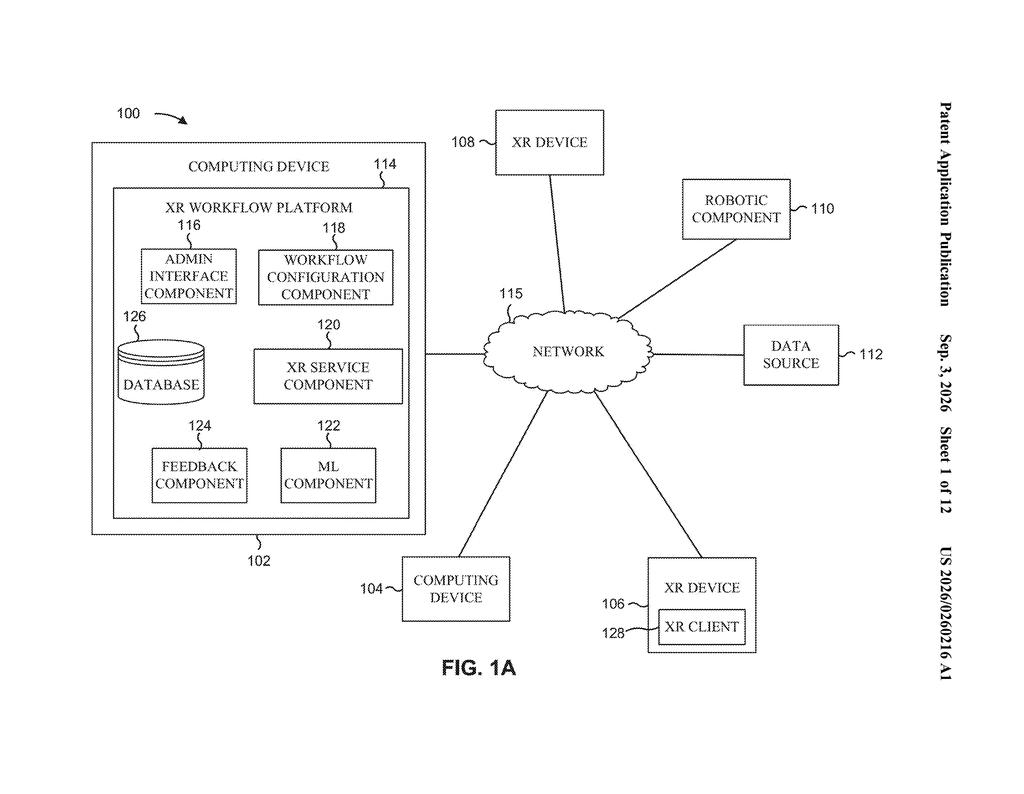
The idea is a platform that takes a workflow, say an approval process, a design review, or a support escalation, and figures out what that workflow needs. It then generates a virtual environment configured for exactly that task, shared across the headsets or XR devices of everyone involved.
So your device and your colleague's device both enter the same purpose-built space, shaped by the workflow itself rather than by someone manually setting a scene. The goal is to make XR tools less like virtual meeting rooms and more like active participants in getting work done.
obtaining, by an extended reality (XR) workflow platform, workflow data associated with a workflow; determining, based on the workflow data, workflow parameters associated with the workflow; …
Translation: The system gathers details about how a team works to figure out their specific needs.
How the platform reads tasks and builds XR environments
The patent describes an extended reality (XR) workflow platform that operates in four main steps.
- Obtain workflow data: The system ingests information about a specific task or business process, which could include the type of work, the people involved, the steps required, and any relevant data or documents.
- Determine workflow parameters: From that data, it extracts structured parameters (think: rules and properties that define what the workflow needs, such as required participants, decision points, or data inputs).
- Generate a workflow configuration: Those parameters get turned into a configuration blueprint, a structured description of what the virtual environment should look like and do.
- Build the collaborative XR environment: Using the configuration, the platform creates a shared XR space that two or more XR devices can enter together, with communication between devices built into the environment itself.
The claim covers the full chain from raw workflow data to a live, shared XR space. It does not specify a particular type of XR device, a particular kind of workflow, or a particular industry, which makes the claim intentionally broad in scope.
A collaborative XR virtual environment is generated based on the workflow configuration to facilitate the workflow. The collaborative XR virtual environment comprises an XR-based communication exchange between at least two XR devices.
Translation: It builds a custom virtual workspace where team members can interact using their headset devices.
What this means for XR's future in corporate software
For companies already investing in XR hardware, this kind of system would mean the environment adapts to the task rather than requiring IT teams or employees to manually configure virtual spaces every time. If the platform works as described, it could lower the barrier to using XR for serious business processes, not just demos or training simulations.
IBM's run of enterprise XR filings suggests the company sees a real market in making headsets and mixed-reality tools useful inside corporate workflows, an area where adoption has lagged despite years of hardware progress. Whether this patent becomes a product or a licensing asset is another question entirely.
IBM's 324th filing we've tracked since May in our IBM coverage adds to a body of AI work that includes an AI-avatar interview system and pixel-level object spotting.
Claim 1 draws a wide circle: any software that collects data about a task, derives parameters from it, builds a configuration, and then generates a shared virtual space where at least two devices can communicate falls inside the boundary. Nothing in the claim specifies a particular industry, device, or type of work.
That generality has teeth. A remote medical consultation, a construction walkthrough, a corporate onboarding session all follow the same collect-configure-generate sequence IBM describes, which means all of them could be covered if the claim survives as written.
Patent offices routinely push back on claims written this broadly, and what IBM actually receives may end up far more specific than what was filed. How narrow that final version becomes will determine whether this is a broad toll on workplace collaboration tools or simply protection for one particular way of building them.
There are more where this came from
We read every patent application Big Tech publishes and send you the ones worth knowing. Plain English, free, every week.
The drawings
12 drawing sheets from US 2026/0260216 A1 · click any drawing to enlarge


Want this weekly breakdown for a company we don't cover? Patentlyze Pro →
Be the first to weigh in