
Qualcomm's New Patent Turns Your XR Headset into a Live Radar for Lost Devices
Qualcomm wants your XR headset to act like a live radar screen — using radio signals to pinpoint where your phone, remote, or any paired gadget is hiding, then floating a real-time arrow in your field of view to lead you straight to it.
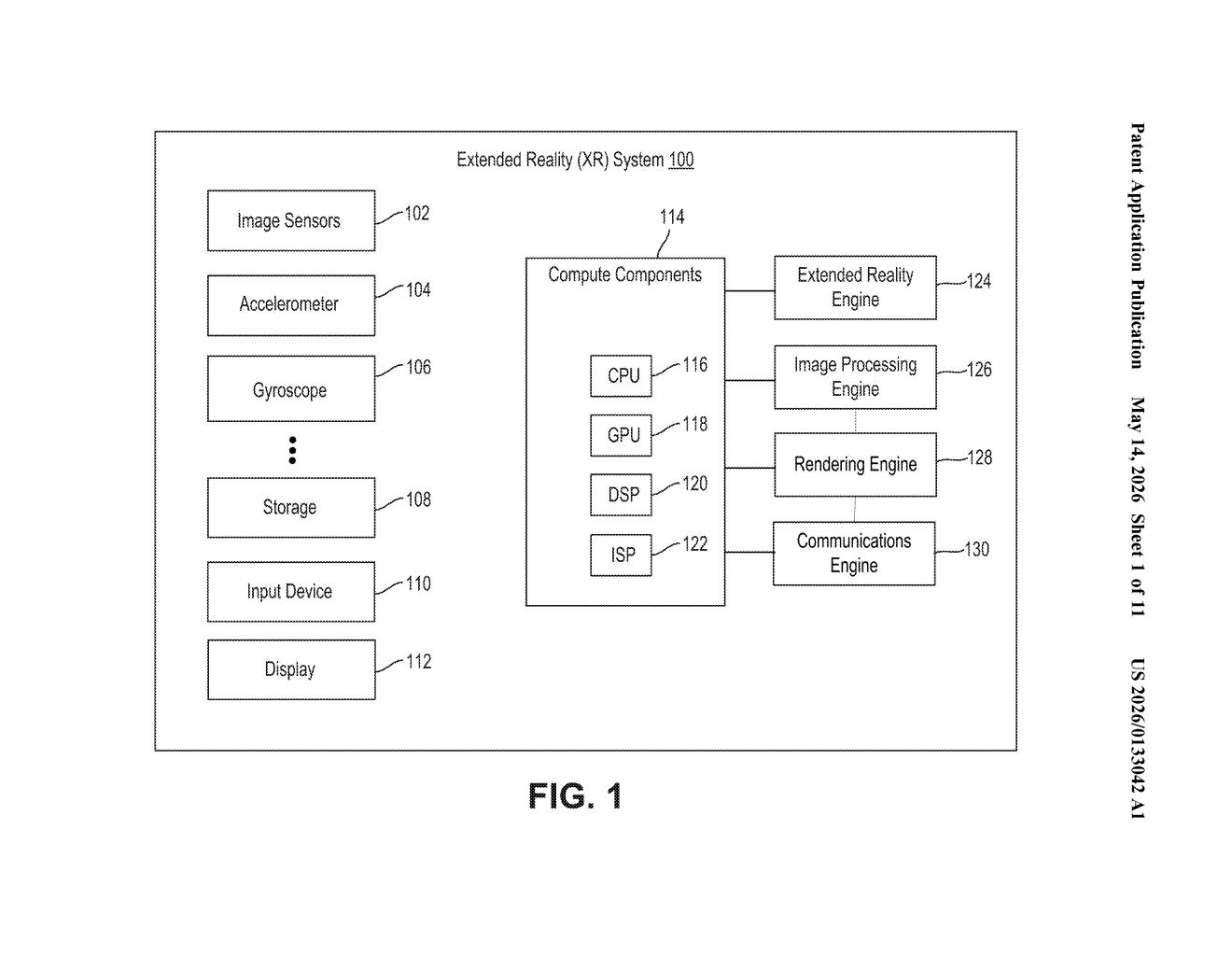
How Qualcomm's XR headset tracks your missing devices
Imagine you've set your phone down somewhere in the house and you're wearing an XR headset. Instead of wandering room to room, the headset could show you a floating pointer and a live distance readout — like a directional compass overlaid on the real world — telling you exactly where the phone is and updating as you (or the phone) move.
That's the core idea in this Qualcomm filing. The headset (the "first device") exchanges radio frequency signals with the target gadget (the "second device") to figure out not just where it is, but how fast it's moving and in which direction. The overlay updates continuously so the guidance stays accurate even if the target is in motion.
What makes this a notch above basic Bluetooth ping-and-beep finders is that it's spatial — you see a directional cue inside a 3D view of the world, not just a sound from a speaker. It's the difference between a map and a live navigator.
How RF signals feed the live distance-and-direction overlay
The system relies on RF-based ranging — techniques like Ultra-Wideband (UWB) or similar radio protocols that can measure distance and angle with much higher precision than standard Bluetooth. The first device (the XR headset or paired computing unit) and the second device (whatever you're looking for) exchange radio signals, and the system calculates both location and velocity — meaning it knows where the target is and how it's moving.
From that data, the system generates virtual content — an on-screen overlay showing:
- A distance readout (e.g., "4.2 meters")
- A directional indicator (an arrow or pointer in 3D space)
- Updates to both as either device moves
The velocity component is the interesting wrinkle. Most "find my device" tools just ping a static location. By tracking velocity (speed + direction of movement), the system can predict where a moving target will be a moment from now and pre-correct the overlay before the signal update even arrives — reducing lag and jitter in the visual cue.
The patent describes a continuous loop: measure → render → re-measure with new RF signals → update the overlay. This keeps the guidance responsive even in dynamic environments where the target device is being carried or moved.
What this means for XR headsets and device-finding tech
Device-finding features already exist — Apple's Precision Finding in the Find My app uses UWB on iPhones and AirTags to show directional arrows. What Qualcomm is patenting here is a version purpose-built for XR headsets, where the guidance lives inside an immersive 3D overlay rather than a 2D phone screen. That's a meaningful difference: in a headset, you don't have to look away from the real world to follow the pointer.
For Qualcomm, which supplies chips to a wide range of Android XR and mixed-reality device makers, this kind of spatial device-finding could become a platform feature baked into the Snapdragon XR chip stack. If you're building a headset on Qualcomm silicon, this capability could come nearly for free — which puts pressure on competitors to match it.
This is a sensible, well-scoped idea — XR headsets are genuinely better form factors for spatial navigation than phone screens, and adding velocity tracking to cut down overlay lag shows real engineering thought. It's not a moonshot, but it's the kind of practical feature that makes a headset feel polished rather than gimmicky. Worth watching as XR platforms mature.
There are more where this came from
We read every patent application Big Tech publishes and send you the ones worth knowing. Plain English, free, every week.
Want this weekly breakdown for a company we don't cover? Patentlyze Pro →