
Qualcomm's New Patent Wants to Use Regular Wi-Fi to Sneak You Onto 60 GHz
Connecting to Wi-Fi at 60 GHz is fast — but getting there is complicated. Qualcomm's new patent wants to use your regular Wi-Fi band to do all the boring setup work, then seamlessly hand you off to a much faster mmWave connection.
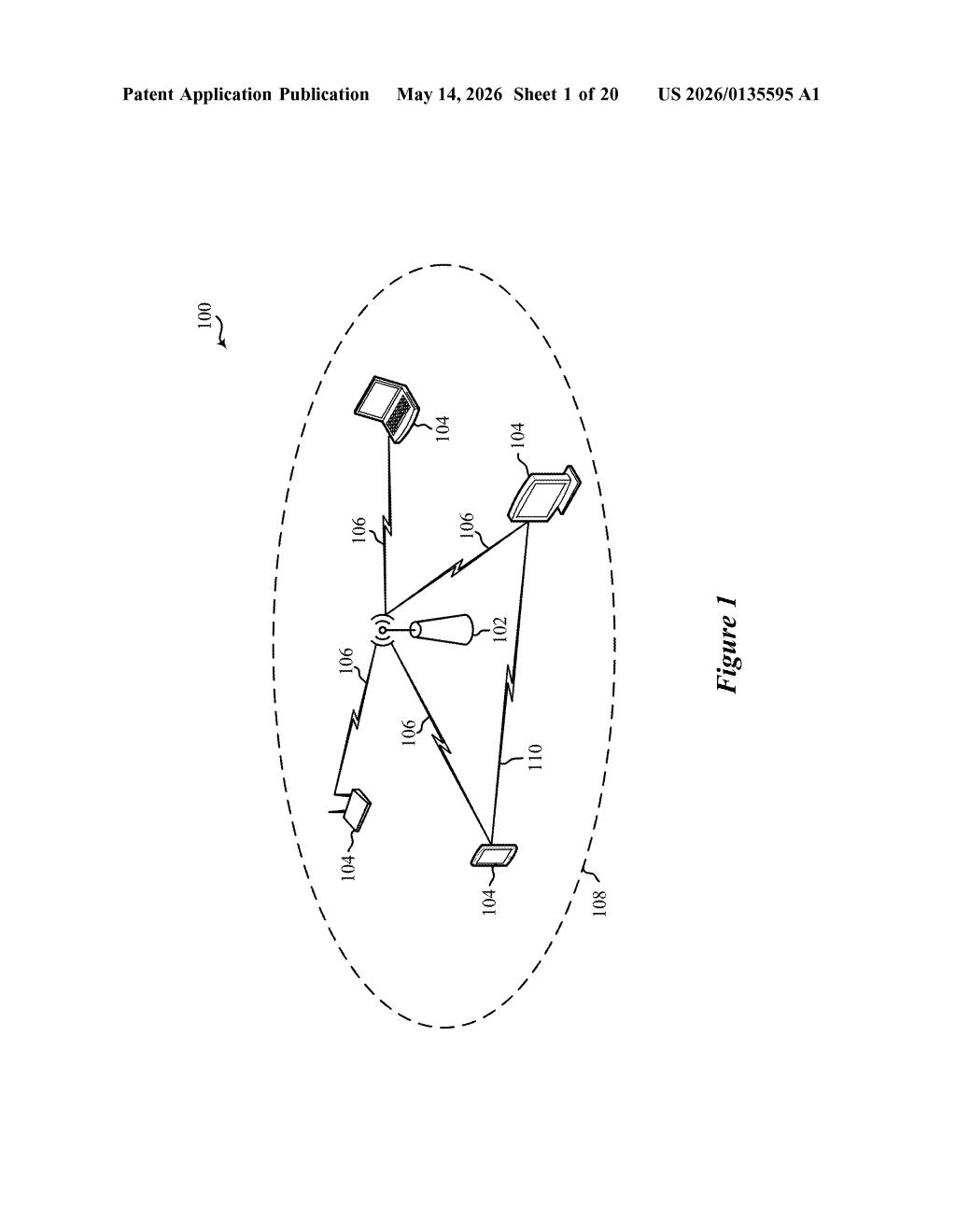
How Qualcomm's 60 GHz Wi-Fi handoff actually works
Imagine your router could instantly switch you to a super-fast, laser-focused wireless connection the moment you sit down at your desk — without you ever having to do anything differently. That's the basic idea behind this Qualcomm patent.
Right now, 60 GHz Wi-Fi (sometimes called WiGig or 802.11ad/ay) is extremely fast but notoriously fussy. Because the signal travels in a tight beam rather than spreading out like a regular Wi-Fi wave, connecting to it involves a tricky setup dance called beamforming training — where the router and your device figure out the best angle to aim at each other. The problem is that doing all that setup at 60 GHz is cumbersome and can slow things down before they even start.
Qualcomm's approach is to offload that setup work onto your normal sub-7 GHz Wi-Fi (the kind you're already using). Your device associates with the router the usual way, gets the beamforming instructions over that regular link, and then switches to the high-speed 60 GHz channel — already pointed in exactly the right direction.
How the anchor link bootstraps the 60 GHz beam session
The patent describes a two-link wireless architecture. The first link — called the anchor link — operates on a conventional carrier frequency below 7 GHz (think standard 2.4 GHz or 5 GHz Wi-Fi). This is the link your device uses to discover the router's network (its BSS, or Basic Service Set), authenticate, and fully associate — the whole standard Wi-Fi handshake.
Once associated, the access point sends beam management setup information over that same anchor link. This is essentially a set of instructions for how to begin a beamforming training operation on the second, faster link. Crucially, this includes a carrier frequency offset (CFO) value — a precise calibration number that helps the device tune itself to the exact 60 GHz channel the router wants to use.
With that prep work done over the reliable low-band link, the device and router run their beamforming training on the directional link (above 7 GHz, targeting 60 GHz mmWave). Beamforming training is the process where router and device exchange probe signals so each can determine the optimal beam angle — think of it like two people aiming flashlights at each other until both beams perfectly overlap.
After training completes, all data traffic can flow over the 60 GHz directional link using the beam angles they've already negotiated, delivering much higher throughput than conventional Wi-Fi bands can offer.
What this means for next-gen Wi-Fi speeds in your home
The practical bottleneck for 60 GHz Wi-Fi has always been getting connected, not staying connected. By moving discovery and association off the finicky mmWave channel and onto a well-understood sub-7 GHz link, Qualcomm's approach makes high-frequency Wi-Fi much more approachable for mainstream devices and chipsets. You'd theoretically get the reliability of normal Wi-Fi for setup and the raw speed of 60 GHz for actual data — without needing entirely separate hardware stacks.
For next-generation WLAN standards like Wi-Fi 7 and beyond, this kind of multi-link operation is increasingly central. Qualcomm is positioning itself to be the chipmaker that defines how devices negotiate those band transitions. That matters a lot when you're the company supplying Wi-Fi silicon to most of the world's smartphones and routers.
This is a genuinely useful piece of systems engineering rather than a headline-grabbing concept patent. The insight — that 60 GHz's biggest friction is connection setup, not data transfer — is correct, and the proposed fix (outsource setup to a band that's already good at it) is clean and practical. Whether it ships in a Qualcomm Wi-Fi chipset in the next few years depends on how fast Wi-Fi 7 / 802.11be multi-link adoption actually moves, but the technical foundation here is solid.
There are more where this came from
We read every patent application Big Tech publishes and send you the ones worth knowing. Plain English, free, every week.
Want this weekly breakdown for a company we don't cover? Patentlyze Pro →