
Samsung Patents Finer QoS Traffic Prioritization for 5G and 6G Networks
Samsung is pushing for a finer-grained way to prioritize network traffic inside 5G and 6G devices — essentially adding a new sub-category layer beneath existing Quality of Service labels so phones can juggle competing data demands more precisely.
What Samsung's sub QoS flow system actually does
Imagine you're on a video call while your phone is also downloading a software update in the background. Your carrier's network tries to give the video call priority over the download — that's Quality of Service (QoS) in action. But today's systems have a fairly blunt set of priority labels to work with.
Samsung's patent introduces a concept called sub QoS flows — essentially a second tier of priority tags that sit beneath the existing ones. Instead of your phone knowing only that one chunk of data is "high priority," it can now know it's "high priority, sub-type 3" — enabling much more granular sorting before data even leaves the device.
The method also ensures that these new sub-priority labels travel securely: the phone performs integrity checks on the full data packet (including the new label) and encrypts the payload, while deliberately leaving the routing header readable so the network can still make fast decisions. It's a small but careful engineering choice.
How sub QoS flow IDs slot into the 5G protocol stack
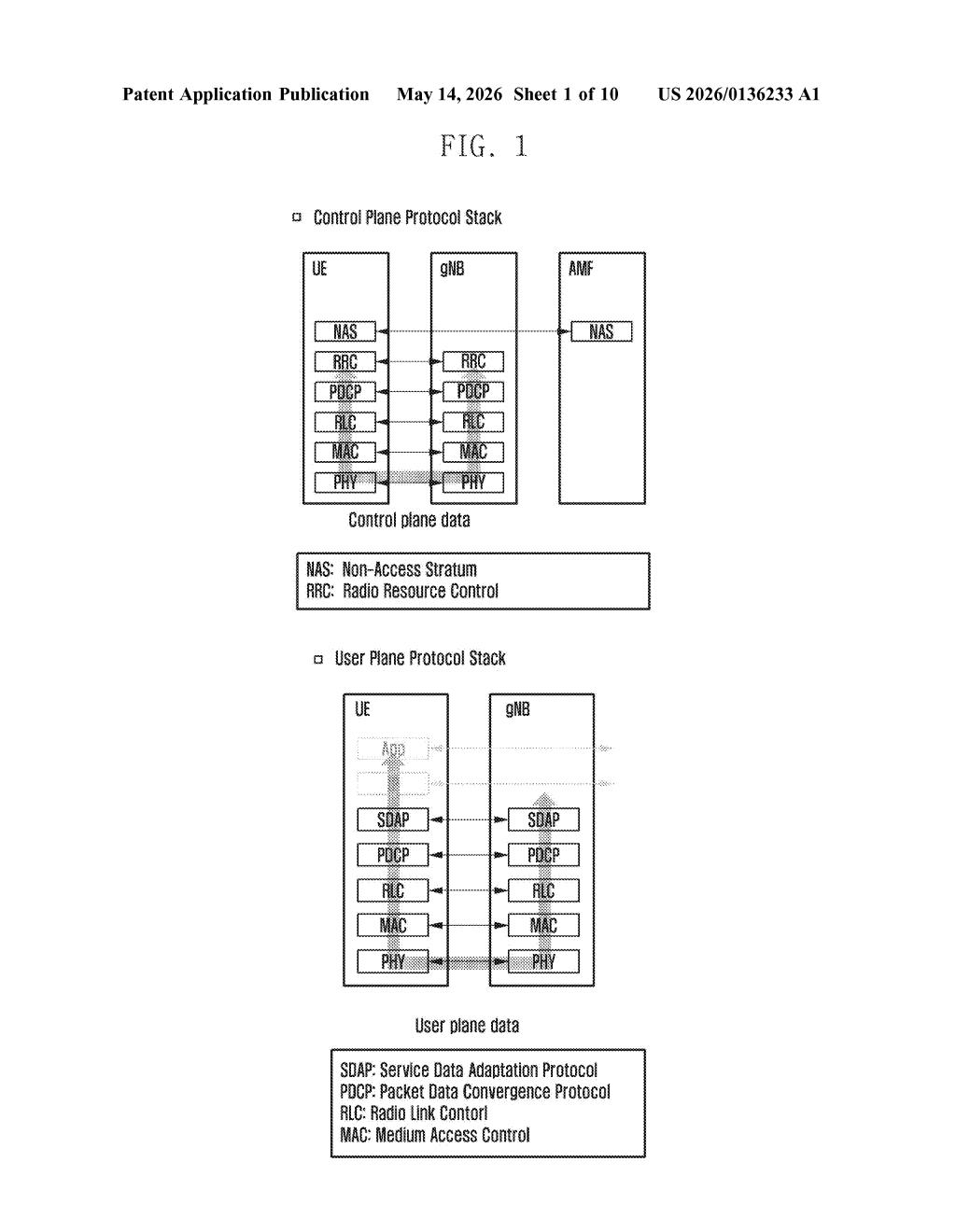
The patent describes a procedure running on a User Equipment (UE) — think your smartphone or a 5G modem — that extends the existing SDAP (Service Data Adaptation Protocol) layer of the 5G protocol stack.
Here's the flow the patent claims:
- The network sends an RRC Reconfiguration message (RRC = Radio Resource Control, the signaling channel the base station uses to configure your device) that now includes parameters for both a standard QoS flow and a new sub QoS flow.
- The UE maps incoming data packets to a Data Radio Bearer (DRB) — the logical pipe that carries your data over the air — using both the regular QoS Flow ID (QFI) and the new sub QoS Flow ID.
- The SDAP header transmitted to lower layers carries both IDs, giving every layer of the stack visibility into the finer-grained priority.
- Critically, integrity protection covers the full SDAP data including the sub-flow field, while ciphering (encryption) is applied to everything except the SDAP header — so the header stays readable for routing decisions but the payload stays private.
The split between what gets encrypted and what doesn't is deliberate: routers and schedulers need to read QoS labels in real time without decrypting traffic, and this architecture preserves that.
What this means for 6G network slicing and device makers
For device makers and chipset vendors, this patent signals that Samsung is thinking about the protocol-level foundations of 6G well before standards are finalized. Finer QoS granularity becomes increasingly important as a single device simultaneously handles AR video, real-time sensor telemetry, background cloud sync, and voice — use cases that are essentially impossible to differentiate cleanly with today's coarse priority buckets.
If sub QoS flows make it into 3GPP standards (the body that defines 5G/6G specs), every device and base station vendor would need to implement them. That gives Samsung — as an early filer — potential influence over how the spec is written, which matters more in telecom than in almost any other industry.
This is a dry, infrastructure-layer patent that won't excite anyone outside a 3GPP working group meeting — but that's precisely the arena where Samsung punches hardest. Telecom standards patents like this one are currency in cross-licensing negotiations and spec-drafting rooms, not consumer feature announcements. Worth tracking for what it says about Samsung's 6G standardization strategy, not for what it does to your phone tomorrow.
There are more where this came from
We read every patent application Big Tech publishes and send you the ones worth knowing. Plain English, free, every week.
Want this weekly breakdown for a company we don't cover? Patentlyze Pro →