
Nvidia Patents a Multi-Camera System Where Each Camera Tells the Others What It Sees
Most security and tracking cameras work in isolation, each doing its own job with no idea what the others are seeing. Nvidia's new patent describes a system where cameras actively talk to each other, passing along notes on the objects they're watching so the whole network stays on the same page.
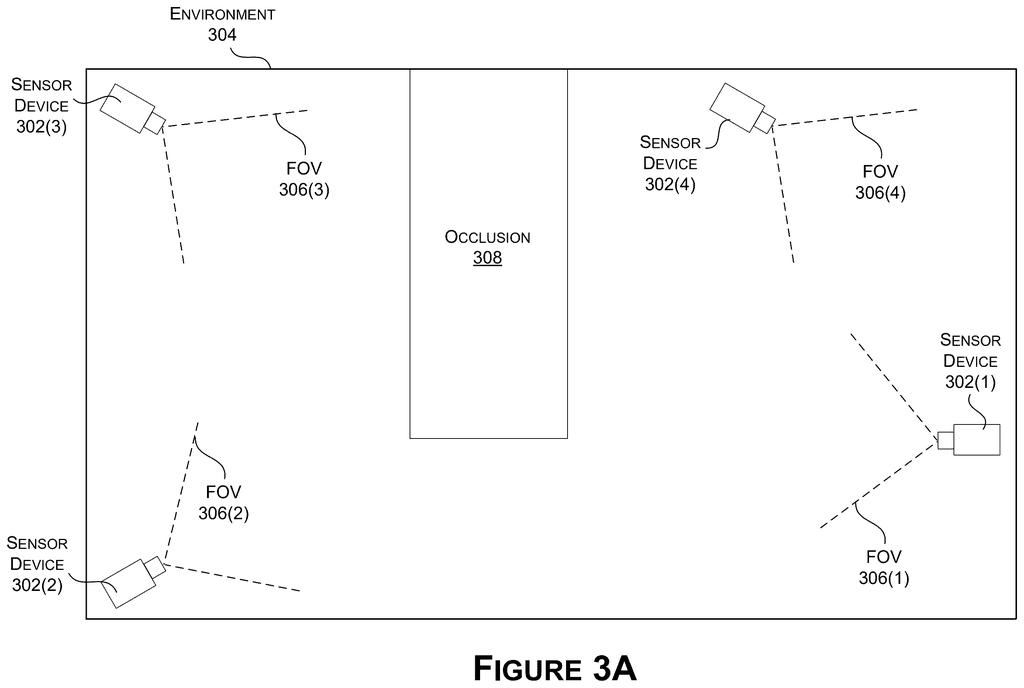
What Nvidia's collaborative camera tracking actually does
Today, when a network of cameras tracks a person across a large space, each camera typically starts from scratch when that person enters its field of view. It has no memory of what the previous camera learned. That handoff problem is what Nvidia is trying to fix.
The patent describes a system where every camera in a network shares what it's learned about an object it's watching, including a unique tag for that object, with all the other cameras nearby. When a second camera spots someone, it checks the shared data coming in from its neighbors and can say, "oh, this is the same person Camera 1 was already watching," rather than assigning them a brand-new identity.
The result is that a tracked object keeps the same ID as it moves from one camera's view to another. Nvidia's steady investment in intelligent sensor systems suggests this kind of infrastructure-level AI is a clear priority, especially for places like warehouses, airports, or any large venue where losing track of something mid-route is genuinely costly.
… determine, based at least on the first information and the second information, to assign an identifier of the one or more identifiers to the detected object …
Translation: The camera matches notes with neighboring lenses to decide if it is looking at the same target.
How cameras share object IDs across overlapping views
The core idea is collaborative object tracking across multiple cameras. Instead of each camera running its own isolated detection pipeline, every device in the network both detects objects in its own footage and receives information about objects already being tracked by its neighbors.
Here's how the handoff works:
- Camera A spots an object and runs detection on it, building a set of descriptors (things like apparent size, position, and visual features).
- It assigns that object a unique identifier and broadcasts that identifier, along with the descriptors, to the other cameras on the network.
- When Camera B independently detects what looks like an object in its own view, it compares what it sees against the incoming data from Camera A.
- If there's a match, Camera B assigns the same identifier to its detected object, keeping the tracking continuous.
The patent covers the logic inside each individual camera device, meaning the intelligence is distributed rather than funneled through a central server. Each camera is both a sender and a receiver of this tracking metadata.
Re-identification (figuring out that two camera sightings are the same object) is the hard part of any multi-camera system, and that's the specific problem this patent addresses at the device level.
… sensor devices—such as camera devices—that communicate with one another to collaboratively track objects located within an environment …
Translation: Multiple smart cameras talk to each other to keep tabs on moving objects across a space.
What this means for warehouses, stadiums, and smart spaces
For large physical spaces, losing the thread on a tracked object during a camera-to-camera transition is a persistent operational headache. Think of a warehouse where a robot or a package needs to be followed across dozens of camera zones, or a stadium where security needs to track a person of interest without relying on a single operator manually handing off between feeds. A system where cameras coordinate automatically cuts down on the gaps.
The distributed approach here is also worth noting for practical reasons. If the tracking logic lives inside each camera rather than in a central server, the system is less likely to fail when network conditions are poor or when one node goes down. For Nvidia, which sells the chips and software stacks that power industrial AI infrastructure, a patent like this fits squarely into its business of making physical spaces more machine-readable.
This is the 55th Nvidia filing we've tracked since May in the autonomous sensing race, following earlier applications on calibrating sensors by observation and radar object speed tracking.
Losing track of a person the moment they step from one camera's view into another is so common in security and retail operations that most organizations have accepted it as a cost of doing business. Manual footage review to follow a single subject across a building can consume hours of investigator time, and failed theft cases often come down to exactly this gap.
What makes this approach significant is that cameras coordinate with each other directly rather than routing everything through a central system. In an airport or large warehouse, that means the network keeps working even when parts of it go down, which is the difference between a tool operators trust and one they work around.
The harder question is what happens when two cameras look at the same crowded scene and disagree about who they are seeing. That is precisely the situation where accurate tracking matters most, and it is where the real test of this approach will come.
There are more where this came from
We read every patent application Big Tech publishes and send you the ones worth knowing. Plain English, free, every week.
The drawings
23 drawing sheets from US 2026/0268502 A1 · click any drawing to enlarge


Want this weekly breakdown for a company we don't cover? Patentlyze Pro →