
Nvidia Patents an AI System That Maps Intersection Zones for Self-Driving Cars
Intersections are where most crashes happen, and they're also the hardest thing to teach a self-driving car. Nvidia's latest patent describes a neural network that can look at live camera and sensor data, spot every intersection in view, and instantly label which zones are contested territory.
How Nvidia's self-driving car reads intersections
Ever tried to figure out who has the right of way when four cars arrive at a four-way stop at the same time? It's confusing for people, and it's even harder for a computer.
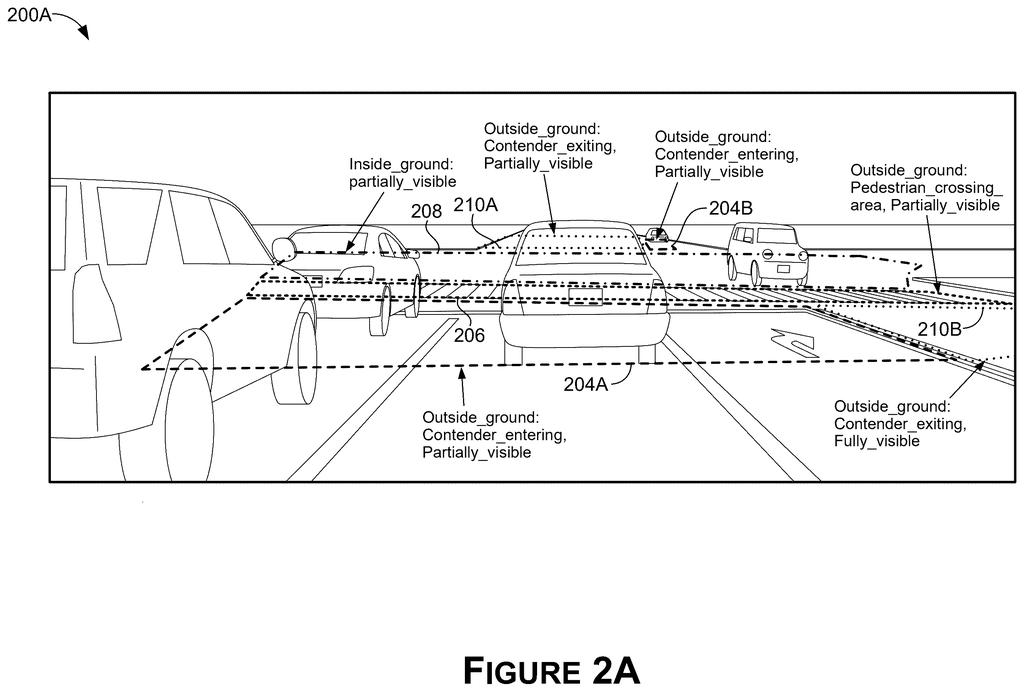
Nvidia's patent tackles exactly that problem. The system uses a neural network trained to look at a self-driving car's sensor feeds in real time and identify the boundaries of intersection areas, the specific patches of road where vehicles from different directions might cross paths. Once those zones are found and labeled, the car knows where it needs to slow down, yield, or assert priority.
The key idea is that the car isn't just reading a pre-drawn map. It's seeing the intersection live, classifying it on the spot, and translating that into 3D coordinates it can actually drive around. That makes it more adaptable to intersections that don't match what a map expected, like a temporary construction layout or an unusual rural crossing.
… identifying, using one or more neural networks and based at least on sensor data obtained using the one or more external sensors, one or more world-space locations and one or more classifications associated with an intersection.
Translation: AI uses sensor data to pinpoint the exact locations and types of intersections.
How the neural network finds and labels conflict zones
The system takes sensor data from the vehicle's cameras and other external sensors and feeds it into a deep neural network (DNN), a type of AI trained on many examples to recognize patterns.
The network produces outputs called signed distance functions (think of these as a heat map that encodes how far any given pixel is from the nearest intersection boundary, and whether you're inside or outside that boundary). Those outputs are then decoded into instance segmentation masks, which are precise outlines drawn around each distinct intersection zone in the camera's view.
From there, the system converts those image-space outlines (coordinates relative to the camera frame) into world-space coordinates, meaning real-world positions in 3D space the car can reason about. The result is a labeled map of:
- Where each intersection zone begins and ends
- What type of intersection it is (the classification step)
- Which areas are contested, meaning multiple traffic streams can conflict there
All of this happens in real time or near real time, so the car can act on the information before it reaches the intersection, not after.
… signed distance functions—that may correspond to locations of boundaries delineating intersection contention areas. The signed distance functions may be decoded and/or post-processed to determine instance segmentation masks representing locations and classifications of intersection areas or regions.
Translation: Math functions calculate intersection boundaries so the car can map where different roads overlap.
What this means for autonomous vehicle navigation
Intersection handling is one of the most cited failure points in autonomous vehicle systems. Rules about right of way, traffic priority, and yielding are easy to write down but hard to apply when the geometry of each intersection is different. A system that can perceive and classify intersection boundaries on the fly, rather than relying entirely on pre-loaded map data, gives a self-driving car a way to handle intersections it has never seen before.
The patent sits at the core of Nvidia's autonomous vehicle platform work, and it reflects how much engineering attention is still going into perception fundamentals rather than higher-level decision-making. If you follow interesting tech patents in the autonomous driving space, this filing is a useful window into how the industry is still working to solve problems that look simple from the outside.
Nvidia's 37th filing we've tracked in the self-driving sensing race since May connects to one that cuts objects from images and one merging camera feeds, showing how its sensing work keeps building.
Claim 1 covers any self-driving or driver-assist machine that uses AI software plus outside sensors to spot and label intersections. It does not lock down any specific design, sensor type, or output.
That open wording draws a wide fence around the general idea, not just one specific version of it. Any competitor doing the same basic job, even with completely different equipment, could fall inside that fence.
If this patent is approved as written, it hands its owner a very broad weapon.
There are more where this came from
We read every patent application Big Tech publishes and send you the ones worth knowing. Plain English, free, every week.
The drawings
15 drawing sheets from US 2026/0245340 A1 · click any drawing to enlarge


Want this weekly breakdown for a company we don't cover? Patentlyze Pro →
Be the first to weigh in