
Sony's New Patent Covers a Gaming Controller That Passes Signals to Nearby Accessories
Your PlayStation controller could one day act as a mini radio tower, passing signals from the console to headsets, keyboards, and other accessories sitting right next to you rather than making them shout across the room.
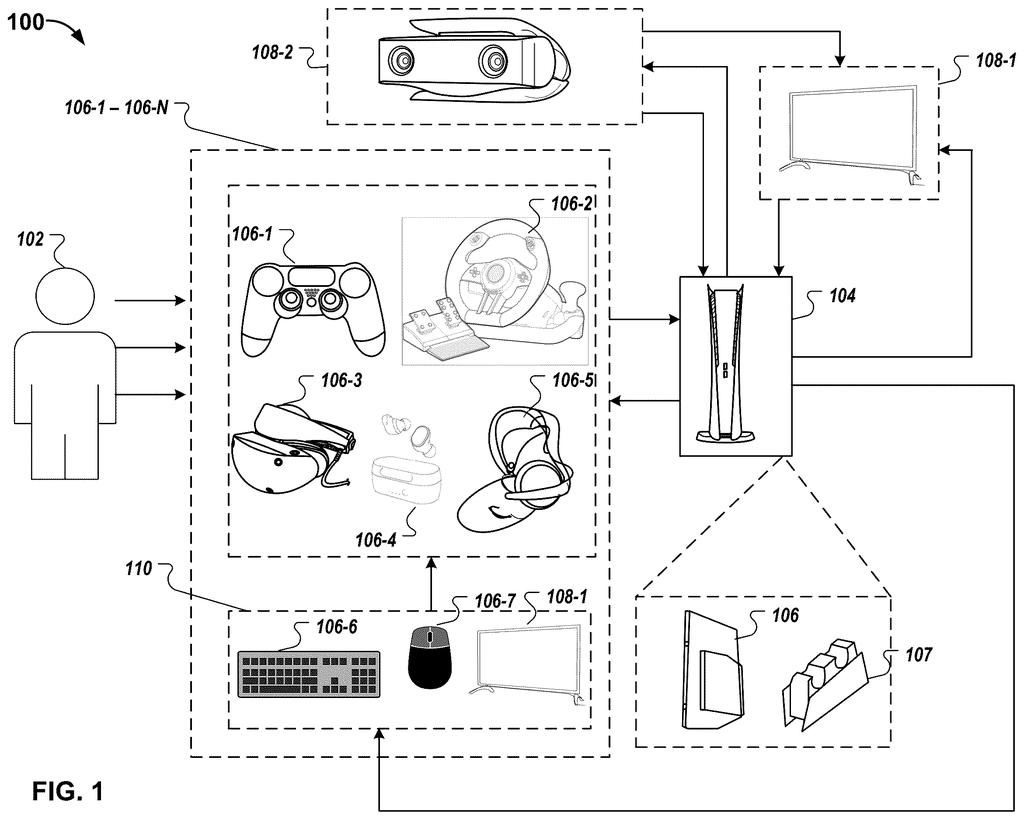
How Sony's controller-as-wireless-hub idea actually works
A gaming controller sits in your hands while the console sits across the room on a shelf. Every other accessory plugged into your gaming setup, a headset, a second peripheral, a haptic device, has to reach all the way back to that shelf to stay connected.
Sony's new patent describes a system where the controller itself handles that last bit of wireless communication. The console sends a signal to the controller, and the controller then re-broadcasts it to nearby accessories over a shorter, cleaner path. Because your hands are already close to whatever you're wearing or holding, the signal doesn't have to fight through furniture, walls, or the RF noise that fills most living rooms.
In plain terms: your controller becomes the local hub, and your accessories talk to it instead of the distant console. That shorter hop is less likely to drop, stutter, or get blocked by your couch.
generating, by the embedded host wireless communication device and responsive to receiving the second transmission data, third transmission data between the embedded host wireless communication device and a plurality of second client devices in data communication with the embedded host wireless communication device …
Translation: The controller creates new signals to talk to nearby accessories after getting instructions from the console.
How the embedded host re-broadcasts console commands locally
The patent describes a three-layer wireless architecture. A host device (the game console) communicates with a first client device (a controller or similar peripheral) over a standard wireless channel. So far, that's normal.
The twist is what's inside that first client device: an embedded host wireless communication device, essentially a second radio chipset that can itself act as a mini base station. The console bundles two types of data into every transmission: instructions for the controller itself, and a separate packet of instructions meant for the embedded radio to forward onward to other accessories.
Those other accessories, called second client devices, never talk directly to the console. They talk to the radio embedded in the controller, which is physically much closer. The patent specifically calls out two advantages of this shorter path:
- Reduced transmission distance between the controller and nearby accessories
- Fewer physical obstructions (walls, furniture, your body) in the way
The console stays in charge of the whole ecosystem; it orchestrates what every device does. But the controller acts as a local relay, cleaning up the last few feet of the signal chain.
What this means for wireless accessories in your living room
Wireless accessories in gaming have always had a range and reliability problem. A console tucked in an entertainment unit behind glass, or in a room corner, creates real dead spots. Headsets cut out, haptic devices lag, and second controllers at the edge of the room behave poorly. This patent's approach would let the accessory that's already in your hands do the heavy lifting for everything nearby, since your hands are usually close to whatever else you're using.
Sony's steady filing interest in wireless gaming infrastructure suggests the company is thinking seriously about how accessories connect as setups grow more complex, with more devices, more RF competition, and players who move around more than they used to. Whether this ever ships matters less than the direction it points: accessories that collaborate rather than compete for signal.
This is the eighth Sony filing in wearable tech we cover since June, joining one on surfaces changing feel and one on reading body signals.
Getting this idea out of a patent and into someone's hands requires building new physical hardware from scratch. A controller or peripheral would need two separate wireless radios inside it: one to stay connected to the console and another to act as a small local hub for nearby devices. That means added cost, more battery drain, and extra bulk in something people already hold for hours.
The most realistic first step probably skips the controller entirely. A separate plug-in accessory that handles the hub role on its own would let Sony test the concept without redesigning its core hardware.
Until that physical foundation exists, this patent describes a smart system design with no obvious home in any current product.
There are more where this came from
We read every patent application Big Tech publishes and send you the ones worth knowing. Plain English, free, every week.
The drawings
6 drawing sheets from US 2026/0263918 A1 · click any drawing to enlarge


Want this weekly breakdown for a company we don't cover? Patentlyze Pro →