
Sony Patents Earbuds That Adjust Ambient Sound Based on Who's Speaking
Sony is patenting a pair of wearable audio devices that learn the acoustic fingerprint of a specific voice, then filter the world around you to make that voice easier to hear.
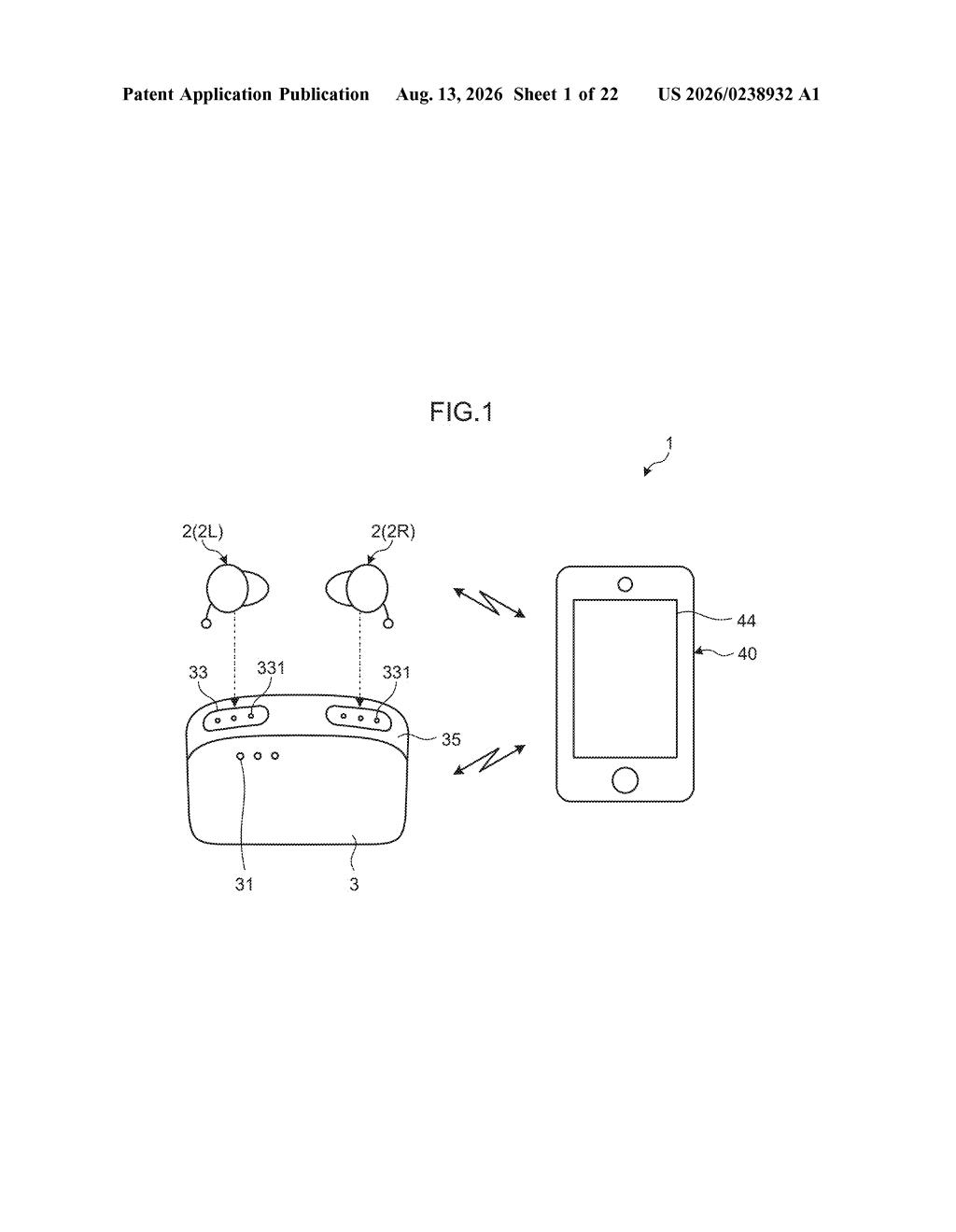
How Sony's voice-matched noise filtering actually works
A tour guide starts talking at the front of a noisy museum hall. You're wearing earbuds at the back, and the crowd noise is swallowing every word. Right now, your earbuds have no idea whose voice matters to you.
Sony's patent describes a system that fixes that. A speaker's device, say a microphone or a transmitter worn by the tour guide, sends a voice profile to your earbuds. Once your earbuds know what that specific voice sounds like, they can process all the surrounding noise with that voice in mind, pulling it forward or suppressing everything else.
The earbuds still pick up the environment around you, not just pipe in the speaker's audio directly. That distinction matters: the system is designed for wearable devices that need to keep you aware of your surroundings while still making a particular speaker easier to understand.
a sound collection unit that acquires an environmental sound around the user; a reception unit that receives feature information for a specific voice included in a voice output from an acoustic output device to the user; …
Translation: The earbuds listen to your surroundings and track the voice of whoever is talking to you.
How the feature profile travels from speaker to earbuds
The patent describes three connected pieces working together: an acoustic output device (the speaker's end, like a microphone or transmitter), an information transmission device that packages and sends voice data, and the acoustic processing device worn by the listener.
The key piece is what Sony calls feature information: a set of acoustic characteristics extracted from a specific person's voice. Think of it as a sonic fingerprint, pitch, cadence, timbre, the things that make one voice distinct from another. That fingerprint travels wirelessly from the speaker's device to the listener's wearable.
Once the wearable has the fingerprint, its processing unit applies it to the live ambient sound the earbuds are picking up from the environment around the listener. The acoustic processing, which could mean filtering, amplifying, or suppressing specific frequency ranges, is tuned specifically to that voice profile rather than using a generic noise-cancellation setting.
- The sound collection unit gathers environmental audio around the listener
- The reception unit receives the voice feature data from the remote device
- The processing unit applies voice-matched acoustic shaping
- The output unit delivers the processed audio to the listener's ears
… a processing unit that performs acoustic processing on the environmental sound around the user collected by the sound collection unit based on the feature information; and an output unit that outputs the environmental sound processed by the processing unit to the user.
Translation: They adjust outside noises based on who is speaking so you can hear them better.
What this means for hearing aids and wireless audio gear
Most noise cancellation today works by targeting categories of sound, engines, wind, crowd murmur, without knowing anything about the specific voice you want to hear. Sony's approach flips that: the system starts with the target voice and works outward. That could make it genuinely useful in hearing assistance scenarios, classroom settings, or large-venue listening where a generic filter simply isn't precise enough.
The hearing-aid and assistive-listening market is an obvious fit, and Sony has a wearable audio portfolio that includes over-ear headphones and earbuds that already handle ambient sound modes. This filing sits alongside a broader wave of personalized audio processing patents, and readers tracking this space can follow the latest Big Tech patents covering audio and wearable sensor work as that space continues to develop.
The design trades processing simplicity for a real-world dependency: the system only works if the speaker's end is also running compatible hardware, which means Sony has to sell or license both sides of the equation. That two-device requirement narrows the use cases considerably; a listener at a live concert or a noisy café can't conjure a transmitter on the performer's end. The trade probably makes sense for structured environments like conference rooms, guided tours, or medical facilities where you can control both ends, but it's a significant constraint for anyone hoping this becomes a general-purpose listening tool.
There are more where this came from
We read every patent application Big Tech publishes and send you the ones worth knowing. Plain English, free, every week.
The drawings
22 drawing sheets from US 2026/0238932 A1 · click any drawing to enlarge


Want this weekly breakdown for a company we don't cover? Patentlyze Pro →
Be the first to weigh in