
Waymo Patents a Deep Learning Model That Reads Road Wetness in Real Time
Wet or icy roads are among the trickiest situations for any driver — human or robot. Waymo is filing a patent for a deep learning system that doesn't just detect rain, but estimates exactly how much water or ice is coating the road surface beneath its vehicles.
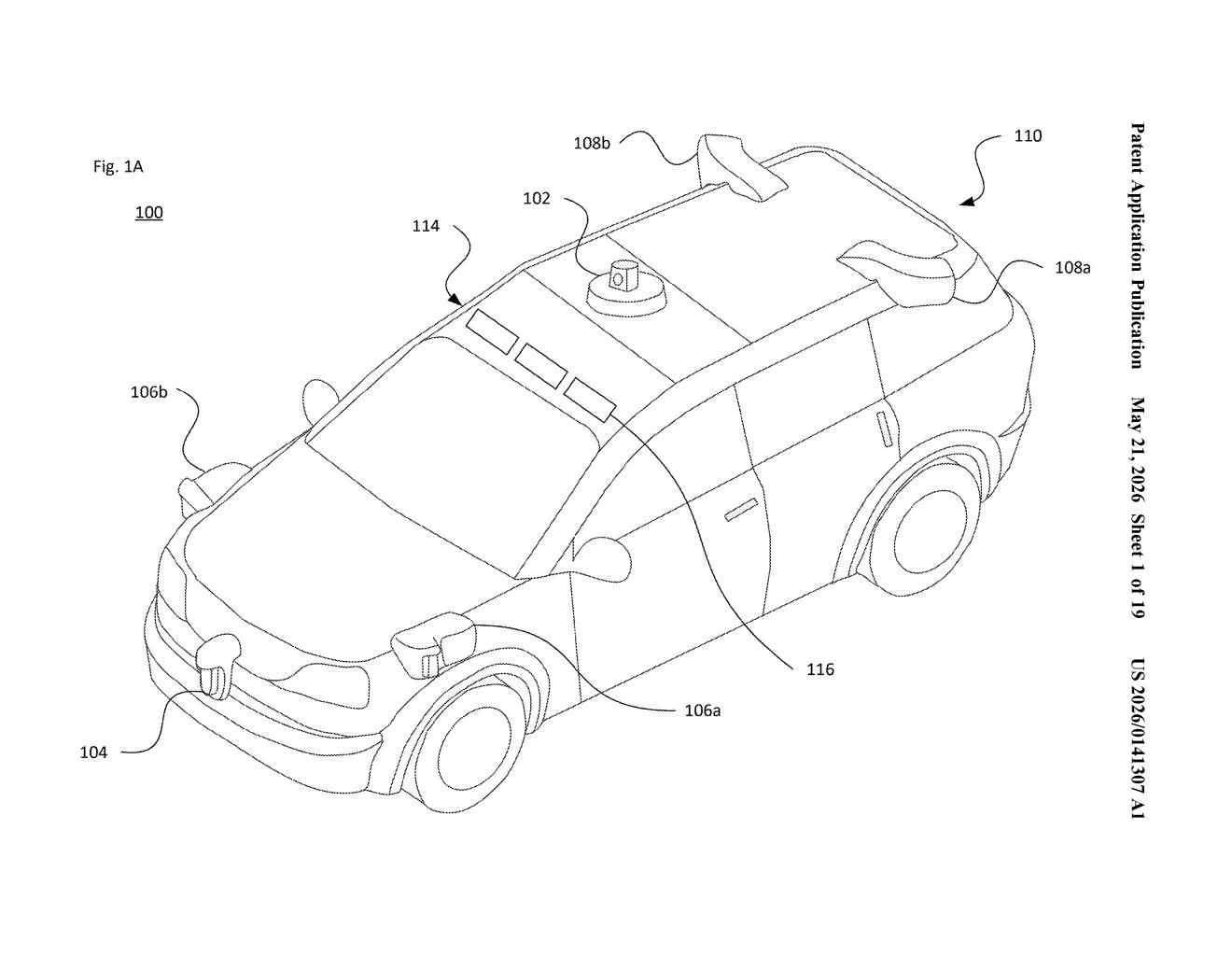
What Waymo's road wetness detection actually does
Imagine driving on a road that looks dry but has a thin film of water you can't see — the kind that causes hydroplaning. A human driver might not notice until it's too late. Waymo's patent describes a system that continuously estimates road wetness and ice coverage, giving its autonomous vehicles a much more detailed picture of what's actually under the tires.
The system pulls together data from the car's own sensors — cameras, lidar, radar — alongside external sources like weather services and nearby weather stations. A deep learning model processes all of that and outputs an estimate of how wet or icy the road is, not just whether it's raining.
Once the vehicle knows the road condition, it can act on it: slow down, reroute, adjust its planned path, or even trigger onboard sensor-cleaning systems to keep cameras and lidar working properly. It's the difference between a car that knows it's raining and one that understands what the rain is actually doing to the road.
How the model fuses sensor and weather data
At its core, this patent describes a machine learning pipeline trained on ground-truth measurements of water film thickness and ice coverage on real road surfaces — the kind of precise physical data you'd get from specialized road sensors or test track instrumentation.
That training data is combined with two categories of inputs:
- On-board signals: data from the vehicle's perception system (cameras, lidar, radar), plus internal vehicle modules like wiper speed or traction control feedback.
- Off-board signals: external weather measurements, weather service APIs, and potentially data from other vehicles or infrastructure.
The resulting model uses a convolutional neural network (a type of deep learning architecture that's especially good at pattern recognition in sensor and image data) with fully connected layers that output a road wetness classification or regression value — meaning it can output both a category ('icy,' 'wet,' 'dry') and a continuous estimate ('approximately 0.3mm water film').
Once deployed on a Waymo vehicle, the model runs inference using only live on-board and off-board signals — no need to reference the original ground-truth sensor data. The output feeds directly into the vehicle's motion planning and control stack, enabling it to adjust speed, reroute around flooded sections, modify planned trajectories, or activate sensor self-cleaning systems.
What this means for Waymo in rain, ice, and snow
Autonomous vehicles have historically struggled with adverse weather — not just because sensors get noisy in rain or snow, but because the vehicles lack a nuanced model of what those conditions mean for the road surface itself. A car that knows the road is wet can brake earlier, corner more cautiously, and plan routes that avoid known problem spots. That's a meaningful safety upgrade over a system that simply detects precipitation.
Waymo's commercialization ambitions make this especially relevant. Expanding its robotaxi service beyond Phoenix and San Francisco — cities with relatively mild weather — requires a credible answer to the 'but what about rain and ice?' question. A system that fuses live sensor data with external weather services to continuously model road surface conditions is a concrete step toward operating in places where weather is actually a factor in everyday driving.
This is genuinely useful, non-trivial work. Training on physical ground-truth measurements of water film thickness — not just weather data — is a meaningful methodological choice that moves beyond 'it looks like it might be raining' toward something closer to real physics. Whether this ships as a distinct module or gets absorbed into Waymo's broader perception stack, it signals that the company is taking adverse-weather operation seriously rather than just avoiding it.
Get our take in your Top Stories
Liked this breakdown? Add Patentlyze as a preferred source on Google, and our plain-English take shows up more often in your Top Stories the next time Google patent news breaks.
There are more where this came from
We read every patent application Big Tech publishes and send you the ones worth knowing. Plain English, free, every week.
Want this weekly breakdown for a company we don't cover? Patentlyze Pro →