
IBM Patents an AI That Catches Bad Data by Reading Rows Like Sentences
Bad data costs companies enormous amounts of money every year, and most tools for finding it are blunt instruments. IBM is patenting an AI that reads each row of a dataset the way a grammar checker reads a sentence, flagging cells that don't fit their context.
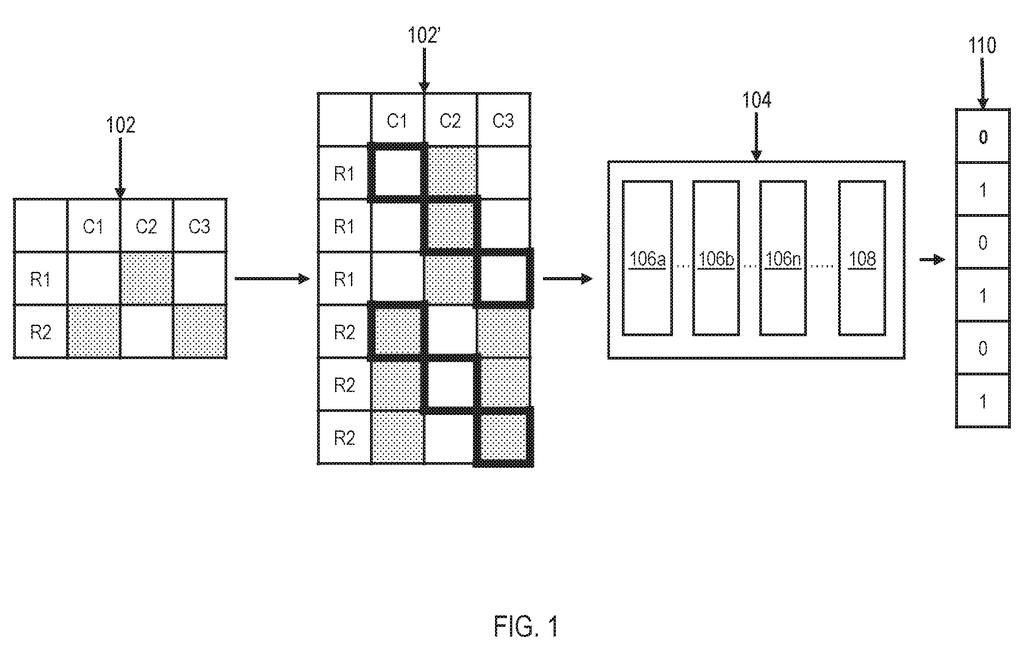
How IBM's row-context AI spots rogue spreadsheet cells
Imagine a massive spreadsheet where one row says a customer's age is 847, or a product price suddenly appears in a column meant for zip codes. Those errors are obvious to a human, but finding thousands of them buried across millions of rows is where things fall apart.
IBM's patented approach trains an AI to understand the relationships between cells in the same row. The AI looks at all the surrounding values to decide whether any single cell makes sense in context, the same way autocorrect leans on the words around a typo to figure out what you meant.
The clever part is how the training works: IBM deliberately injects fake errors into a clean dataset, labels those bad cells, and then teaches the AI to spot them. Once trained, the AI goes through your actual data row by row, examining every cell in turn, and flags the ones that look out of place given what their neighbors say.
performing data modification on selected data cells of an initial dataset, wherein the data modification imparts errors in the selected data cells; labeling the selected data cells as being erroneous, wherein the data modification and the labeling provide a training dataset with the errors imparted in the selected data cells; …
Translation: The system teaches the AI by deliberately messing up clean data and marking the mistakes.
How the model focuses on one cell at a time inside a full row
The patent covers two connected processes: building the AI model and then using it.
Training phase: IBM starts with a clean dataset and deliberately corrupts selected cells, introducing errors of various kinds. Those cells get labeled as erroneous, creating a supervised training set. The AI then processes each row repeatedly, each time putting a spotlight on one focus cell and deciding, based on what the surrounding cells say, whether that focus cell belongs there. This row-by-row, cell-by-cell loop gives the model a sense of contextual relationships, meaning it learns that a date column next to a name column implies certain value shapes, and a number wildly outside that pattern is suspicious.
Inference phase: Once trained, the model takes a new, unseen dataset and repeats the same iterative process. It selects a row, then steps through each cell in that row as the focus cell, outputting a classification: erroneous or not. It then moves to the next row and repeats.
The core technical insight is that the model is not just checking each cell in isolation against a rule or a value range. It is learning relational context, how cells within the same record relate to each other, and using that learned context to judge any individual cell. Think of it like a fact-checker who reads the whole paragraph before deciding whether one sentence is wrong.
… identify relationship(s) between cells of a row that inform a context of a focus cell and classify whether the focus cell is erroneous based on the informed context.
Translation: The AI checks each cell by looking at how it fits with the other data cells in the same row.
What this means for businesses drowning in dirty data
Dirty data is a constant headache for any organization that runs reports, trains its own AI models, or makes decisions from databases. A wrong value in one cell can cascade into a bad business decision or a flawed AI output downstream. Traditional data-quality tools mostly apply fixed rules ("this column must be a number") and miss errors that are technically valid values but contextually wrong.
IBM's steady investment in enterprise data-quality AI points toward tools that could be embedded in data pipelines, automatically reviewing incoming records before they pollute a database. For anyone whose job touches data preparation, that kind of automated, context-aware review could save significant manual checking time.
That makes this IBM's 33rd filing in the AI training and infrastructure filings we've tracked since May, joining one on catching data leaks from models and one on reprocessing garbled audio.
Claim 1 is broad. It covers any AI model built by injecting synthetic errors, labeling them, and training the model to classify focus cells using row-level context. That description fits a wide range of architectures, from transformer-based models to older sequence models, and the claim does not restrict itself to a particular type of error, dataset format, or industry.
That breadth has real implications. If granted as written, this claim could make it difficult for competitors to build any row-aware, context-driven data-cleaning AI that uses the same synthetic-error training trick, regardless of the underlying architecture they choose. The training-by-corruption idea is not new in machine learning generally, but claiming it specifically in the context of tabular data quality with this particular iterative, cell-by-cell framing is where IBM is staking its ground.
The practical value of the underlying idea is real. Context-aware error detection is genuinely better than rule-based checks for the kinds of errors that slip through normal validation. Whether the claim survives scrutiny at the patent office will depend heavily on what prior art exists in the data-cleaning and anomaly-detection literature, which is a crowded field.
There are more where this came from
We read every patent application Big Tech publishes and send you the ones worth knowing. Plain English, free, every week.
The drawings
8 drawing sheets from US 2026/0268113 A1 · click any drawing to enlarge


Want this weekly breakdown for a company we don't cover? Patentlyze Pro →