IBM
IBM · AI / ML · Filed Feb 17, 2025 · USPTO published Aug 20, 2026 · Aug 20 release
IBM Patents a System to Keep Corrupted Data Out of AI Code Generators
When an AI model has already seen the test questions during training, its scores don't mean much. IBM's new patent tackles that problem at the source, before the model ever gets trained.
- Publication number
- US 2026/0244896 A1(US20260244896A1)
- Applicant
- International Business Machines Corporation
- Filed · Published
- Feb 17, 2025 · Aug 20, 2026
- Inventors
- HIROSHI KANAYAMA, Takuya Ohko, Masayasu Muraoka, Issei Yoshida
- Status when we published
- Waiting for an examiner
- Document
- 20 claims
- US classification
- 706/16
What IBM's training data cleanup system actually does
Imagine you're a teacher grading a student, but the student somehow got a copy of your answer key weeks before the exam. Their score looks great, but it tells you nothing about what they actually know. That's the problem IBM is trying to solve for AI coding assistants.
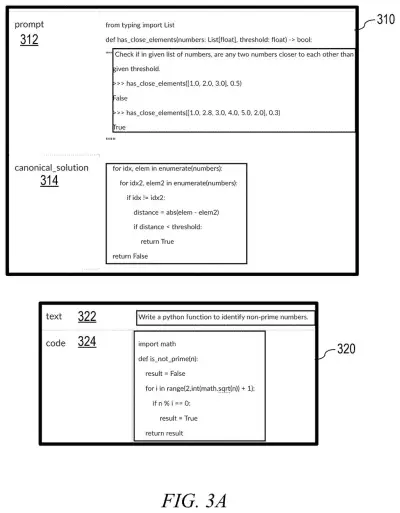
AI models that write code are evaluated on standardized tests called benchmarks. If chunks of those benchmark questions accidentally ended up in the model's training data, the model can "memorize" the answers rather than genuinely learn to code. IBM's patent describes a system that compares training data against benchmark content, flags entire code repositories where overlap shows up too often, and scrubs those repositories before training begins.
The result is a cleaner dataset and, in theory, benchmark scores you can actually trust. It's a behind-the-scenes quality control step, but it directly affects whether the AI coding tool you use has been honestly evaluated.
… generating one or more contamination metrics for each repository in the one or more repositories, based on a frequency of the instances of the content-sharing data in the one or more repositories; …
Translation: Calculating a contamination score for code sources by counting how often the matching test data appears.
How IBM scores repositories for benchmark contamination
The patent describes a multi-step pipeline for detecting and removing what researchers call benchmark contamination (situations where test material leaks into training data, inflating a model's apparent performance).
- Content matching: The system compares strings of text between benchmark datasets and training datasets to find shared passages. Think of it as a plagiarism detector running in reverse.
- Repository identification: Rather than flagging individual files, the system traces matches back to their source repositories (the code libraries or data collections the training samples came from).
- Contamination metrics: For each repository, the system calculates a score based on how frequently shared strings appear inside it. A repository with many benchmark-matching passages scores higher on the contamination scale.
- Selective decontamination: Repositories that cross a contamination threshold are identified as tainted. Training samples linked to those repositories (tracked via metadata) are then removed or excluded before the model trains.
The final step is training the code-generation large language model (LLM) on whatever data survives the cleanup. The key design choice is working at the repository level rather than the individual-file level, which makes the process more practical at scale since modern training datasets contain billions of files spread across millions of repositories.
Mechanisms are provided for decontaminating training data for training a code generation large language model (LLM).
Translation: The system cleans up the training datasets used to build artificial intelligence coding assistants.
What this means for trusting AI coding benchmarks
Benchmark contamination is a known problem in AI research, but it's hard to police because training datasets are enormous and benchmarks are public. If a model's reported accuracy is partly a product of memorization rather than genuine skill, engineers and companies making decisions based on those scores are operating on bad information. IBM's approach, scoring entire repositories rather than hunting for individual contaminated files, offers a way to catch contamination patterns that file-by-file scanning would likely miss.
For anyone relying on AI coding tools in production, the trustworthiness of the underlying benchmarks matters more than it might seem. A model that "aced" a test it had already seen may underperform in real conditions. IBM's approach to training-data hygiene sits inside a broader wave of new Big Tech patents aimed at making AI model evaluation more rigorous and less gameable.
IBM's 34th filing we've tracked since May in the AI guardrails race builds on one catching its own mistakes and one scoring bias against protected groups.
Source: US 2026/0244896 A1 at the USPTO (PDF). Full patent text and figures are in the official publication.
Get our take in your Top Stories
Liked this breakdown? Add Patentlyze as a preferred source on Google, and our plain-English take shows up more often in your Top Stories the next time IBM patent news breaks.
Add Patentlyze on Google
One click.
There are more where this came from
We read every patent application Big Tech publishes and send you the ones worth knowing. Plain English, free, every week.
The drawings · 5 sheets
5 drawing sheets from US 2026/0244896 A1 · click any drawing to enlarge


More from IBM
All 470 IBM patents →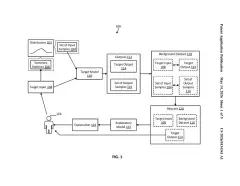
More in AI training & infrastructure
All 316 AI training & infrastructure patents →
Adobe
Adobe Patents a Way to Send Human Reviewers Only the Data That Will Trip Them Up
Samsung
Samsung Patents a Double-Check System for AI Code Training Data
Samsung
Samsung Patents a System That Makes AI Grade Its Own Homework
Microsoft