
IBM Patents an AI That Tracks Daily Device Habits to Flag Alzheimer's Risk
IBM has filed a patent for a system that watches how you use your devices over time and uses that data to calculate your Alzheimer's risk, flagging a warning before symptoms become obvious. The idea: your phone or computer may notice cognitive changes before you or your doctor do.
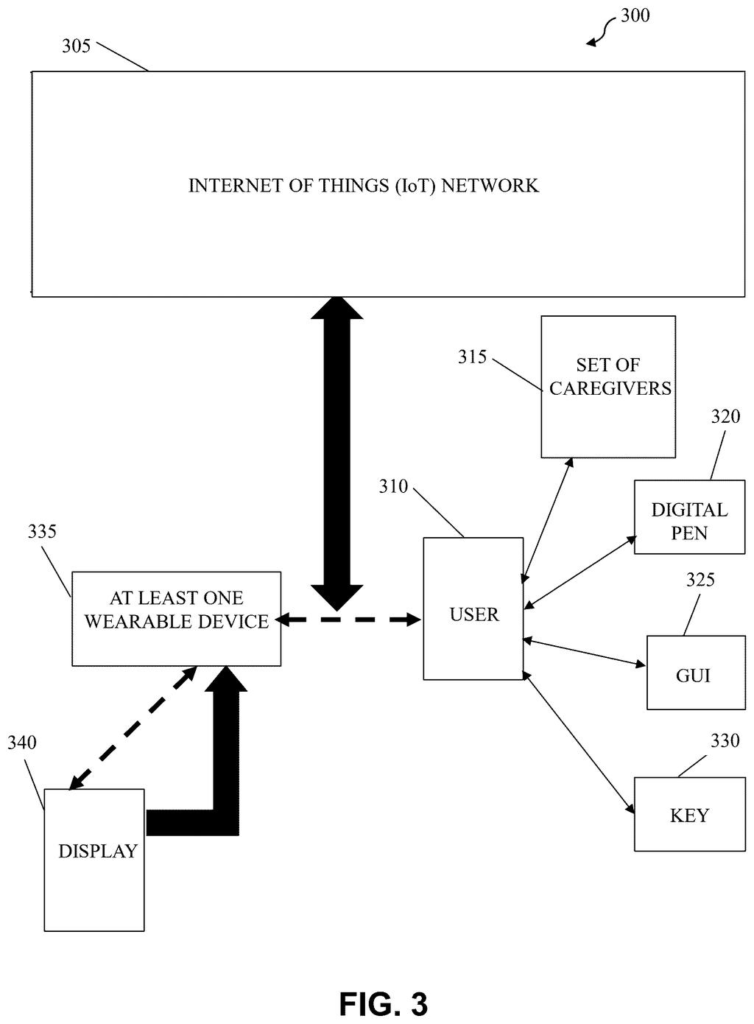
How IBM's AI watches for cognitive changes over time
Every time you pick up your phone and type a message, swipe through an app, or pause longer than usual before responding to a notification, you're leaving a trace. IBM's patent describes a system that collects those behavioral traces and turns them into a picture of how your mind is functioning.
The system builds a profile of you specifically, then trains an AI on that profile alongside data from many other users over time. It produces two scores: one that reflects your long-term cognitive baseline and one that reflects right now. When the two diverge enough to suggest a problem, the system sends an alert.
This isn't a one-time test. The monitoring is continuous and personal, which is what makes it different from a clinical screening. Your device becomes a kind of ongoing cognitive checkpoint comparing today's version of you to yesterday's.
… determining a long term cognitive state score (CSS) and a real-time CSS using the trained AI model; determining that an Alzheimer's risk score is below a predetermined Alzheimer's threshold based on the long term CSS and the real-time CSS …
Translation: The system calculates ongoing and current mental scores to evaluate potential disease risk.
How the system scores short-term and long-term brain health
The patent describes a pipeline that starts with user data collected from a device, likely behavioral signals like typing speed, response latency, navigation patterns, or interaction timing, though the patent does not specify which signals exactly.
From that data, the system builds a user profile and trains an AI model using both that profile and historical profiles from other users. That combination matters: it lets the model understand what normal aging looks like across a population while still accounting for your individual baseline.
The trained model then calculates two distinct outputs:
- Long-term cognitive state score (CSS): a stable measure of your cognitive health over an extended period
- Real-time CSS: a snapshot of how you're functioning right now
When the system determines that your Alzheimer's risk score (derived from both scores) falls below a preset threshold, it sends a notification. The framing here is important: the alert fires when the risk calculation crosses a line, not when a single bad moment occurs. That design helps filter out noise from a rough day or a distraction.
… train an artificial intelligence (AI) model using the user profile and historical user profiles; determine a long term cognitive state score (CSS) and a real-time CSS using the trained AI model …
Translation: It trains machine learning models on current and past user data to measure brain function over time.
What early Alzheimer's detection could mean for you
For most people, Alzheimer's goes undetected until symptoms are already affecting daily life. A system like this could move the detection window years earlier, when interventions, lifestyle changes, or clinical trials are most likely to help. The value isn't just medical; earlier detection can give people and families more time to plan.
The practical question is what the notification actually triggers. A flag sent to you is different from one sent to a doctor, a caregiver, or an insurer. IBM's run of AI-in-healthcare filings suggests this sits inside a broader push, but this patent alone doesn't settle who receives the alert or what happens next. Those details will determine whether this becomes genuinely useful or just anxiety-inducing.
That makes this IBM's 20th filing we've tracked in AI vision since May, a group that includes work on which pixels flag objects and AI-written search summaries.
For someone with a family history of Alzheimer's, the difference between a yearly doctor's visit and a phone tracking cognitive changes every day is enormous. You stop waiting to feel worried enough to book an appointment. The system catches drift you would never notice yourself.
The weak spot is what happens after the warning fires. The patent describes sending a notification when your risk score drops below a safe threshold, but says nothing about who receives it or what comes next. An alert without a clear path to a doctor is a source of fear, not help.
The approach of comparing your personal baseline against broader patterns is well-matched to a disease that changes slowly over years. Whether enough people will share the behavioral data required to make it accurate is the real question this patent leaves open.
There are more where this came from
We read every patent application Big Tech publishes and send you the ones worth knowing. Plain English, free, every week.
The drawings
5 drawing sheets from US 2026/0279582 A1 · click any drawing to enlarge


Want this weekly breakdown for a company we don't cover? Patentlyze Pro →