
Google Patents a Way to Cut the Blurry Halo From Glasses-Free 3D Screens
Glasses-free 3D screens have always had a ghost problem: light meant for one eye leaks into the other, turning the image muddy. Google has filed a patent describing a targeted fix at the pixel level.
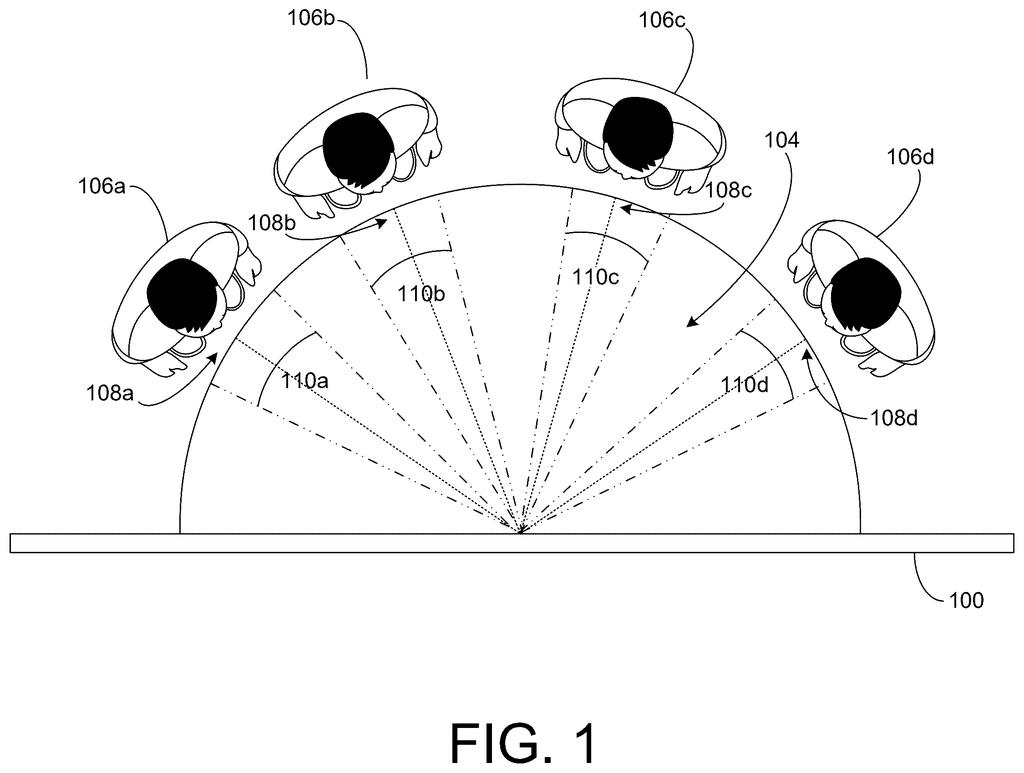
What Google's glasses-free 3D display fix actually does
Every time a glasses-free 3D screen tries to show your left eye and right eye different images at the same time, something messy happens at the edges: light bleeds across, and your brain receives a confused double signal.
Google's patent addresses this by deliberately dimming the pixels around the border of each eye's image zone. Think of it like turning down the lights at the edge of a spotlight so it doesn't spill onto the next performer. Each eye still gets its own full picture in the middle, but the fade-out at the rim means far less rogue light reaches the wrong eye.
The result, in theory, is a sharper, more convincing 3D image with no glasses required. This kind of display already exists in niche form on some tablets and gaming devices, but crosstalk (the leaking-light problem) has always been the main reason the experience feels cheap. Google's approach targets that specific weak point.
… applying a first intensity profile to the first subset that includes a reduced intensity at a periphery of the left eye image to thereby reduce crosstalk.
Translation: Dimming the edges of the picture makes the 3D effect look much cleaner.
How Google dims the pixel edges to stop image bleed
An autostereoscopic display (a screen that creates a 3D effect without special glasses) works by sending slightly different images to your left and right eyes simultaneously. It does this by assigning different groups of subpixels (the tiny red, green, and blue dots that make up each full pixel) to each eye's view.
The core problem is crosstalk: light from subpixels meant for your left eye spills over and hits your right eye too, and vice versa. The more crosstalk, the ghostier and flatter the 3D effect looks.
Google's patent describes a method for applying an intensity profile to each group of subpixels. Instead of every subpixel in a zone lighting up at full brightness, the ones near the edges of that zone are dimmed. The technical term for this shape is a tapered or reduced-intensity periphery. The center of each eye's image zone stays bright and detailed; the edges fade out gently.
- The system determines a left-eye image and a right-eye image as a stereoscopic pair.
- It identifies which subpixels will form each image.
- It applies a custom brightness curve to each group, pulling down the edge intensities to cut light spill.
This is a software-and-firmware-level instruction to the display driver. The display hardware itself does not necessarily have to change, though specific implementations could involve tuned backlight or emitter arrangements.
What this means for glasses-free 3D consumer screens
Glasses-free 3D has been a recurring promise in consumer electronics for over a decade, and crosstalk is consistently the reason it disappointments. Reducing it through per-pixel brightness shaping, rather than adding bulkier optics, keeps the display thin and manufacturable with existing panel technology.
For you as a potential buyer, this is the difference between a 3D screen that strains your eyes after two minutes and one that feels natural enough to actually use. Google files patents across display hardware, AR, and video processing, so this could inform anything from a future tablet to a spatial computing device, though nothing specific is confirmed by this filing alone.
That makes this Google's 41st filing we've tracked in our smart glasses display watchlist since May, adding to work like anchoring AR images to reality and fixing flex-related accuracy loss.
The core change here lives in software: the system dims the edges of each sliver of image so that light meant for your left eye does not spill into your right eye and create a ghostly blur. No new screen materials or optics are required, just a smarter set of instructions for how the screen lights itself.
The catch is that the right physical screen has to exist first. A display built with the necessary layered arrangement could potentially receive this improvement as a driver update rather than a hardware swap, which shortens the road to a finished product considerably.
Google does not currently sell a glasses-free 3D display, so this is a solution looking for its product. What it solves, though, is the exact thing that has made every glasses-free 3D screen feel unfinished: tilt your head slightly and the image collapses into noise. Remove that problem cleanly, and the main reason these screens never caught on disappears with it.
There are more where this came from
We read every patent application Big Tech publishes and send you the ones worth knowing. Plain English, free, every week.
The drawings
9 drawing sheets from US 2026/0281293 A1 · click any drawing to enlarge


Want this weekly breakdown for a company we don't cover? Patentlyze Pro →
Be the first to weigh in