
Qualcomm Patents a Way for Cars to Focus Their Sensor Data on the Most Dangerous Objects First
A self-driving car generates more data every second than most people store in a year. Qualcomm's new patent describes a system that figures out which objects on the road are actually dangerous, then throws more processing power at those and less at everything else.
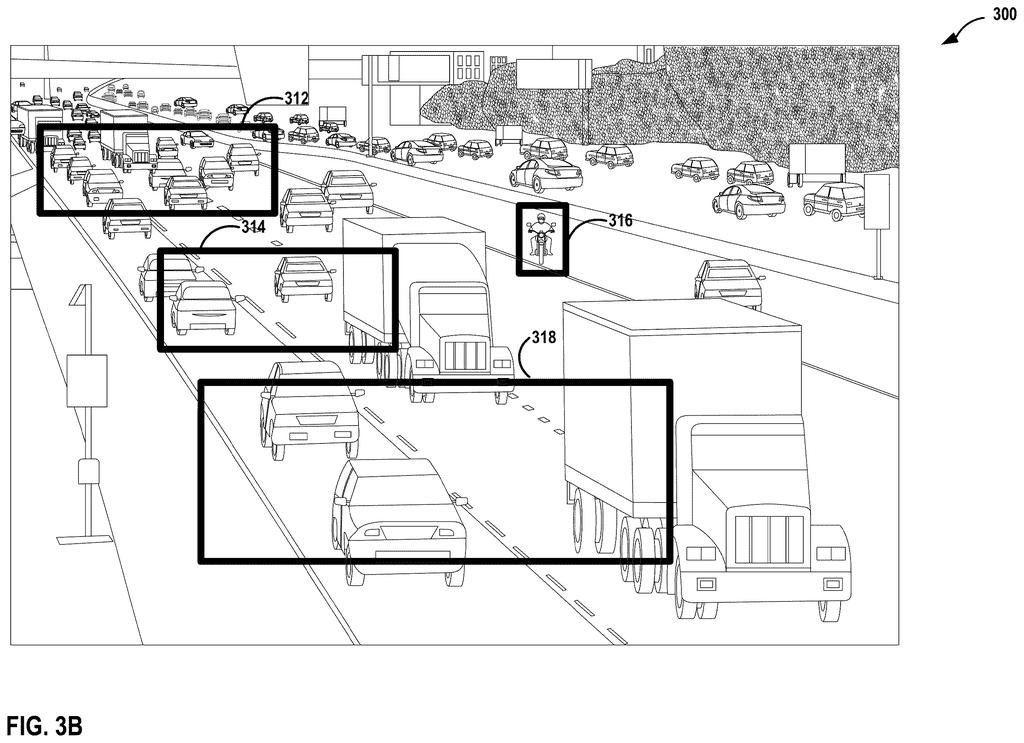
How Qualcomm's priority-ranked sensor trick works in a car
Today, cameras and sensors on a car treat every part of the scene the same way: a parked car three blocks away gets the same attention as a pedestrian stepping off the curb two feet ahead. That wastes processing time and can slow down the decisions that matter most.
Qualcomm's patent describes a system that watches the scene around the car, ranks every object by how likely it is to get in the vehicle's way, and then splits the sensor data accordingly. High-risk zones get higher-quality, higher-priority data. Low-risk zones, like an empty field to the side, get compressed down to save bandwidth and computing power.
Think of it like a surgeon who pays close attention to the area being operated on while a nurse handles the routine monitoring elsewhere. The car's chip stays focused where the actual danger is, which could mean faster, more reliable reactions in the moments that count.
… determine priority levels of the plurality of external objects based on the at least one respective attribute of each external object, wherein the priority levels of the plurality of external objects are indicative of respective likelihoods of the plurality of external objects interfering with the device; …
Translation: The system figures out which surrounding objects pose the greatest collision threat to the vehicle.
How the chip scores threats and formats sensor regions
The system works in three main steps, all happening in real time on the car's onboard chip:
- Attribute detection: The processing circuitry reads incoming sensor data (camera, lidar, radar, or a combination) and extracts attributes of every external object it sees: size, speed, heading, distance, and how those factors are changing over time.
- Priority scoring: Each object gets a priority level based on how likely it is to interfere with the vehicle. A car accelerating into your lane from a merge scores higher than a cyclist sitting at a red light a block away.
- Adaptive formatting: The sensor data is split into regions that map to those priority levels. High-priority regions are formatted at full fidelity or with minimal compression. Low-priority regions are compressed more aggressively, reducing the data volume the system has to move and process.
The word "lookahead" in the patent title refers to the system anticipating potential conflicts before they develop, not just reacting to objects that are already a problem. This predictive step is what separates priority-based compression from simple distance-based cropping.
The patent covers both the segmentation logic and the formatting decisions, meaning the claims span how the scene is divided and how each segment's data is handled afterward.
… segment the sensor data into a plurality of portions of the sensor data associated with regions of the environment based on the priority levels of the external objects in the regions of the environment.
Translation: It then divides up the data so the car focuses more computer power on the dangerous areas.
What this means for self-driving chips and real-time safety
Autonomous and driver-assistance systems are running up against a hard ceiling: there is only so much bandwidth and computing power available on a moving vehicle, and the volume of raw sensor data keeps growing as carmakers add more cameras and sensors. A system that intelligently trims what gets processed at full resolution, rather than brute-forcing everything, could let the same hardware handle more complex traffic situations safely.
For you as a driver or passenger, the downstream effect is a vehicle that responds more quickly in genuinely dangerous situations because its chip isn't spending equal time analyzing an empty parking lot and an oncoming truck. Qualcomm's run of automotive perception filings suggests this is a sustained engineering priority, not a one-off idea. The approach also has implications for how much data vehicles need to transmit to the cloud for processing, which cuts costs and latency together.
Qualcomm's 36th filing we've tracked since July in the self-driving sensing race adds to a run that includes orientation-free object boxing and cross-checking false location reads.
The gap between what a car's sensors capture and what its computers can act on in time is where accidents happen. That gap is not a software quirk to be patched later; it is the central reason fully reliable self-driving cars remain out of reach despite years of promises.
Sorting nearby objects by how likely they are to cause a collision, then spending more computing power on the dangerous ones, treats that problem at the right scale. It mirrors how an attentive human driver actually allocates attention, which suggests the logic is sound at a basic level.
The approach lives or dies on how accurately the car predicts danger before deciding what to compress. A wrong guess about which object matters most corrupts everything that follows, and the harder question is how well that prediction holds up in rain, at high speed, or in chaotic traffic.
There are more where this came from
We read every patent application Big Tech publishes and send you the ones worth knowing. Plain English, free, every week.
The drawings
9 drawing sheets from US 2026/0278843 A1 · click any drawing to enlarge


Want this weekly breakdown for a company we don't cover? Patentlyze Pro →