
Google Patents AI Audio Technology That Generates Natural-Sounding Dialogue Without Robotic Quirks
AI-generated audio has a tell: it sounds like a robot trying to be polite. Google's new patent describes a system designed to fix that, using two separate AI models that each handle a different part of writing a script.
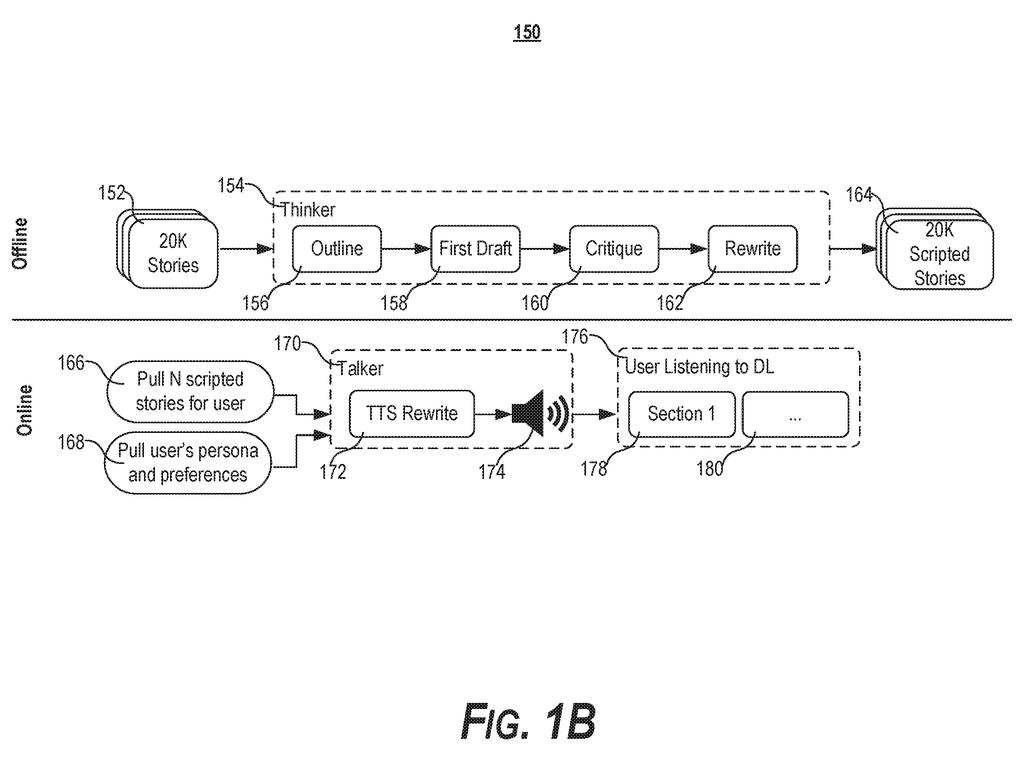
What Google's two-model audio script system actually does
You're listening to an AI-generated summary of a long document, and within thirty seconds you can tell it's a machine. The delivery is flat, the transitions are clunky, and it keeps complimenting you on your interest in the topic.
Google's patent describes a system built to fix those problems. The first AI model reads through whatever content you give it, whether that's an article, a report, or a document, and produces a basic transcript covering the key topics. Then a second, leaner AI model takes that draft and rewrites it to sound more like something two actual people might say out loud: natural phrasing, real transitions, the kind of back-and-forth that doesn't make you cringe.
The clever part is that the second model is intentionally smaller and faster than the first. That setup lets the system personalize the rewrite for different listeners without burning huge computing resources every time someone hits play.
… generating, using a second, different machine-learned model, by the computing system, the revised transcript from the transcript, wherein the revised transcript includes an increased number of linguistic characteristics indicative of human speech …
Translation: A second AI model rewrites the transcript to sound much more like a real person talking.
How the two models split the transcript writing job
The patent describes a multi-model architecture for turning a body of text or data into a polished audio transcript. The process runs in two distinct stages.
First, a large AI model (think of it as the researcher) reads a corpus of context data and generates an initial transcript. That transcript is essentially a structured summary: here are the topics, here is the information. It is accurate but not yet human-sounding.
Second, a separate, smaller model (the editor) takes that draft and revises it to include what the patent calls linguistic characteristics indicative of human speech. These include things like natural sentence rhythm, realistic turn-taking between speakers, and the absence of the flat or overly formal tone that plagues most AI audio. The patent specifically calls out problems it is trying to solve: preachy tones, excessive flattery, monotone delivery, and awkward transitions.
The key design choice is that the second model has fewer parameters and lower inference latency (meaning it runs faster and costs less to operate) than the first. This split architecture matters because personalization, adjusting the rewrite for a specific listener's preferences, happens in the second stage, where it can be done cheaply and quickly at scale.
… traditional large models such as large language models (LLMs) or similar often produced audio content that sounded unnatural due to issues such as preachy tones, excessive flattery, awkward transitions, monotone delivery, and/or limited conversation length …
Translation: Older AI models sounded robotic and awkward because they suffered from weird tones and stilted pacing.
What this means for AI-generated podcasts and audio summaries
If this system works as described, it changes what AI-generated audio can realistically do. Today, AI summaries and podcast-style content often feel like a text-to-speech engine reading a Wikipedia article. Google's track record in AI-generated content patents suggests this is part of a longer push toward audio that can substitute for human-produced shows, briefings, or educational content.
For you as a listener, the practical difference is whether you can get through a ten-minute AI-generated briefing without tuning out. For publishers and app developers, it is about whether AI audio is good enough to put in front of paying users. The patent is also notable for explicitly naming the quality failures it aims to fix, which is a more honest framing than most filings manage.
Google's 19th filing we've tracked since May in our AI teams working together watchlist follows its self-checking code translation patent and automated ad-building patent.
Claim 1 is broad enough to raise eyebrows. It covers any system that uses a first model to generate a transcript and a second, smaller model to revise it for naturalness. That framing does not specify a particular AI architecture, a particular type of audio, or a particular definition of what counts as sounding human. That is a wide net.
In practice, what the claim would block, if granted, is any competitor building a two-stage transcript pipeline where the second stage is explicitly optimized for naturalness and runs on a leaner model. The personalization angle adds a bit more specificity, but the core claim is really about the division of labor between a heavy first model and a lighter second one.
The patent earns some credit for being honest about the failure modes it is fixing. Most AI audio patents describe what the system does well; this one lists the embarrassing things it is trying to stop doing. That specificity helps clarify what the system is actually for, even if the claim language itself casts a broad shadow.
There are more where this came from
We read every patent application Big Tech publishes and send you the ones worth knowing. Plain English, free, every week.
The drawings
19 drawing sheets from US 2026/0279336 A1 · click any drawing to enlarge


Want this weekly breakdown for a company we don't cover? Patentlyze Pro →