
Samsung Patents a Faster Method for Video Software to Locate Duplicate Picture Regions
Every time you stream a video, your device is hunting for repeated patterns inside each frame to compress the data down. Samsung has filed a patent for a technique that makes that hunt faster by comparing compact mathematical summaries instead of raw pixel grids.
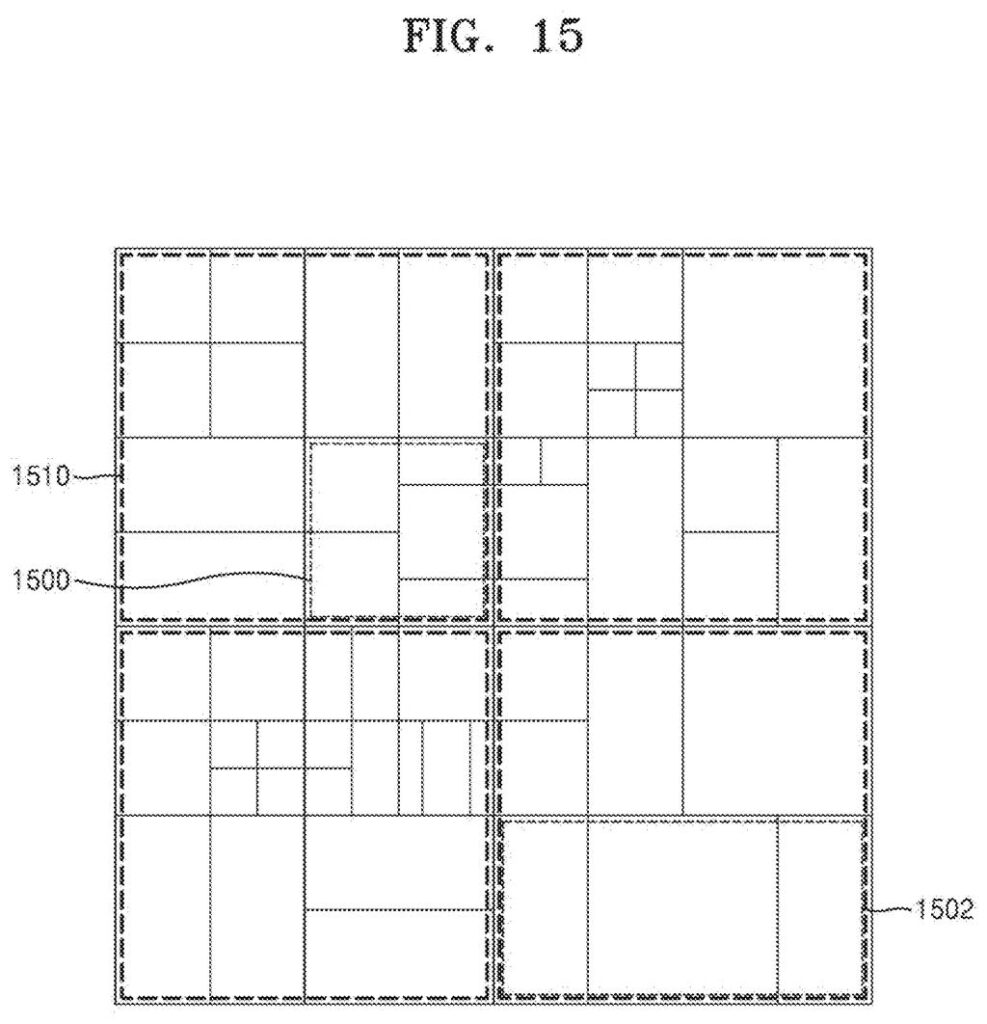
How Samsung's template matching speeds up video compression
Ever wondered why a two-hour movie can fit on your phone? Video files stay small because the software that encodes them notices when one part of a frame looks like another part, copies the match, and throws away the duplicate data. Finding those matches is the expensive part, and it gets harder as resolution goes up.
Samsung's patent describes a shortcut. Instead of comparing every raw pixel in a candidate area, the system first runs a mathematical transform on a narrow border of pixels around each block (called a "template"). That transform squashes the border into a compact summary. Then the system compares summaries, not full pixel grids, which is much faster.
The result is that the video encoder or decoder can search a bigger area for good matches without taking much longer, which can translate to either better picture quality at the same file size or the same quality at a smaller file size. Both outcomes matter on phones, tablets, and streaming boxes where bandwidth and storage are real constraints.
determining a transformed template of a current block by performing a transform on a template of the current block; determining transformed templates of a plurality of candidate blocks by performing a transform on templates of the plurality of candidate blocks in a search region; …
Translation: The software converts the target video section and surrounding options into simplified mathematical formats to compare them quickly.
How the transform step cuts down block comparison work
The patent covers both encoding (compressing video) and decoding (playing it back). The core idea is template matching in the transform domain.
In standard video compression, a "block" is a small rectangular patch of pixels. To predict what a block will look like, the codec searches nearby areas for a patch that resembles it, then stores only the difference. The search normally compares raw pixel values, which is computationally heavy when you run it across thousands of blocks per frame.
Samsung's method adds a transform step (a mathematical operation that converts pixel data into frequency-like coefficients, similar in spirit to how JPEG compresses still images) to the template: the thin strip of already-decoded pixels that borders the current block. The same transform is applied to the border strips of every candidate block in the search region. Now comparisons happen in the transformed space rather than pixel space.
Key steps in the claimed method:
- Apply a transform to the current block's border strip to produce a transformed template.
- Apply the same transform to border strips of all candidate blocks in the search region.
- Compare those transformed templates to find the closest match.
- Use the best-matching candidate as the reference block for prediction.
- Reconstruct the current block from the prediction, correcting any remaining error.
Because transform-domain comparisons can be computed more efficiently than raw pixel comparisons, the search can cover more candidates in the same time budget.
… comparing the transformed template of the current block with the transformed template of each of the plurality of candidate blocks; on the basis of the result of the comparison, determining a reference block of the current block from among the plurality of candidate blocks; …
Translation: It matches the target section against the options to find the best preexisting duplicate in the video data.
What this means for streaming and device video quality
Video compression is foundational to streaming, video calls, and on-device recording, and the patents that shape it get baked into codec standards (like HEVC or VVC) that every device on the planet eventually runs. A faster, more accurate block-search method can mean your phone encodes 4K video with less heat and battery drain, or a streaming service delivers the same quality at a lower bitrate.
That said, the practical payoff here is incremental rather than dramatic. Samsung's track record in video codec patents suggests this fits a long-running effort to squeeze efficiency out of each stage of the compression pipeline. The gains from any single technique like this are typically measured in fractions of a percent of bitrate reduction, meaningful at scale but invisible to any individual viewer.
Samsung's 122nd filing we've tracked in our camera sensor push since May builds on the two-stage image storage idea and the open hardware camera access patent.
The method described here is software, not a new chip or piece of hardware. Before it reaches any product, someone has to weave it into a working video encoder or decoder, run it through industry conformance tests, and get it accepted into a standard or a proprietary system.
Samsung builds its own video processing chips and licenses video technology widely, so the paths to a real product do exist. The fastest route is probably a firmware or software update to an existing system, not a new hardware program.
The technique solves a specific efficiency problem in video compression by cutting down how much a decoder has to search when reconstructing an image. That matters and reliably to anyone who streams video or records it, even if no one ever sees this patent's name on a box.
There are more where this came from
We read every patent application Big Tech publishes and send you the ones worth knowing. Plain English, free, every week.
The drawings
29 drawing sheets from US 2026/0281348 A1 · click any drawing to enlarge


Want this weekly breakdown for a company we don't cover? Patentlyze Pro →