
Samsung Patents a Two-Stage AI Approach to Storing and Sending Images More Efficiently
Samsung has filed a patent for an image compression method that splits the job between two different types of neural networks, one that can perfectly undo its own work and one that can't, to squeeze images down more efficiently than a single network could.
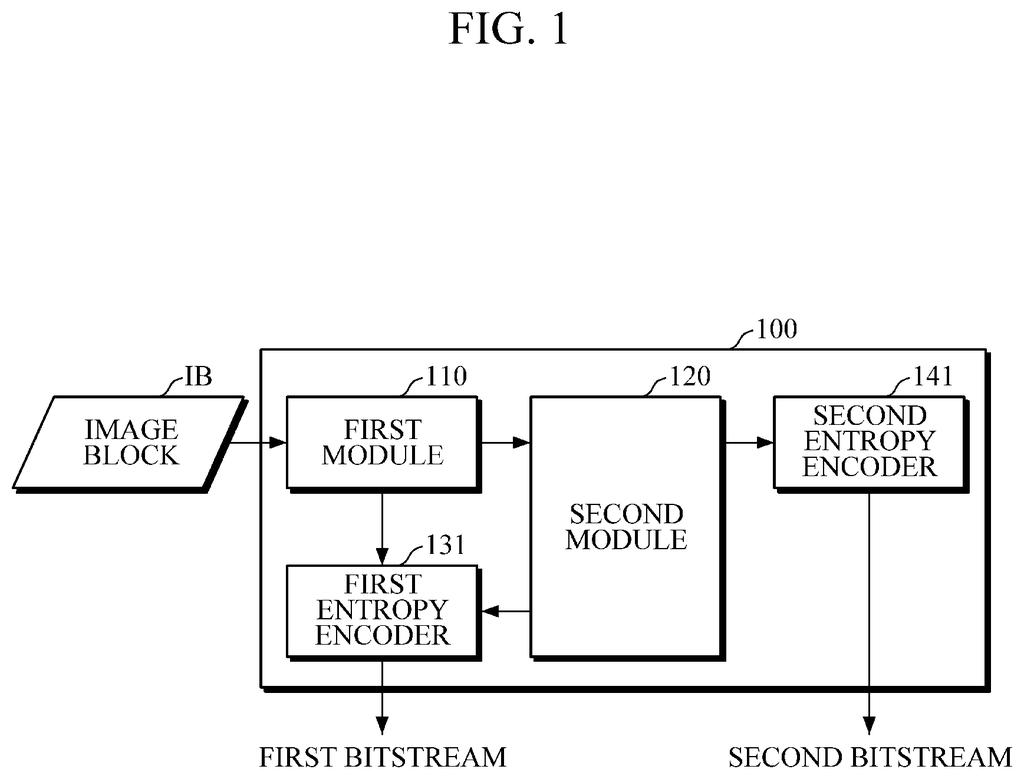
What Samsung's two-stage image compression actually does
You're backing up thousands of vacation photos to the cloud and the upload is crawling because each file is enormous. Compression is what shrinks those files, but standard compression tools make a trade-off: the more you compress, the more detail you lose.
Samsung's approach uses two neural networks in sequence. The first network converts your image into a compact numerical description in a way that can be perfectly reversed (think of it like folding a piece of paper so precisely that you can always unfold it back to its original shape). The second network then analyzes that description to figure out the statistical patterns inside it, which tells the system where it can afford to cut data without wrecking the image.
That pattern analysis feeds into entropy encoding, a well-established compression technique that stores common patterns with fewer bits, like how Morse code gives the letter E the shortest signal because it appears most often. The twist here is using a neural network to make that analysis much more accurate than traditional methods.
transforming an image block into a first latent representation based on an invertible neural network; transforming the first latent representation into a second latent representation based on a non-invertible neural network; …
Translation: The system processes the image through two different types of neural networks in sequence.
How the invertible and non-invertible networks split the work
The patent describes a pipeline with four main steps:
- Invertible neural network (INN) encoding: An image block is fed into a neural network whose math is designed to be fully reversible. It converts the raw pixel data into a "latent representation" (a compressed numerical summary) with no information permanently discarded at this stage.
- Non-invertible neural network (NINN) analysis: That first summary is passed to a second network that is not reversible. This network extracts higher-level statistical patterns from the data. Because it doesn't need to preserve a reversal path, it can do more aggressive, flexible analysis.
- Probability estimation: The second network's output is used to estimate a probability distribution of the first latent representation, meaning it predicts how likely each value in the compressed data is to appear. Think of it as building a statistical map of the data before you store it.
- Entropy encoding: Armed with that probability map, an entropy encoder compresses the first latent representation. Values that appear often get short codes; rare values get longer ones. This is the same idea behind ZIP files, just driven by a neural network's predictions instead of fixed rules.
The decoding side runs the invertible network in reverse to reconstruct the original image. Because the first network is perfectly invertible, the reconstruction can be mathematically exact for that stage, which limits the quality loss to only what the entropy encoding step introduces.
… estimating a probability distribution of the first latent representation, and performing entropy encoding on the first latent representation based on the probability distribution by using an entropy encoder.
Translation: It calculates data patterns to compress the image data as efficiently as possible for storage.
What this means for video streaming and storage quality
For everyday users, better compression means higher-quality images and video at the same file size, or the same quality at a smaller size. That translates directly to faster uploads, less storage cost, and better-looking video calls and streaming at low bandwidth.
For Samsung specifically, this sits at the intersection of its camera hardware, its Galaxy device storage, and its semiconductor business. A proprietary neural compression method that outperforms standard codecs (like HEVC or JPEG) could show up in camera pipelines, cloud backup services, or even broadcast and medical imaging equipment. Samsung's run of neural image-coding filings suggests the company is treating AI-driven compression as a long-term platform, not a one-off optimization.
Samsung's 121st filing we've tracked since May in our camera sensor push work builds on apps reaching phone hardware and pixel shifts for cleaner photos.
Samsung's design locks the first compression network into a strict rule: whatever it does to an image, a decoder can perfectly undo it. That constraint buys perfect reconstruction but costs the network some freedom to find clever shortcuts, so a second network has to be added on top to handle the statistical work the first one cannot do as freely.
Running two networks in sequence is the real price of this approach. On a phone or a low-power device, that sequential compute load could disqualify the design before it ever reaches users, regardless of how good the output looks.
The trade reads clearly for high-stakes settings like medical imaging or broadcast production, where quality loss carries real consequences and power budgets are generous. For everyday video calls or streaming, the overhead may simply be too much to absorb.
There are more where this came from
We read every patent application Big Tech publishes and send you the ones worth knowing. Plain English, free, every week.
The drawings
15 drawing sheets from US 2026/0281464 A1 · click any drawing to enlarge


Want this weekly breakdown for a company we don't cover? Patentlyze Pro →