
Apple Patents Animated QR Codes That Pack More Data Into Moving Images
A regular QR code can only hold so much, Apple's new patent describes a system that turns a scannable code into a short animation, cycling through multiple frames to pack in far more information than a single static image ever could.
What Apple's animated QR-code system actually does
Ever tried to cram a long web address or a full digital ticket into a tiny QR code and watched it turn into a dense, nearly unscannable mess? That density problem is real, and it gets worse the more data you try to encode.
Apple's patent describes a system that solves this by turning a static code into a short looping animation. Instead of squeezing everything into one frame, the system breaks your data into chunks and displays each chunk as a separate frame in sequence, the way a flip-book works. A camera or scanner reads all the frames together and reassembles the full picture.
The result is a code that can carry much more information without becoming visually unreadable, and that can be embedded directly into images or videos on a screen rather than printed on paper.
… generating a sequence of visual elements based on the input data, (3) separating the sequence of visual elements into a plurality of visual element groups based on a number of containers that are simultaneously displayed within the animated code …
Translation: Apple's system breaks down input data into chunks to fit the moving code's layout.
How Apple splits data across animated code frames
The patent describes a six-step pipeline for creating what Apple calls an animated code, which works like a multi-frame QR code.
- Input data arrives and is converted into a sequence of visual elements (the dots, squares, or patterns that encode the underlying information).
- Those elements are grouped into batches, with the number of groups determined by how many on-screen containers (think: defined display zones) will be shown at once.
- Each group becomes one frame in an animation sequence. Each frame is formatted to fit neatly inside those containers.
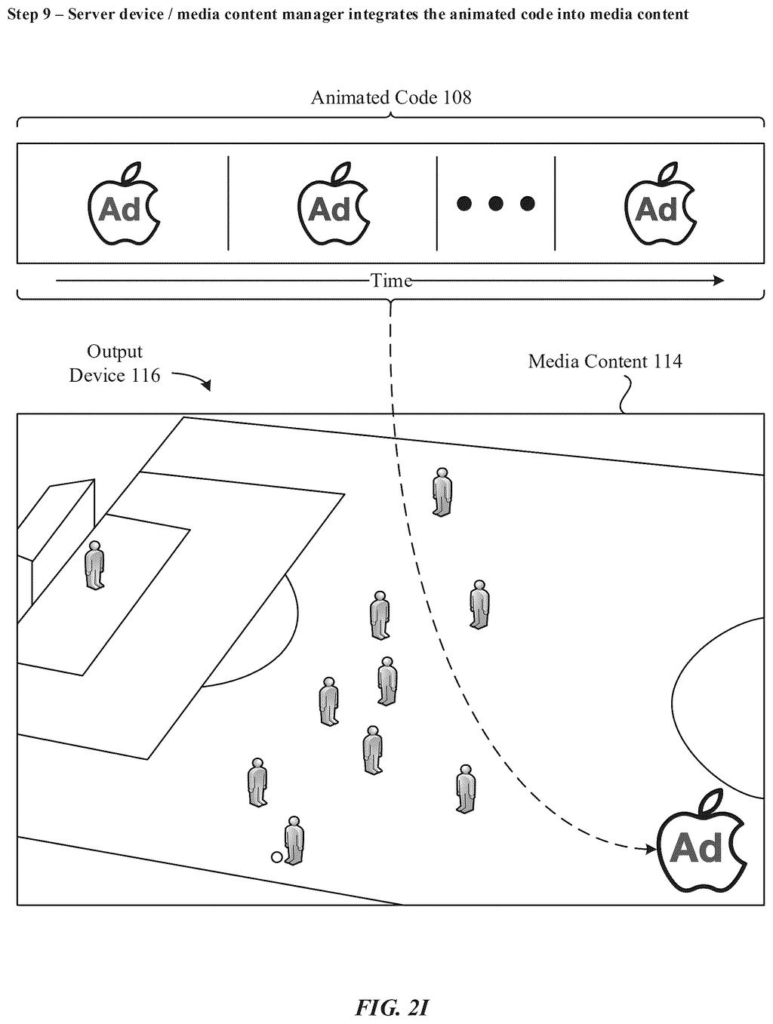
- The frames are compiled into a finished animated code and then embedded into a media item, such as an image or a video, for display on a screen.
A reader (a camera app, for instance) scans all the frames as they cycle and reconstructs the complete dataset from the sequence. The key insight is that time becomes part of the encoding space: you are not limited to what fits on a single static image.
What animated codes could mean for iPhone scanning
Static QR codes hit a practical ceiling: pack in too much data and the code becomes too dense for a phone camera to read reliably in real-world lighting. Animated codes sidestep that ceiling entirely by spreading data across time rather than space. For use cases like boarding passes, event tickets, payment flows, or authentication tokens, that extra capacity could matter.
The patent also specifies that the resulting code can be embedded into media items shown on a display, not just printed. That detail points toward on-screen uses, where a cycling animated code on an iPhone or iPad screen could be scanned by another device, fitting neatly into Apple's existing Wallet and Passbook-style infrastructure.
Apple's 433rd filing we've tracked since May in our Apple coverage follows a virtual try-on store and a wearable camera fix.
Claim 1 is canceled, which immediately narrows what this patent can assert. That is not a technicality to brush past: the broadest, most general claim is gone, leaving only the dependent claims to define the actual protected territory. Whatever protection Apple ends up with here covers a specific implementation of animated codes, not animated codes as a concept.
That narrowness limits how much this filing could block competitors. A rival encoding animated codes in a meaningfully different pipeline, different grouping logic, different container structure, different compilation steps, likely falls outside whatever claims remain. Apple is not locking up the idea of cycling QR-style codes; it is filing around its particular method for building them.
Still, if Apple ships an animated-code reader or generator inside the Camera app or Wallet, this patent gives it some legal footing over that specific workflow. The technical problem being solved is real and the approach is sensible. Just don't read this as Apple owning the animated-code space outright.
There are more where this came from
We read every patent application Big Tech publishes and send you the ones worth knowing. Plain English, free, every week.
The drawings
20 drawing sheets from US 2026/0278322 A1 · click any drawing to enlarge


Want this weekly breakdown for a company we don't cover? Patentlyze Pro →