
Apple Patents a Virtual Store Where You Can Swap Accessories and Try On Products
Apple has filed a patent for a three-dimensional virtual shopping environment where you can customize products by dragging accessories onto them and preview how items look on your own body before buying.
What Apple's virtual shopping experience actually does
A shopper walks into a store, picks up a watch, swaps the band for a different color, and holds it up to their wrist. That whole experience, Apple thinks, should be possible without leaving your couch.
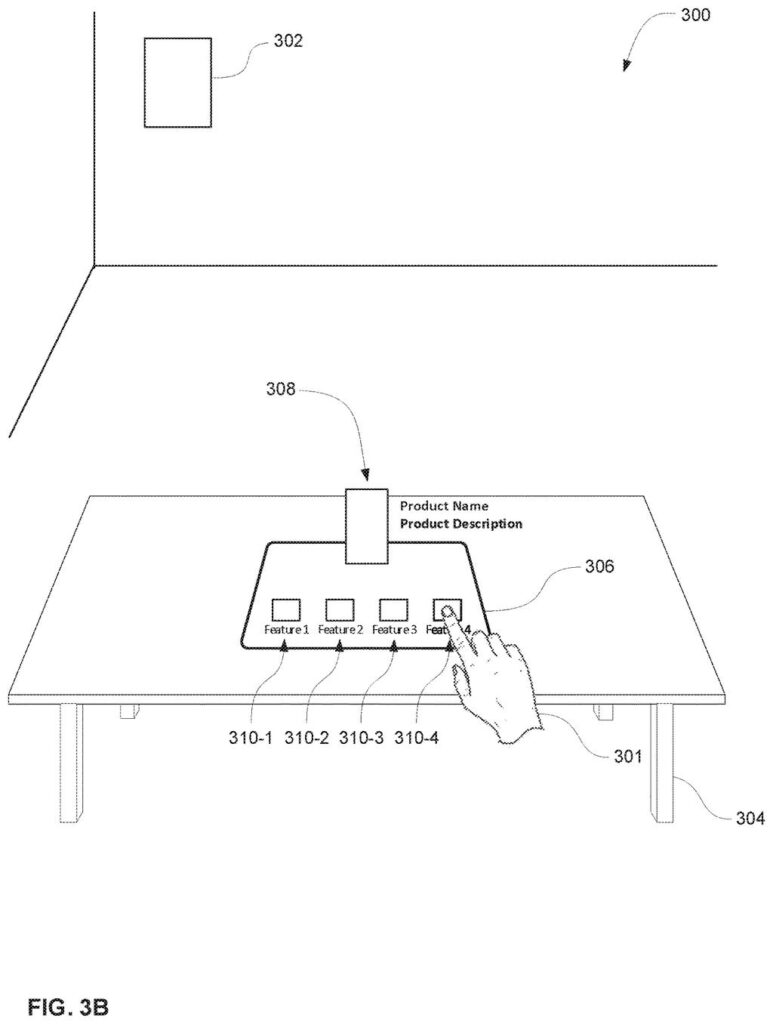
This patent describes a virtual store you could visit through a headset. Product displays float in a three-dimensional space, and you can grab a replacement accessory, drag it toward the product, and watch it snap into place, swapping out whatever was there before. The system detects when your dragged item gets close enough to the product and makes the switch automatically.
You can also hold a product up against a part of your own body to see how it looks on you specifically, not a generic mannequin. Apple describes dedicated "stations" in the space that can show extra details about a product when you step up to them.
… replacing the representation of the first accessory component with the representation of the second accessory component.
Translation: Swapping out parts of a virtual item when you drag a new piece close enough to it.
How the drag-and-snap accessory system works
The patent centers on a three-dimensional computer-generated environment presented through one or more displays, which in practice means a mixed-reality or fully virtual headset like Apple Vision Pro.
Inside that environment, products are shown at display stations. Each product representation has two parts: a base component (say, the watch case) and an accessory component (the band). When a user moves a different accessory representation close enough to the product, the system checks whether a proximity threshold has been crossed. If the criteria are met, it swaps the old accessory representation for the new one automatically. This is sometimes called a snap-to-replace interaction: no button press required, just bring the item close and the system takes over.
The patent also covers a body-preview mode in which the user can position a product representation against a representation of part of their own body, so they can see how a watch looks on their wrist or how glasses sit on their face in real time.
Key components the claim describes:
- A 3D environment with one or more product display stations
- Per-product base and accessory representations that can be mixed and matched
- Input detection that tracks when a dragged item enters a threshold distance
- Automatic replacement of the existing accessory when the threshold is crossed
… a user is able to preview a product by placing a representation of the product on a representation of a portion of the user's body.
Translation: Trying on virtual goods by moving them onto a digital model of your body.
What this means for shopping on a spatial computer
Apple Vision Pro already exists as a spatial computing platform, and shopping is one of the most obvious things a virtual environment could make better. Physical retail has always let you touch and customize products; this patent is Apple's attempt to bring that tactile logic into a headset interface. If it ships, it could let Apple sell its own accessories (bands, cases, chargers) through an immersive storefront that feels closer to a boutique than a website grid.
The body-preview feature is the part with the most practical pull. Trying on a watch band or a pair of glasses in AR is genuinely useful because fit and color on your body matter in ways a product photo cannot capture. Apple's run of spatial-commerce filings suggests the company sees Vision Pro as a retail surface, not just a media viewer.
Apple's 52nd filing we've tracked since May in our AR glasses watch adds to work like one fixing camera-eye mismatch and one guiding users through spaces.
The hardware Apple needs to run this already exists, and so do the hand movements it depends on. What's missing is mostly the software layer and the store content to populate it, which means the gap between this patent and a real product is narrower than most.
The accessory-customization flow described here, where you pick up a band or case and drag it onto a device to see how it looks, would be straightforward to build on top of what Apple already ships. A virtual Apple Store app built around that interaction would be a natural first step.
The body-preview piece, trying on a watch on your wrist or glasses on your face through a headset, is harder to make feel trustworthy. Tracking is one thing; making the result look convincing enough that someone actually buys based on it requires a level of polish that takes time to get right.
There are more where this came from
We read every patent application Big Tech publishes and send you the ones worth knowing. Plain English, free, every week.
The drawings
31 drawing sheets from US 2026/0278670 A1 · click any drawing to enlarge


Want this weekly breakdown for a company we don't cover? Patentlyze Pro →