
Samsung Patents a VR Display System That Sharpens Only Where Your Eyes Point
Samsung has filed a patent for a VR rendering technique that concentrates visual detail exactly where a wearer's eyes are looking, and deliberately skips the work everywhere else. It's a focused bet on a well-known tradeoff in headset design, with a specific new wrinkle around lens optics.
How Samsung's eye-tracking VR display actually works
Imagine putting on a VR headset and noticing that the edges of your view look a little blurry while the center looks sharp. That's partly physics, partly a deliberate choice: rendering every pixel at full quality all the time is expensive and your eyes wouldn't notice the difference anyway.
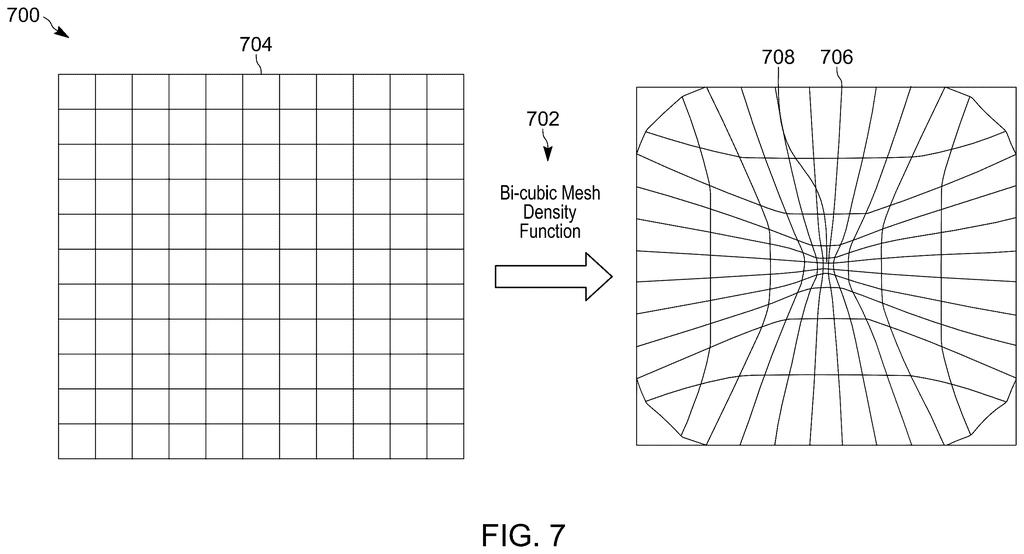
Samsung's filing describes a system that builds a custom grid, called a mesh, across the display. The mesh is denser (meaning more detail) in the area where the lens naturally focuses your vision, and sparser everywhere else. Your eye-tracking sensor keeps updating that grid as your gaze moves, so the high-detail zone follows you around.
The result is that your device doesn't waste processing power on corners of the frame you aren't looking at. The patent also accounts for the specific optical shape of the lens, not just where your eye is pointed, which is what makes it a step beyond simpler gaze-following approaches.
… generate a mesh using the eye-tracking data and the lens FOV data, wherein the mesh includes a high density area and a low density area, defined based at least partly on the lens FOV data; …
Translation: It builds a digital grid that creates sharp images where you look and lower quality elsewhere.
How the mesh splits high-detail from low-detail zones
The system works in four stages that run in sequence every time a new frame needs to be drawn.
- Content intake: The device receives the image or scene it needs to display, same as any normal rendering pipeline.
- Data collection: It pulls in two inputs simultaneously: eye-tracking data (where the user is looking right now) and lens field-of-view (FOV) data stored in memory. The lens FOV data describes the optical characteristics of the physical lens sitting between the screen and the eye, including which parts of the display the lens naturally magnifies or distorts.
- Mesh generation: The system generates a non-uniform mesh, a grid that is not evenly spaced. Areas aligned with the lens's focal zone and the user's gaze get a high-density grid, meaning more sample points and therefore more visual detail. Peripheral areas get a coarser, low-density grid.
- Warping and rendering: The content is warped (geometrically reshaped) using that mesh so that high-detail zones end up correctly mapped to the lens optics. Then the final image is rendered and sent to the display.
The key claim is that the mesh shape is defined at least partly by the lens FOV data, not just by gaze direction alone. That distinction matters because the optical center of a VR lens doesn't always perfectly match the geometric center of the display.
What this means for next-gen Samsung VR headsets
VR and mixed-reality headsets are in an ongoing fight between image quality and battery life. Rendering full-detail frames at high frame rates drains power fast, and dedicated chips can only do so much. A technique that concentrates rendering work where it is actually needed, and skips it where it isn't, directly extends how long a headset can run on a charge and can reduce heat.
For Samsung, the pattern in Samsung's VR display filings points toward building headset hardware that leans harder on software-level rendering tricks to compensate for real-world power limits. If this approach ships in a consumer product, you might not see a visible difference in image quality compared to brute-force rendering, and that's actually the goal: the same perceived sharpness, with less work done to get there.
Samsung's 47th filing we've tracked in the AR glasses race since May follows earlier applications on keeping lenses focused on your eyes and checking headset fit.
The core tradeoff here is straightforward: you get cheaper rendering in exchange for accepting that the visual detail map is always slightly behind your actual gaze. Eye-tracking has latency, and if the mesh update lags even a few milliseconds, the high-detail zone can trail where you're actually looking. For slow head movements, that's invisible. For fast saccades (the rapid eye flicks you make constantly without noticing), it could produce a subtle softness at the exact moment of focus change.
Adding lens FOV data to the mesh calculation is the more interesting part of this filing. Most foveated rendering systems treat the lens as an afterthought and just follow the gaze vector. Baking lens optics into the mesh shape means the high-quality zone is positioned where the lens actually delivers detail to the retina, not just where the algorithm thinks the eye is pointing. That's a real correction for a real physical problem.
Whether the latency cost is acceptable depends entirely on how fast the eye-tracker and the mesh generator can run together. The patent doesn't pin down those numbers, which makes it hard to assess whether this is a shipping-ready design or an architecture that needs faster silicon to be practical.
There are more where this came from
We read every patent application Big Tech publishes and send you the ones worth knowing. Plain English, free, every week.
The drawings
11 drawing sheets from US 2026/0278941 A1 · click any drawing to enlarge


Want this weekly breakdown for a company we don't cover? Patentlyze Pro →