
Samsung Patents a Way to Keep Both Eyes in a Headset Perfectly in Sync
Even a tiny timing gap between the display over your left eye and the one over your right eye can cause discomfort, disorientation, or visible flicker in a headset. Samsung has filed a patent for a handshake system that makes both displays update at exactly the same instant.
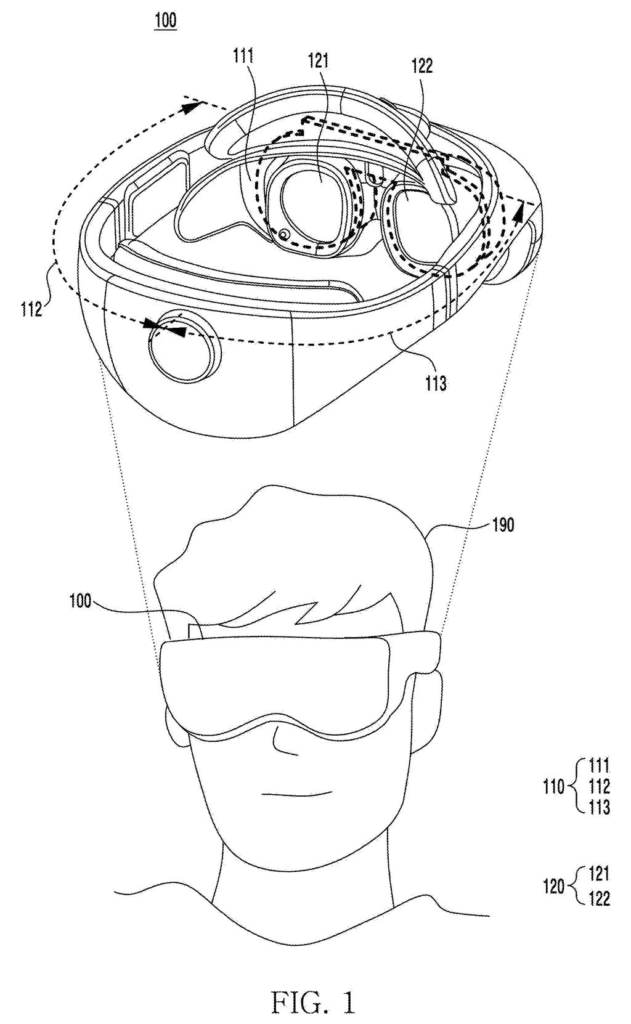
What Samsung's dual-display sync fix actually does
You're wearing a headset and watching a scene shift from day to night. The left eye's screen updates a fraction of a millisecond before the right. You might not consciously notice, but your brain does, and the result is eyestrain, nausea, or a subtle sense that something is off.
Samsung's filing describes a coordination system for the two separate display drivers inside a headset. Instead of both screens just waiting for a single shared command, the drivers talk to each other. When the first driver gets its instruction, it immediately tells the second driver, and then waits for the second driver to confirm it received its own instruction before either screen actually changes. That way, both screens move at the same moment, not just the same second.
The whole handshake happens inside the device with no extra hardware. It's a software-level protocol between the two chips that control the screens.
… defer controlling of the first display according to the command until a second signal indicating a reception of the command is received from the second display driver circuitry …
Translation: One screen waits for the other to catch up so both eyes see changes at the exact same moment.
How the two display drivers coordinate their timing
A head-worn device like an AR or VR headset typically runs two separate displays, one positioned over each eye. Each display has its own driver circuit (a dedicated chip that translates commands from the main processor into actual pixel changes). Keeping those two chips in perfect lockstep is harder than it sounds, because the processor sends commands to each one at slightly different times.
Samsung's approach adds a two-way confirmation layer between the two driver chips:
- The processor sends a display command to the first driver at time T1, and to the second driver at a slightly later time T2.
- The first driver, as soon as it receives the command, sends a signal to the second driver saying "I got it" and then holds off on doing anything yet.
- The second driver receives the command at T2 and sends its own confirmation signal back to the first driver.
- Only when the first driver receives that confirmation does it execute the command. At that point, both drivers act simultaneously.
The result is that the two displays change state at the same instant, even though the processor delivered the commands at different times. This is called display synchronization, and it matters most for commands that change brightness, refresh timing, or color calibration across both screens at once.
What flicker-free displays mean for headset comfort
In a headset, your two eyes are looking at two completely independent screens. If those screens update even a few milliseconds apart, the visual mismatch can cause what researchers call binocular rivalry (your brain getting conflicting signals from each eye), which contributes to headset-induced nausea and fatigue. A reliable sync mechanism makes longer sessions more comfortable for everyday users.
Samsung's steady investment in head-worn display technology shows up in filings like this one, which are less about new sensors or optics and more about getting the fundamentals right. For a consumer headset to compete on comfort, the synchronization problem has to be solved at the hardware-driver level, not patched over in software after the fact.
That makes this Samsung's 41st filing we've tracked since May in the AR glasses race, a run that includes a headset collision warning and a camera-linked AR window.
The coordination described here runs on software alone, with no new physical parts required. A headset already carrying the right screen-driver chips could potentially receive this capability through an ordinary update.
The one open question is speed. The system sends a confirmation signal between the two driver chips before changing what appears on screen, and if that exchange takes too long, the fix could introduce the very flicker it was meant to prevent. The document offers no timing data, so that remains an unsolved engineering problem rather than a closed one.
What the filing does establish is a clear, documented method for keeping both eyes in agreement at the same moment. Users rarely notice when that works, but they notice immediately when it does not, and first impressions on a new device tend to stick.
There are more where this came from
We read every patent application Big Tech publishes and send you the ones worth knowing. Plain English, free, every week.
The drawings
11 drawing sheets from US 2026/0268831 A1 · click any drawing to enlarge


Want this weekly breakdown for a company we don't cover? Patentlyze Pro →