
Samsung Patents a Faster Way for AR Headsets to Recognize Where They Are
Every time you put on a mixed-reality headset, the device has to figure out where it is in the room. Samsung's new patent describes a more efficient way to do that search, by building a layered map of visual landmarks the headset has already seen.
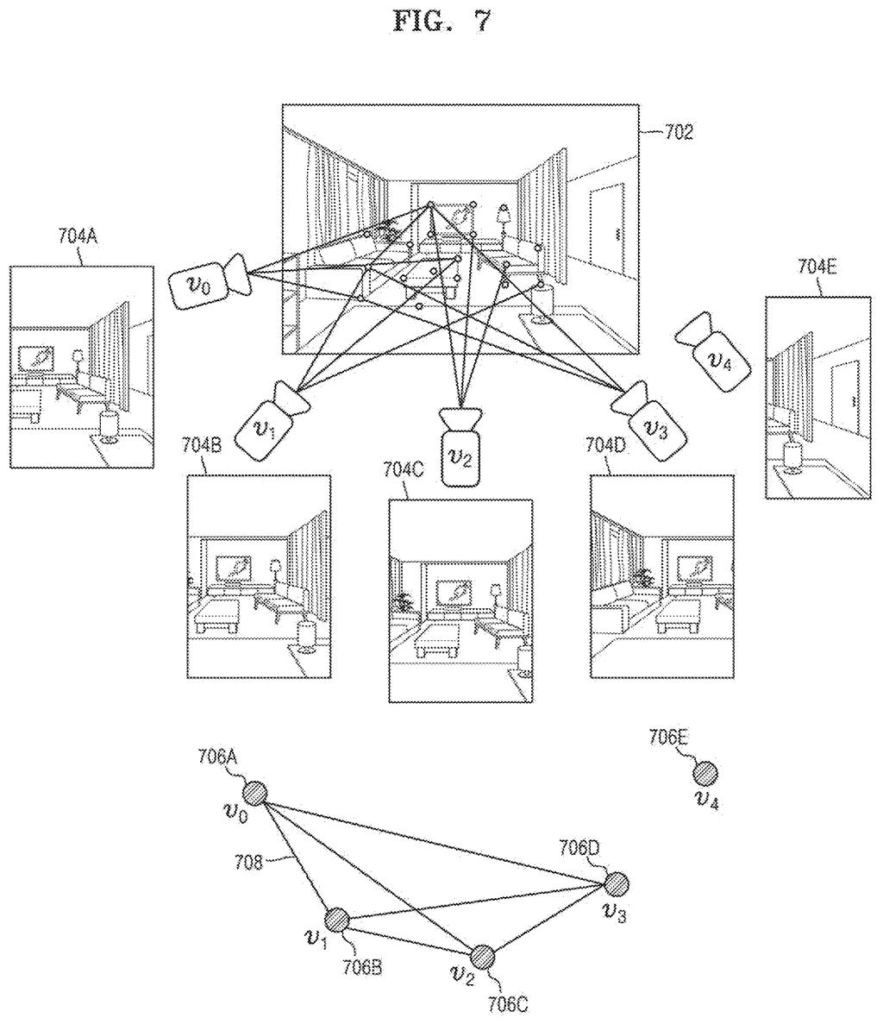
How Samsung's AR headset figures out where it left off
You're putting on your AR headset after setting it down for a few minutes. The device has to re-orient itself, scanning the room to figure out exactly where you are and which direction you're facing. Right now, that process can be slow, because the headset may search through a huge pile of remembered images one by one.
Samsung's patent describes a system that organizes those memories more intelligently. Instead of a flat list of snapshots, the headset builds a layered map that connects images based on which landmarks (think: the corner of your desk, a window frame, a distinctive poster) appear in multiple shots. That way, when you pick the headset back up, it can jump straight to the most relevant memories rather than checking every single one.
The result is a headset that orients itself faster after you put it back on, and stays locked to your real-world surroundings more reliably as you move around.
… generating, by the HMD device, a co-visibility graph based on the co-visibility of the landmarks between the different views of the plurality of views, the co-visibility graph comprising multiple levels …
Translation: The headset builds a multi-layered map by tracking how visual landmarks overlap across different camera angles.
How the co-visibility graph maps shared landmarks
The patent describes a technique called a co-visibility graph, a data structure that connects different camera views of a room based on shared visual landmarks.
Here's how it builds that map:
- The headset captures many overlapping views of a scene as you wear it.
- It identifies consistent landmarks in each view, meaning distinctive visual features that appear across multiple frames, like a light switch or a shelf edge.
- It calculates co-visibility, which simply means figuring out which landmarks show up in more than one view at the same time.
- It organizes all of this into a multi-level graph, where nodes represent views and edges (connections) represent shared landmarks between them.
When the headset needs to figure out its current pose (its position and orientation in 3D space), it searches this graph instead of brute-forcing through every stored image. The layered structure means it can start at a coarse level and zoom into only the most likely matches.
This approach is part of a broader problem in AR and VR called relocalization, where a device that has temporarily lost track of where it is tries to find itself again as quickly as possible. A well-organized graph makes that search far less computationally expensive.
… detecting a pose of the HMD device based on the co-visibility graph of the real-world scene.
Translation: The device figures out its exact physical position and orientation by checking against this layered map.
What faster scene recognition means for AR headset users
For anyone who uses an AR or mixed-reality headset, the most frustrating moments often happen right after you put the device back on. The headset freezes or drifts while it re-learns the room, and virtual objects snap around before settling. A faster, more organized localization system directly reduces that lag.
Samsung is competing in a headset market where Apple's Vision Pro has set a high bar for how tightly virtual content can stay anchored to physical space. A more efficient scene-search system could help Samsung close that gap without demanding more battery power or heavier processors, which matters a lot for a device you wear on your face. Samsung's track record in AR and spatial computing patents suggests this is an area the company is investing in seriously, not just filing defensively.
Samsung's 48th filing we've tracked in the AR glasses race since May follows work like its eye-tracking focus patent and its gaze-sharpening VR display application.
Anyone who has picked up an AR headset after setting it down knows the disorienting moment when the device seems to forget where it was. This patent targets that specific failure, describing a smarter way for the headset to remember a room by cataloging which landmarks appeared together across different recorded views.
The practical result is a device that can re-orient itself faster and more accurately when you put it back on, without burning through processing power to do it. You would notice this most in everyday interrupted use, stepping away to take a call and returning to find your virtual objects still anchored exactly where you left them.
For Samsung customers, the concrete promise here is a headset that behaves more like a reliable tool and less like a device you have to babysit. That kind of quiet dependability tends to determine whether a product earns a place in someone's daily life.
There are more where this came from
We read every patent application Big Tech publishes and send you the ones worth knowing. Plain English, free, every week.
The drawings
14 drawing sheets from US 2026/0278836 A1 · click any drawing to enlarge


Want this weekly breakdown for a company we don't cover? Patentlyze Pro →