
Samsung Patent Lets You Float Phone App Controls Into Your Physical Space
Samsung is working on a way to pull the controls for an app running on your phone out of the screen entirely and drop them into a physical spot in the room around you, visible through a wearable device's camera.
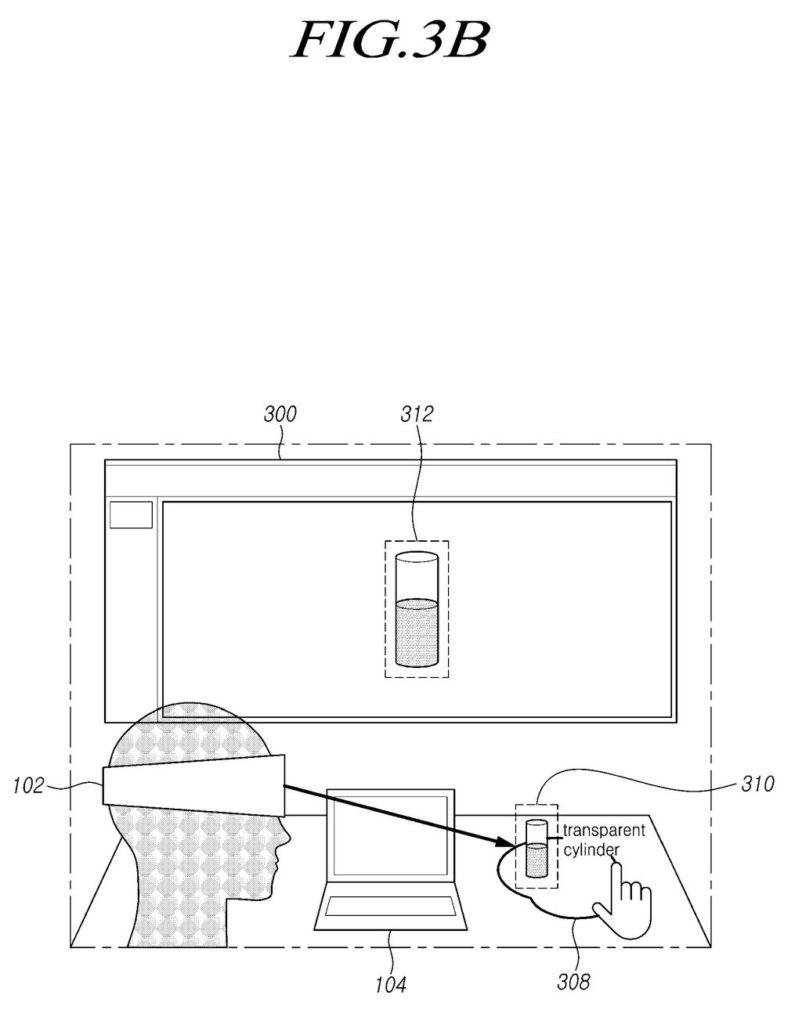
How Samsung's AR remote-control idea works in practice
Imagine you're watching a video on your phone, but instead of reaching for the phone every time you want to pause or skip, a set of playback buttons floats in the air in front of your couch, right where you told them to live. That's the core idea in this Samsung patent.
The setup involves two devices: one running the app (your phone) and one wearing a camera that sees the world around you (think AR glasses or a headset). The phone tells the glasses which app is open, the glasses look up the matching controls for that app, and then they paint those controls into a spot you picked in your physical environment.
The key detail is that you choose the location. Samsung's system lets you set a specific spatial zone in the real world where the controls appear, so they're always in a consistent, predictable spot rather than drifting around.
… display at least one first UI for controlling the first application in a specified spatial area, wherein the specified spatial area includes a spatial area set by a user within a real environment image obtained in real-time by the sensor.
Translation: It projects app controls into a specific part of the real world that you choose using a camera.
How the two devices share app and UI data in real time
The patent describes a two-device architecture where a second electronic device (for example, a phone or tablet) runs an application and broadcasts what that application is to a first electronic device (a camera-equipped wearable).
When the wearable receives that app-identity signal, it looks through its own stored library of UI information to find a matching control layout for that application. That library is stored locally on the wearable, so it doesn't have to fetch designs from the internet every time.
The wearable then renders those controls inside a specified spatial area, a zone the user previously defined by pointing at or marking a location in the real-world camera feed. The controls anchor to that spot and appear overlaid on whatever the camera sees there.
The claim language is deliberately broad, covering:
- Any sensor-equipped first device that reads the physical environment in real time
- Any transceiver link between the two devices
- A memory-backed UI lookup rather than a streamed UI from the host device
- User-defined spatial anchoring of the resulting interface
… receiving, from a second electronic device, first application information associated with a first application executed on the second electronic device …
Translation: The glasses get data from your phone about an app that is currently running.
What this means for Samsung's AR wearable ambitions
For anyone who wears AR glasses while also carrying a phone, the friction of context-switching is real: you look at the glasses, look back at the phone, tap something, repeat. Samsung's approach offloads the control surface entirely onto the glasses, letting the phone stay in your pocket. The user-defined anchor zone is a practical detail that makes the idea more usable: controls that appear in a consistent spot become muscle memory, the same way a physical remote always lives on the armrest.
Samsung has been building out its Galaxy ecosystem with wearables that increasingly compete with or extend the phone, and this filing fits squarely into that pattern. Plain-English patent summaries covering the AR and wearables space have tracked a steady stream of filings like this one, where Samsung's engineers work out the plumbing for spatial interfaces before the hardware is publicly announced.
Samsung's 31st filing we've tracked since May in the AR glasses race builds on one sharpening focus with eye movement and one adapting content to surroundings.
The software idea here is simple: two devices swap an app name, one pulls up a saved screen layout, and that layout gets drawn over whatever the camera sees. No new hardware invention is needed for any of that. The real missing piece is a pair of smart glasses with a good camera and enough memory to store screen layouts for hundreds of apps, and Samsung has not put anything like that in shoppers' hands yet.
The fastest route from this patent to an actual product means Samsung convincing outside app makers to submit their layouts for use with the glasses. That is as much a people problem as a technology problem.
Get our take in your Top Stories
Liked this breakdown? Add Patentlyze as a preferred source on Google, and our plain-English take shows up more often in your Top Stories the next time Samsung patent news breaks.
There are more where this came from
We read every patent application Big Tech publishes and send you the ones worth knowing. Plain English, free, every week.
The drawings
32 drawing sheets from US 2026/0244319 A1 · click any drawing to enlarge


Want this weekly breakdown for a company we don't cover? Patentlyze Pro →
Be the first to weigh in