
Wing Aviation Patents a Rail System That Calibrates Drones Before They Fly
Before every flight, a delivery drone needs to know its sensors are working correctly. Wing Aviation has patented a way to automate that check-up by running drones through a calibration section built directly into the rail they launch from.
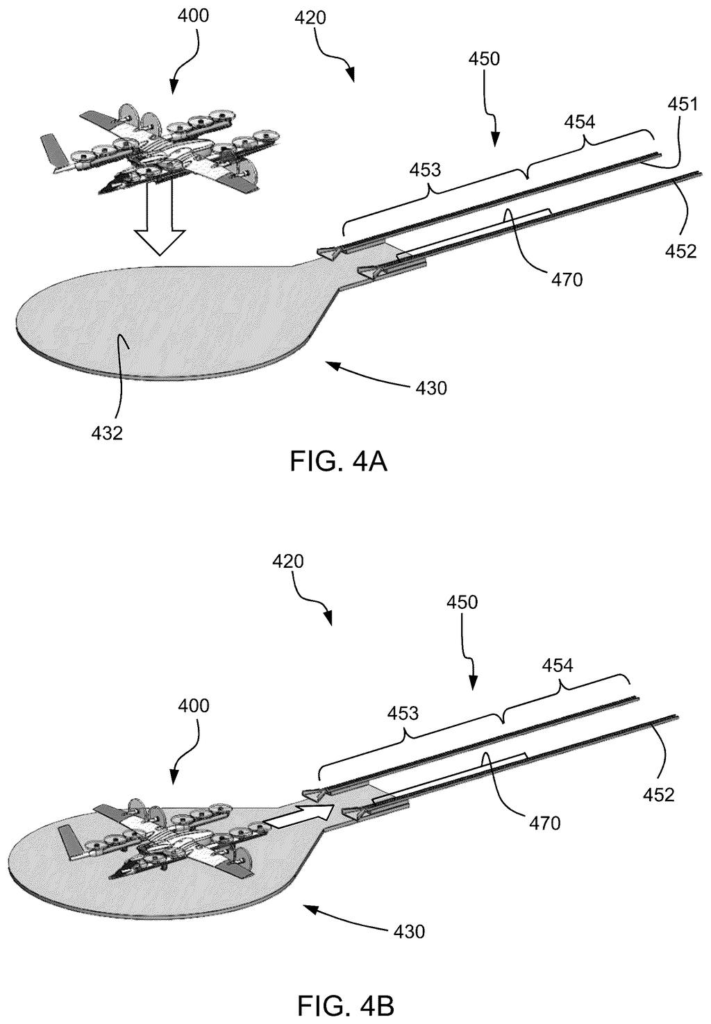
What Wing's on-rail drone calibration actually does
Every time a delivery drone lifts off, it has to trust that its navigation sensors are reading the world accurately. A tiny drift in a gyroscope or compass can send a package to the wrong address, or worse. Right now, making sure those sensors are correct takes extra steps that slow down operations.
Wing Aviation's idea is to bake that sensor check directly into the launch rail itself. A drone rolls onto a track, stops at a section of that track designed specifically to test and correct its instruments, and only takes off once the calibration has passed. No separate testing station, no manual intervention between check and flight.
Wing, which is Google's parent company Alphabet's drone delivery arm, has been running commercial delivery services in Australia and the United States. A system like this would let their ground infrastructure handle quality control automatically, every single flight, rather than relying on scheduled maintenance windows.
navigating, by a UAV, onto a first track of a UAV holding structure, the first track having a length sufficient to hold one or more UAVs, wherein the first track includes a calibration section; …
Translation: The drone parks on a special holding rail equipped with a built in testing area.
How the track holds and checks a drone before launch
The patent describes a UAV holding structure equipped with at least one track long enough to park one or more drones. That track is divided into distinct sections: a calibration section and a takeoff section.
When a drone is ready to fly, it navigates onto the track under its own power. Once it reaches the calibration section, the track physically constrains the drone, meaning the drone is held in place so it cannot move freely. While held, it runs a calibration operation, which is essentially a self-check of its onboard sensors, confirming that instruments like accelerometers and compasses are reading correctly before the vehicle is trusted with a flight.
Only after the calibration operation completes does the drone move to the takeoff section and lift off. The sequence is enforced by the structure itself: the drone cannot skip the calibration section to reach the launch point.
- Drone navigates onto the track independently
- Track's calibration section physically holds the drone during the sensor check
- Calibration results determine whether and when takeoff proceeds
- Drone then moves to the takeoff section and launches
… subsequently performing, by the UAV, a calibration operation while the UAV is constrained by the calibration section of the first track.
Translation: While locked in place on the rail, the drone runs diagnostics before its flight.
What this means for drone delivery at scale
For a drone delivery network operating hundreds of flights per day, sensor drift is a quiet but real operational risk. If a drone's gyroscope is slightly off, its flight controller makes small errors that compound over distance. Catching that before departure, rather than mid-flight, is the difference between a reliable service and one that fails unpredictably.
The design also points toward fully automated ground infrastructure. If the track itself enforces calibration without human oversight, you can run a delivery hub with far fewer ground crew. That matters a lot for Wing's economics as it tries to scale commercial delivery beyond small pilot programs into something that covers whole cities.
Google's 731st filing we've tracked since May in our Google coverage joins recent applications like a prompt-to-questions AI and a compact multi-letter keyboard.
Adding a mandatory check stop before every flight means every drone waits longer on the ground before it can go anywhere. If that stop slows down faster than drones arrive, the whole launch pad backs up, and a busy delivery hub could grind to a crawl during peak hours.
Wing appears to be betting that catching a faulty sensor before takeoff is worth that delay. One crash or wrong delivery traced to bad equipment does far more damage to public confidence than a slower launch cycle, so the trade reads as worth it at this stage.
The patent does not say how long the check actually takes, which is the number that decides everything. A two-second check is invisible; a thirty-second check is a scheduling problem that no clever track layout fully solves.
There are more where this came from
We read every patent application Big Tech publishes and send you the ones worth knowing. Plain English, free, every week.
The drawings
26 drawing sheets from US 2026/0277252 A1 · click any drawing to enlarge


Want this weekly breakdown for a company we don't cover? Patentlyze Pro →