
IBM Patents a 3D Printer Where the Printing Surface Rides the Robot Arm
Every consumer 3D printer lays down plastic in flat horizontal slices, stacking them up like a wedding cake. IBM's new patent describes a system where the surface you're printing onto is itself mounted on a robot arm, tilting and rotating to let the nozzle approach from almost any direction.
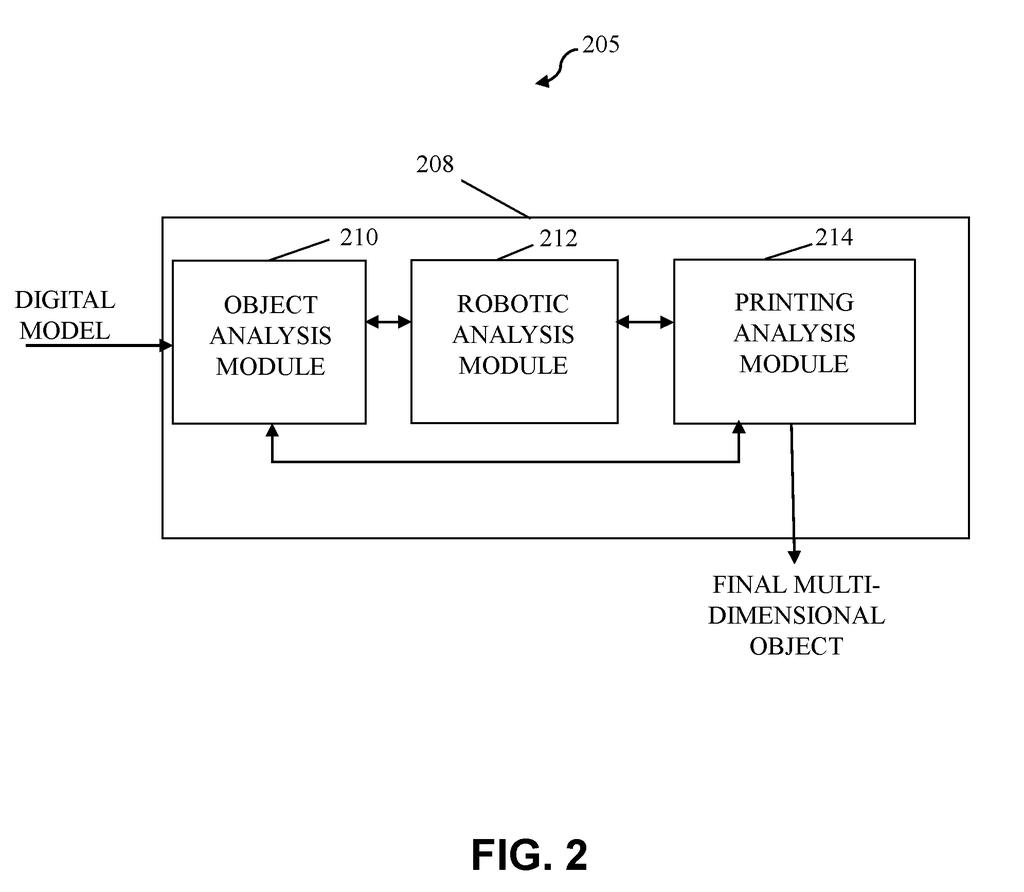
What IBM's moving print-bed robot actually does
Standard 3D printers work in one fixed direction: the nozzle moves left, right, forward, and back, while the object slowly grows upward one thin layer at a time. That works fine for simple shapes, but curved overhangs and complex geometries can require a lot of wasted support material, or they just can't be printed at all.
IBM's patent describes a system that breaks that constraint. Instead of keeping the print bed fixed, it gets mounted onto a robot arm. Before printing starts, the system analyzes a 3D model of the object, figures out the best angle for the nozzle to hit each individual layer, and then calculates coordinated paths for both the nozzle and the arm. The arm tilts and repositions the bed as printing progresses.
The practical payoff: the nozzle can always approach at the ideal angle, potentially reducing wasted support material and opening up shapes that flat-bed printers struggle with.
… determining an angle at which a printing nozzle approaches each individual layer of the object during a printing process based on the analyzed digital model and an analysis of the printing nozzle of the robotic system …
Translation: The system figures out the best tilt for the nozzle on every single layer.
How IBM's system syncs the nozzle and the robot arm
The patent describes a method that treats both the print nozzle and the print bed as moving parts that need to be coordinated, rather than keeping one of them stationary.
Here is the step-by-step logic the system follows:
- Analyze the digital model to determine the 3D shape of the object.
- Calculate the approach angle for the nozzle at every individual layer, based on the object's geometry and the physical characteristics of the nozzle itself.
- Map the movement paths (called a "locus" in the patent, meaning the full trajectory) for both the nozzle and the robot arm.
- Find where those paths intersect and use that data to decide how the print bed should be attached to the robot arm.
- Print the object with the bed actively repositioning on the arm throughout the process.
The key insight is that by moving the surface being printed onto, not just the nozzle, the system can maintain a favorable printing angle regardless of how complex the shape is. Traditional multi-axis 3D printers usually move only the nozzle head; this patent puts motion on both ends of the equation.
The claim is broad enough to cover any "multi-dimensional" printing, which likely includes variations beyond standard three-axis motion.
… attach a printing bed to the robotic arm based on the aggregation of the intersection; and perform multi-dimensional printing of the object by utilizing the printing bed and the robotic arm of the robotic system …
Translation: The print surface is mounted directly onto the robot arm to build the final shape.
What this means for complex manufactured parts
For manufacturing, the ability to print at variable angles without locking the bed in place could reduce or eliminate the scaffolding-like support structures that conventional printers need for overhangs. Support material wastes feedstock, adds print time, and has to be removed manually, sometimes damaging the finished part in the process.
For IBM specifically, IBM's steady interest in robotic manufacturing patents reflects an ongoing effort to apply AI and automation to industrial production. Whether this becomes a physical product depends on factors the patent doesn't address, including the mechanical tolerances required to keep a moving bed stable enough for precise deposition. But as a blueprint for rethinking how print beds are used, it's a concrete step away from the flat-table assumption that every desktop printer still makes.
That makes this IBM's fourth filing in our robotics coverage we've tracked since May, joining ones on modular snake robots and invisible robot safety fences.
The patent describes software logic, not a new machine. Before any of this planning code could matter, someone would need a robot arm stable enough to hold a moving print bed while a nozzle deposits material in precise layers, and that mechanical problem is left entirely to others.
What IBM has locked down here is the decision-making layer: how the system calculates the angle of each printed layer, how it maps the arm's path against the nozzle's path, and how it decides where to attach the print bed. That is a real and specific claim, and if this style of 3D printing becomes common, that prior art will carry weight.
The shortest route to a product runs through hardware that does not yet appear in this document, which puts this closer to a reserved position on the map than a shippable tool. Interesting as a signal about where factory automation may go, but a long way from a factory floor.
Get our take in your Top Stories
Liked this breakdown? Add Patentlyze as a preferred source on Google, and our plain-English take shows up more often in your Top Stories the next time IBM patent news breaks.
There are more where this came from
We read every patent application Big Tech publishes and send you the ones worth knowing. Plain English, free, every week.
The drawings
3 drawing sheets from US 2026/0257428 A1 · click any drawing to enlarge


Want this weekly breakdown for a company we don't cover? Patentlyze Pro →
Be the first to weigh in