
Sony Patents a System That Keeps Wireless Controllers Connected While Switching Between Routers
Wireless controllers dropping out mid-game is one of gaming's most persistent frustrations. Sony is now patenting a system that silently moves your controller's connection from one network hub to another before the signal even has a chance to fail.
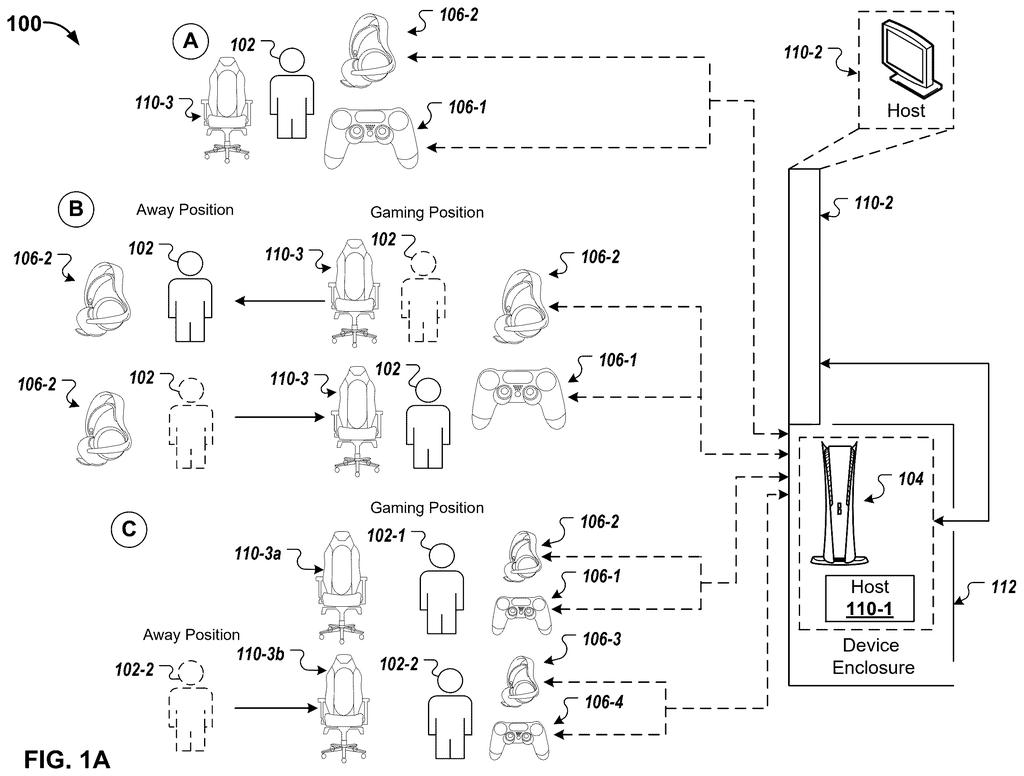
What Sony's automatic controller hand-off actually does
Imagine you're deep into a game and your wireless controller suddenly cuts out, not because the battery died, but because the hub it was talking to got overwhelmed or went offline. Sony's new patent is designed to stop exactly that from happening.
The idea is to have multiple hubs (Sony calls them hosts) wired into your gaming console at once. Each hub acts as a relay between your wireless controller and the console. If one hub starts struggling, the system reads signals coming from your controller, checks the health of the network, and automatically shifts your controller's connection over to a different hub. You wouldn't have to do anything.
The system is predictive, meaning it doesn't wait for a dropout to happen. It monitors conditions and moves things around before you'd notice a problem. Think of it like a phone call being handed off between cell towers as you drive, except for your game controller.
… determining, based on the status information and the signals, a migration from a first host in the multiple hosts to a second host in the multiple hosts different from the first host …
Translation: The system decides to switch from one router to another by looking at network conditions and sensor signals.
How the system decides which hub takes over the signal
The patent describes a gaming network made up of two key layers: an electronic gaming device (the console itself) and multiple hosts, each physically wired into that console. Wireless controllers and other peripherals connect to the console through whichever host is currently managing them.
The system continuously collects two streams of data:
- Status information about the network itself, things like host load, connection quality, and which host is currently paired with which peripheral.
- Feature data sent by the wireless peripheral, which can include signal strength readings and environmental data from the gaming environment.
Using both streams, the system determines when migrating a peripheral's connection from one host to another would improve or preserve reliability. The first host and second host are wired together, which is how the signal handoff is coordinated without interrupting the wireless link on the other end.
The word "seamless" in the patent's title refers to the goal of making this host swap invisible to the player. The migration is designed to complete without the peripheral losing its connection to the console. This is similar to how enterprise Wi-Fi systems roam a laptop between access points as you walk around an office, but applied here specifically to gaming peripherals in a structured wired-plus-wireless network.
… migrating connectivity signals of a gaming computer network in a gaming environment …
Translation: The technology shifts the controller signals between different network nodes while you play.
What this means for wireless controllers in large gaming setups
For most home gamers with a single console and one receiver dongle, this patent doesn't change anything today. But it points toward a real problem in setups where multiple people are gaming in the same room, or where a single console needs to reliably manage a larger number of wireless devices simultaneously. Connection reliability gets harder as the number of peripherals and competing wireless signals grows.
The deeper value here is the predictive element. Reactive reconnection (your controller drops, you wait for it to re-pair) is already common. A system that anticipates trouble and moves the connection proactively is a meaningfully different approach, and one that matters most in competitive or professional gaming contexts where even a fraction-of-a-second dropout is costly.
Sony's 518th filing in our Sony coverage since May adds to a run that includes paying via controller and body gestures as controls.
Wireless controllers dropping out mid-game is a small frustration in a living room and a serious operational problem in an arcade, esports venue, or any space running dozens of devices at once. At that scale, a single dropout can disrupt a competition, and there is currently no elegant fix beyond cables and hoping for the best.
Sony's patent addresses that by building a system that watches for signs of trouble before a dropout actually happens and shifts the connection to a more stable path. That is a meaningfully different ambition than what most wireless technology attempts today.
For a household with one controller, this is overengineered. For a venue running a tournament, it is exactly the right level of seriousness applied to a problem that has long deserved it.
There are more where this came from
We read every patent application Big Tech publishes and send you the ones worth knowing. Plain English, free, every week.
The drawings
5 drawing sheets from US 2026/0273398 A1 · click any drawing to enlarge


Want this weekly breakdown for a company we don't cover? Patentlyze Pro →