
Sony Patents a Way to Pay for Games Through Your PS5 Controller
Sony has filed a patent that turns a PlayStation controller into a payment relay, letting your phone hand off credit card details to your console wirelessly, without you ever touching a menu.
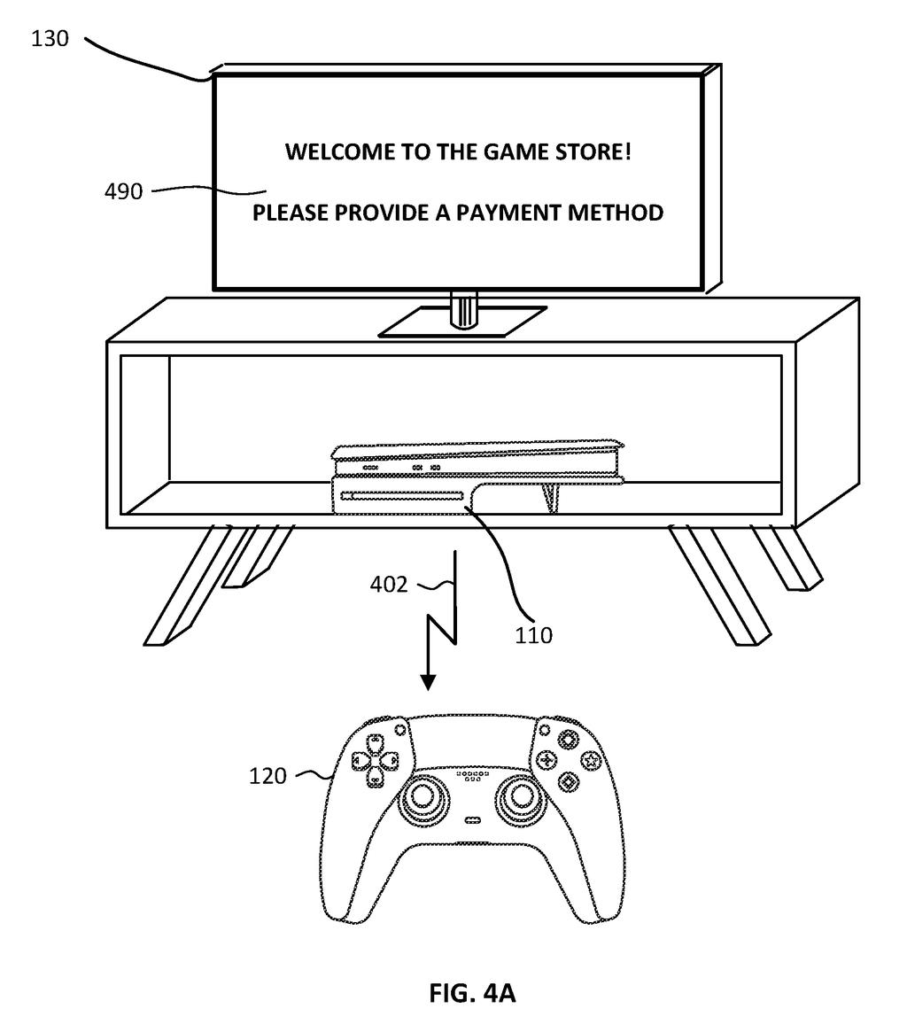
How Sony's controller-as-payment-bridge idea works
You're sitting on the couch, controller in hand, and your PS5 asks you to confirm a purchase. Instead of grabbing your phone to look up a card number, or navigating to a saved-payment screen, your phone is already nearby, and the controller handles the handoff automatically.
That's the idea behind this Sony filing. The controller detects when your phone (or another device) is close by, sends it a small prompt, and your phone replies with your payment information. The controller then passes that info straight to the console, completing the purchase without you typing anything.
Think of it as a short relay race: phone to controller to console, all in a couple of wireless hops. The patent doesn't specify exactly which wireless technology does the detecting, but the flow is designed to be automatic once your device is in range.
detecting that an electronic device is within a predetermined distance from the video game controller, wherein the video game controller is wirelessly coupled to a video game console …
Translation: The controller notices when your phone or another device gets close to it.
How the controller detects, signals, and relays payment data
The patent describes a three-step wireless chain that moves payment credentials from a nearby phone (or other device) to a PlayStation console, using the controller as the middle link.
- Proximity detection: The controller continuously checks whether a known electronic device is within a set distance. When it spots one, it emits a signal, essentially a tap on the shoulder to the nearby device.
- Device handshake: The nearby device receives that signal and sends back a notification confirming it got the message. This handshake confirms the device is present and ready to share data.
- Payment relay: After the handshake, the phone sends a message containing payment method information (card details, a token, or similar credentials) to the controller. The controller then wraps that in a second message and forwards it to the console.
The claim is specifically tied to an event at the console, meaning the relay is triggered by something the console is waiting on, like a purchase confirmation prompt, rather than running in the background all the time. That event-driven design is important: the controller isn't constantly broadcasting your payment data, only forwarding it when the console has actually asked for it.
… a first message that includes payment method information for a video game player associated with the video game controller is received from the electronic device and a second message that includes the payment method information is transmitted from the video game controller to the video game console …
Translation: Your credit card details are passed from your device through the controller to the console.
What this means for buying games on PlayStation
For PlayStation users, the everyday annoyance this targets is real. Buying a game mid-session usually means pausing, navigating payment menus, and sometimes picking up your phone anyway to check a card number or approve a two-factor prompt. A controller-mediated shortcut could make those small purchases feel frictionless.
The broader strategic picture is about keeping transactions inside Sony's ecosystem. If your phone hands credentials to the controller and the controller hands them to the console, Sony controls the whole chain. That matters for digital storefronts, subscription upsells, and in-game purchases, all areas where a smoother checkout converts more sales. Whether this ever ships as described is a separate question, but the problem it targets, friction at the payment step, costs real money in abandoned purchases.
Sony's tenth cell phone patent we've tracked since May follows filings like a split controller idea and a battery drain guide.
Abandoned purchases are one of the most documented and costly problems in online retail, and gaming stores lose real money every time a player decides the checkout process is too much trouble. The friction is not imaginary: putting down a controller, unlocking a phone, and typing in card numbers is enough interruption to kill the impulse entirely.
Sony's approach matches the scale of that problem well. The controller is already in the player's hands, the phone is already nearby, and routing payment credentials through that existing physical setup removes the interruption almost entirely rather than just trimming it slightly.
The remaining question is whether the security across those wireless steps is strong enough to earn player trust, because a payment feature that people are afraid to use solves nothing. That detail is not addressed in the filing, and it will matter as much as the convenience itself.
There are more where this came from
We read every patent application Big Tech publishes and send you the ones worth knowing. Plain English, free, every week.
The drawings
16 drawing sheets from US 2026/0273403 A1 · click any drawing to enlarge




Want this weekly breakdown for a company we don't cover? Patentlyze Pro →