
Sony Patents a Wi-Fi System That Drops Unwanted Data Packets Before They Finish Arriving
Most Wi-Fi devices wait for an entire incoming data packet to arrive before deciding to throw it away. Sony's new patent describes a way to bail out early, the moment a quick address check shows the packet isn't meant for you.
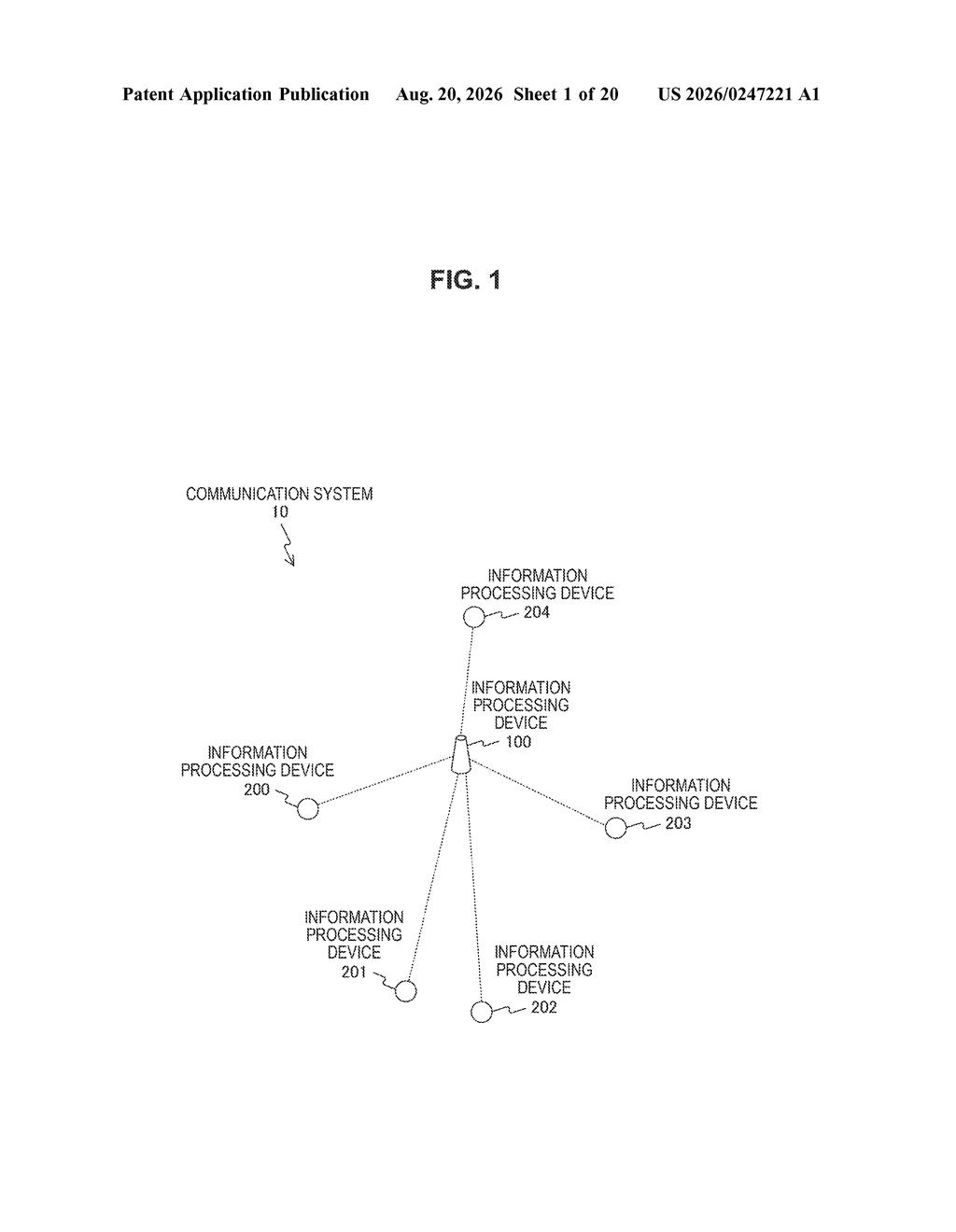
What Sony's early packet-cancellation system actually does
A security camera stares at an empty hallway all night. It receives every signal, processes every frame, and burns through battery doing it, even when most of that data was never meant for it. You face a quieter version of this problem every time your phone, laptop, or router sits in a busy coffee shop or office full of overlapping Wi-Fi traffic.
Sony's patent describes a system where a Wi-Fi device starts reading an incoming data packet, checks the sender and recipient address baked into the earliest part of that packet's header, and if those addresses don't match up to a connected device, it stops listening immediately. No need to sit through the rest of the packet.
The signal used to trigger that early exit is designed with what the patent calls backward compatibility, meaning it's built to work with existing Wi-Fi equipment, not just future hardware running the same Sony system.
… upon detecting a frame check sequence (FCS) up to a media access control (MAC) header of the A-MPDU subframe, in a case where there is no error in data of the MAC header of the A-MPDU subframe, stop reception of an A-MPDU including the A-MPDU subframe …
Translation: The device checks the packet header first and immediately stops downloading the rest of the data if it is not needed.
How the address check triggers an early reception stop
Wi-Fi sends data in bundled chunks called A-MPDUs (Aggregated MAC Protocol Data Units), which are basically groups of smaller subframes packed together for efficiency. Normally, a receiving device has to process a significant portion of an incoming A-MPDU before it can decide the data isn't relevant to it.
This patent describes processing circuitry that reads only up to the MAC header (the short routing label at the front of each subframe, containing source address, destination address, and group identifiers) and then runs a quick Frame Check Sequence (FCS) check, a lightweight error-detection step, just on that header. If the header passes that check and the addresses don't match a connected device, the system stops reception immediately.
After dropping the packet early, the device sets its own carrier sense level, which is essentially how loud the surrounding wireless noise appears to be, to reflect that an active transmission is happening nearby. This prevents the device from accidentally talking over the ongoing transmission it just decided to ignore.
Key elements the claim covers:
- Reading only the MAC header before deciding to stop
- Using source address (TA), destination address (RA), or group identifier as the decision trigger
- Adjusting the local carrier sense level after an early exit
- Backward-compatible signaling so older devices aren't confused
The first information processing device performs control such that a signal (which is a signal having backward compatibility) serving as an index by which the second information processing device receiving a frame stops the reception of the frame is transmitted …
Translation: The sender transmits a special signal that tells the receiving device to ignore the rest of the incoming data transmission.
What this means for crowded Wi-Fi environments
In a dense Wi-Fi environment, like an apartment building, a conference center, or a factory floor packed with sensors, devices spend a surprising amount of time processing traffic that was never meant for them. Cutting that work short, even by a fraction of a millisecond per packet, adds up across millions of receptions, reducing wasted processing cycles and potentially improving battery life on low-power devices.
The backward-compatibility requirement written into claim 1 is the practical detail that makes this deployable. A technique that only works when every device on the network has been updated is a technique that rarely gets used. Wi-Fi engineers and chipset designers working on dense IoT deployments or next-generation access points will find this filing relevant, as the latest Big Tech patents in wireless networking increasingly focus on reducing per-device overhead rather than just chasing raw throughput numbers.
Sony's 360th filing we've tracked since May in our Sony coverage adds to a run that includes a noise-reduction pixel layout and a cross-network device reader.
Claim 1 covers one specific sequence of steps and nothing else. That tight focus makes it easier to approve and harder for a rival to slip past by simply shuffling the order.
The flip side is real: any design that skips one of those steps, or uses a different way to exit early, falls outside the claim entirely. So the patent blocks a specific path, not the whole road.
For teams building the next generation of Wi-Fi chips or small connected devices, this kind of narrow efficiency patent still forces a choice: follow the exact protected sequence, or engineer a different route from scratch.
Get our take in your Top Stories
Liked this breakdown? Add Patentlyze as a preferred source on Google, and our plain-English take shows up more often in your Top Stories the next time Sony patent news breaks.
There are more where this came from
We read every patent application Big Tech publishes and send you the ones worth knowing. Plain English, free, every week.
The drawings
20 drawing sheets from US 2026/0247221 A1 · click any drawing to enlarge


Want this weekly breakdown for a company we don't cover? Patentlyze Pro →
Be the first to weigh in