
Samsung Patents a Storage Chip That Pre-Loads Broken-Up Files Before Your Device Asks
Files stored on your phone are often split into dozens of scattered pieces. Samsung's new patent describes a storage chip that figures out where all those pieces are ahead of time and fetches them before your phone finishes asking.
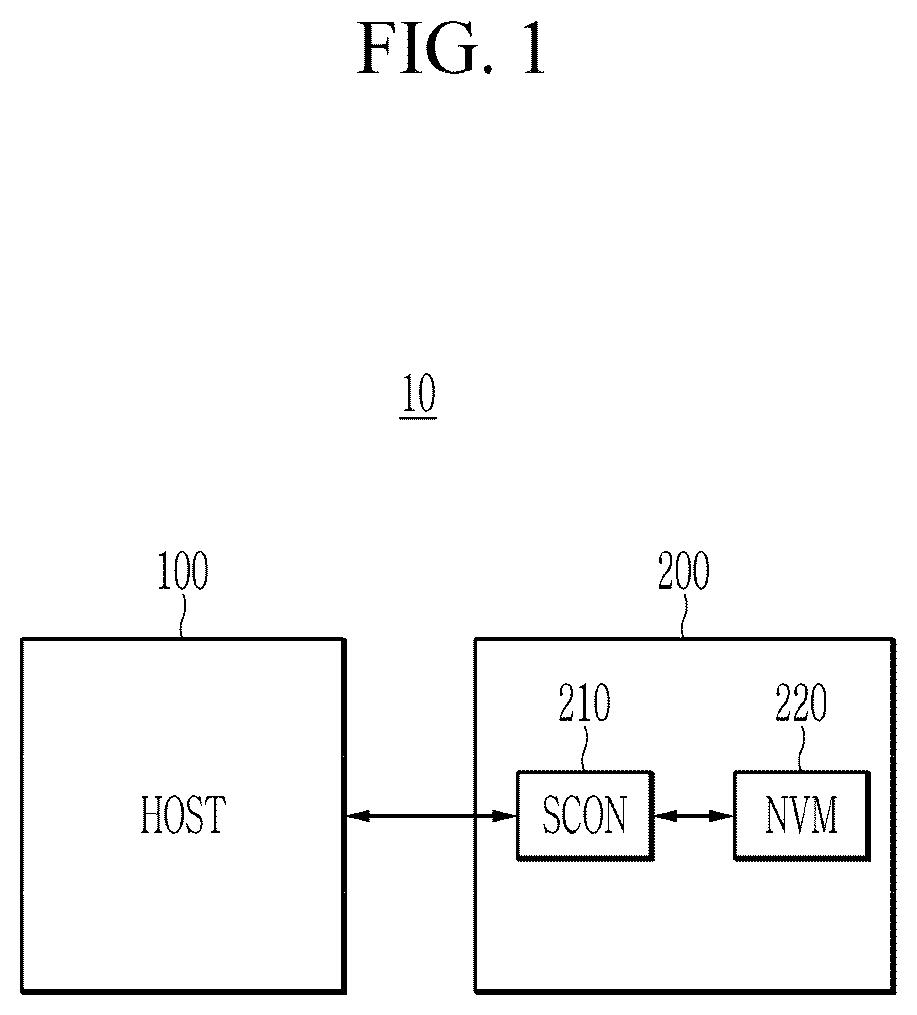
How Samsung's prefetch trick speeds up fragmented file reads
A cluttered hard drive works like a jigsaw puzzle dumped into a drawer: the pieces of any one picture are scattered around, not neatly stacked together. When your phone opens a file, its storage chip has to hunt down every fragment one by one, which adds up to small but real delays.
Samsung's patent describes a storage controller that gets a heads-up about where all those fragments live, right inside the same command your phone sends when it asks for a file. Armed with that map, the chip can start pulling every fragment into fast memory before your phone has finished making its request.
The system uses an existing communication format called UFS, which is the standard link between a phone's processor and its storage chip. Samsung's idea is to tuck the fragment map into an unused slot of that format, so no extra messages are needed. The result is fewer round-trip delays when loading files that are split across storage.
a non-volatile memory configured to store one file as a plurality of file fragments; and a storage controller configured to receive a read command with respect to the plurality of file fragments from a host through UFS protocol information unit (UPIU) …
Translation: The storage chip breaks files into pieces and gets instructions from the phone processor using a standard communication protocol.
How the storage controller reads the EHS field to prefetch fragments
Modern phone storage uses a standard called UFS (Universal Flash Storage), the wired protocol connecting a phone's processor to its memory chip. Every read request travels as a structured packet called a UPIU (UFS Protocol Information Unit), which has several defined fields.
The patent focuses on a field called the EHS (Extra Header Segment), an optional slot in that packet that has largely sat unused. Samsung's design puts file fragmentation information there: essentially a map telling the storage controller exactly which physical addresses hold the scattered pieces of a single file.
When the storage controller receives that enriched read command, it does two things at once:
- Responds to the immediate read request as normal
- Launches a prefetch (a read-ahead operation that pulls future data into fast buffer memory before it is explicitly requested) for all the other fragments listed in the EHS field
Because the fragment map arrives alongside the very first read command, the storage chip does not have to wait for a second request before it starts fetching the rest of the file. The host device, whether a phone or tablet, generates that map and populates the EHS field; the storage controller does the rest without any back-and-forth negotiation.
… perform prefetching on the plurality of file fragments based on file fragmentation information included in an extra header segment (EHS) field of the UPIU.
Translation: It anticipates what you need by reading extra details hidden inside the command header.
What faster file prefetching means for phones and tablets
File fragmentation is not a problem you see, but you feel it as the tiny hesitations when apps open or large files load. Because Samsung is describing a change at the storage protocol level, this fix would apply to any file type on any app, not just one use case. Phones, tablets, and laptops that use UFS storage chips could all benefit if the approach ships in hardware.
The practical ceiling here is how much of the improvement users would actually notice. For small files the gains are probably imperceptible. For large, heavily fragmented files, such as video recordings or big app bundles, the prefetch head-start could mean a real reduction in load times. the pattern in Samsung's storage-protocol filings suggests the company is working to squeeze performance from the UFS interface itself rather than simply adding more raw storage speed.
Samsung's 35th filing we've tracked since June in our next-generation SSD patents watchlist follows one on chips clashing during transfers and one on drives running out of instructions.
Claim 1 is notable for how broadly it is written. It covers any storage device that (a) uses UFS, (b) stores a file as fragments, and (c) performs prefetching based on fragmentation data in the EHS field. There is no limitation on the type of host device, the file format, or how the fragment map is generated. That breadth means, if granted, the claim would reach most UFS-based consumer storage chips doing this specific trick.
The narrowing question is whether the EHS field approach already exists in published UFS specifications or prior research. UFS is a well-documented industry standard maintained by JEDEC, so examiners will scrutinize whether stuffing fragment maps into EHS fields was already obvious or described elsewhere. If there is prior art covering read-ahead using header metadata in UFS, this claim shrinks fast.
For readers, this is competent storage engineering rather than a headline moment. The idea is logical and the patent is clear, but its real value depends entirely on how much white space Samsung found in the prior-art record.
There are more where this came from
We read every patent application Big Tech publishes and send you the ones worth knowing. Plain English, free, every week.
The drawings
19 drawing sheets from US 2026/0277487 A1 · click any drawing to enlarge


Want this weekly breakdown for a company we don't cover? Patentlyze Pro →