
Samsung Patents a Fix for Storage Drives That Run Out of Instructions to Process
When a storage drive's command queue fills up, work stalls. Samsung's new patent describes a way to sidestep that ceiling without redesigning the queue itself.
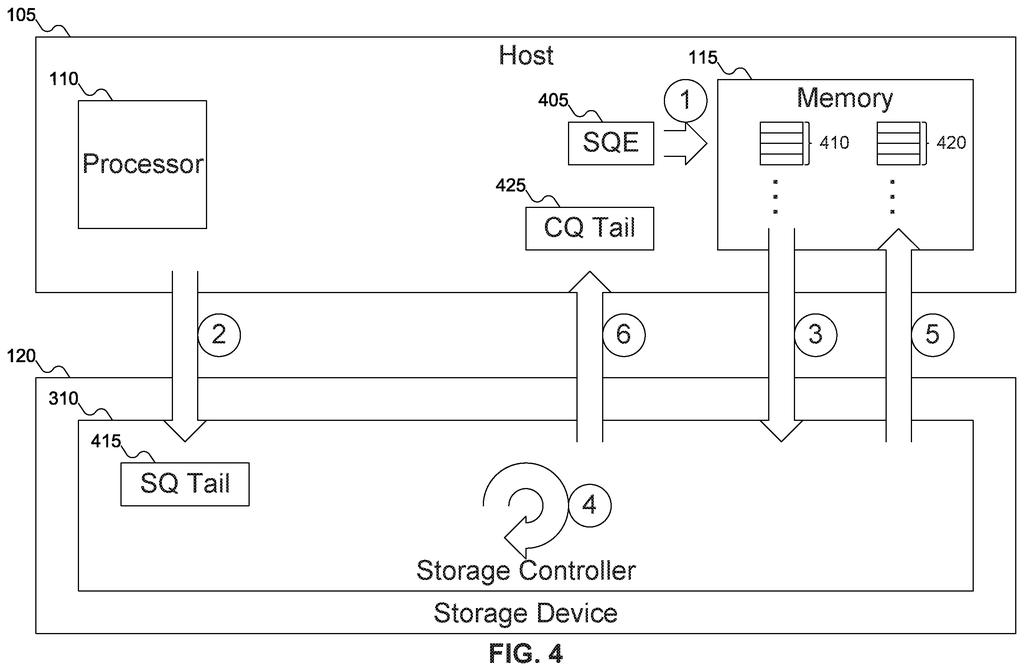
What Samsung's queue overflow fix actually does
Imagine you're at a busy deli counter where the ticket machine only holds 50 numbers. Once it's full, new customers can't even take a number, so the line breaks down. Your storage drive has a similar problem: it holds a queue of commands waiting to be processed, and that queue has a fixed size. When it fills up, things stall.
Samsung's patent describes a workaround that keeps the queue from becoming a hard wall. Instead of cramming all the information about a command directly into the queue slot, the slot holds a small pointer, a kind of forwarding address, that points to a separate structure stored elsewhere in memory. That second structure then holds two more pointers: one to the actual command data and one to the user's data. So the queue slot stays small, and the real payload lives outside.
The result is that a queue with a fixed number of slots can handle commands that carry more information than those slots were originally designed to fit, without changing the queue's structure or size.
1 . A memory, comprising: a first data structure stored in the memory, the first data structure including a field, the field to store a first identifier to a second data structure, the second data structure including a second identifier and a third identifier …
Translation: The memory organizes commands and user data using interconnected lists of identifiers.
How the pointer chain sidesteps the queue size limit
The patent describes a memory architecture built around a three-level chain of data structures.
Level one is the queue entry itself, a slot in the submission queue that storage hardware already uses to line up commands. Instead of holding everything a command needs, this slot holds a single first identifier (essentially a pointer, or memory address) that points somewhere else.
Level two is a second data structure stored at that address. It contains two more identifiers: a second identifier pointing to the actual command data (the instructions telling the drive what to do) and a third identifier pointing to the user data (the actual content being read or written).
The core insight is indirection. By replacing a direct, fixed-size payload with a forwarding address, you decouple the queue slot size from the amount of information a command actually needs to carry. The queue can stay the same size in hardware terms while the real metadata and data payloads live in a more flexible region of memory.
- Queue entry stores only a single pointer, keeping slots compact
- Second structure holds separate pointers to command metadata and user data
- Overflow is avoided because bulky payloads are stored outside the queue, not inside it
The second data structure may include a second pointer to a data relating to a command and a third pointer to a user data. The memory may also include a queue that may include the first data structure.
Translation: A queue holds the primary list, which points to separate records for commands and user data.
What this means for high-traffic storage hardware
Storage queues are a pressure point in any system that handles large volumes of read and write commands quickly, think data center SSDs, enterprise NVMe arrays, or high-throughput embedded storage. A queue that runs out of slots forces the system to wait, which wastes the speed advantage fast storage is supposed to provide.
This approach is a low-level engineering fix, not a user-facing feature, but it could translate into fewer bottlenecks in Samsung's storage products under heavy load. If the pointer-chaining method allows existing queue hardware to handle richer command payloads without a redesign, that is a meaningful efficiency gain for system architects building around Samsung memory.
Samsung's 33rd filing we've tracked since June in our next-gen SSD applications watchlist builds on one on drive self-reporting and one on faster storage writes.
Samsung's patent describes a smarter queuing system for storage controllers, one that uses a chain of forwarding addresses to handle a flood of incoming commands without getting stuck. The whole mechanism lives in software and data structures, not in new physical components.
That matters for how quickly this could reach real products. Because nothing here requires new manufacturing or new chips, the change could travel as a firmware update to drives that already exist, making the gap between idea and shipping product unusually small.
The problem it solves is specific: storage slows under heavy demand, and this targets that exact pressure point. It will not transform what a drive looks like on a spec sheet, but it is a credible explanation for why one drive stays composed when another one stumbles.
There are more where this came from
We read every patent application Big Tech publishes and send you the ones worth knowing. Plain English, free, every week.
The drawings
11 drawing sheets from US 2026/0277797 A1 · click any drawing to enlarge


Want this weekly breakdown for a company we don't cover? Patentlyze Pro →