
Nvidia Patents a Unified Audit Log That Stitches Together Multi-Node Activity
When a single request fans out across dozens of compute nodes, keeping a coherent audit trail is surprisingly hard. Nvidia's new patent tackles that exact problem — tying scattered logs back to one unified record.
What Nvidia's cross-node audit logging actually does
Imagine you submit a job to a large cloud system, and behind the scenes that job is split up and handled by five different servers. Something goes wrong, or a compliance auditor asks "what happened to request #4872?" — and suddenly you're digging through five separate log files trying to piece together a timeline. That's the problem this patent addresses.
Nvidia's idea is to assign a single audit identifier to each incoming request, then use that ID as a thread to link together all the activity logs generated across every node that touched the request. Instead of hunting through scattered records, you get one unified view.
When an audit request comes in, the system looks up that identifier, finds all the associated logs from all the nodes involved, and hands them back together. For enterprises running large distributed workloads — think GPU clusters for AI training or inference — this kind of traceable, consolidated logging is a real operational need.
How the audit engine maps operations across nodes
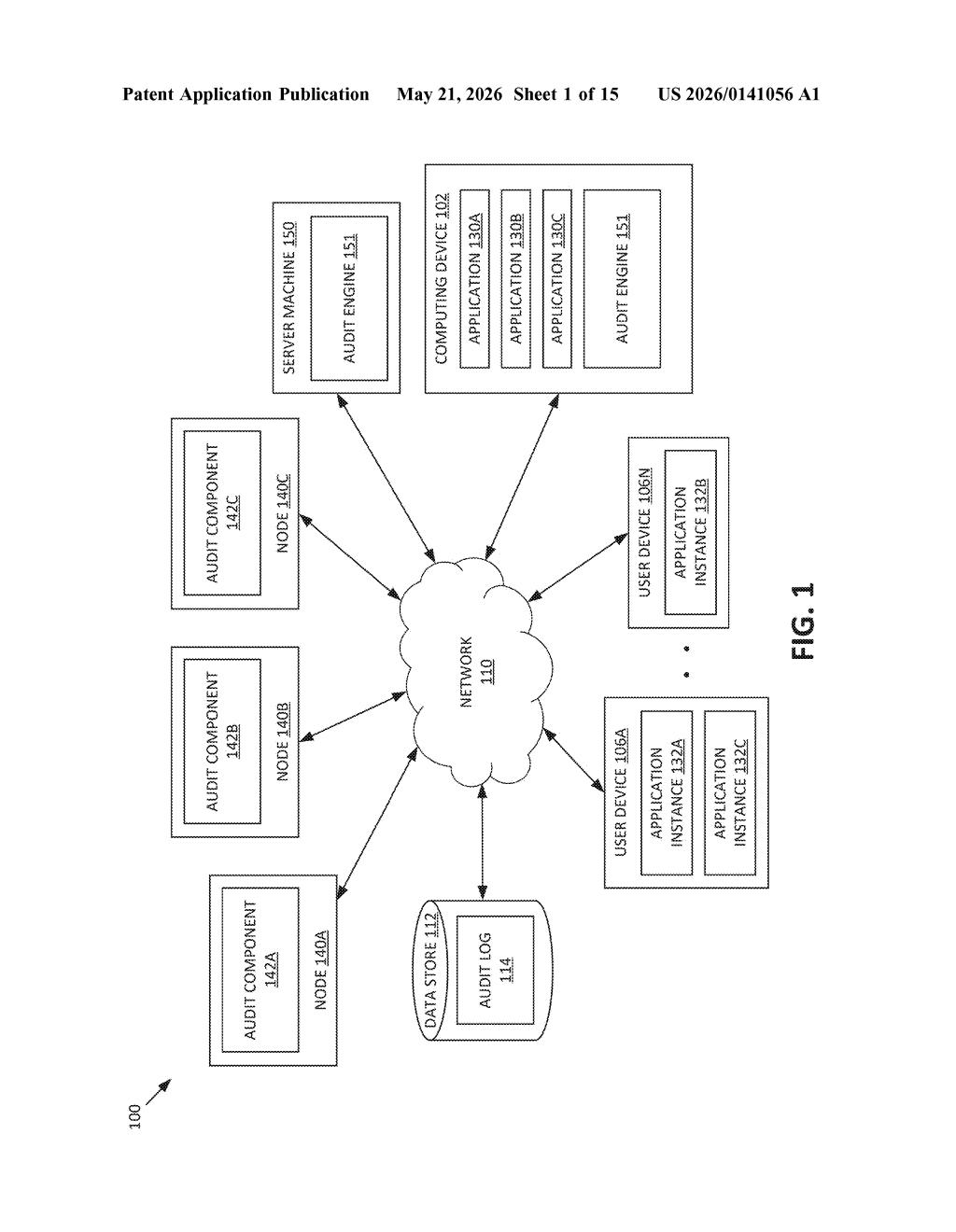
The patent describes a system with a central audit engine that collects log entries — called audit data — from multiple nodes in a distributed computing environment. Each node may be handling a different piece of the same original request, so the audit engine's job is correlation, not just collection.
At the core of the approach is a mapping stored in a central audit log. When a request comes in, an audit identifier is associated with it. As operations execute across Node A, Node B, and so on, each node generates its own audit data. The audit engine ties all of those entries to the same identifier in the log.
When someone later queries for the audit trail of a specific request, the system:
- Looks up the audit identifier in the central log
- Follows the mapping to locate all associated audit data entries across nodes
- Returns the full picture to the requesting client device
The patent covers both the method and the apparatus — including server machines, computing devices, and the data store that holds the consolidated audit log. It's architecturally straightforward, but the value is in the cross-node correlation being handled automatically rather than manually.
What this means for enterprise AI infrastructure compliance
For enterprises running distributed AI workloads on GPU clusters — Nvidia's core market — audit logging is increasingly non-negotiable. Regulations like SOC 2, HIPAA, and emerging AI governance frameworks require organizations to prove what happened, when, and where. Right now, piecing that together across dozens of nodes is largely a manual, error-prone process.
This patent suggests Nvidia is thinking about infrastructure-level compliance tooling as a first-class feature of its computing platforms, not just an afterthought. If this ends up baked into something like DGX Cloud or a future version of the NVIDIA AI Enterprise software stack, it could make multi-node traceability something customers get out of the box rather than having to bolt on themselves.
This is genuinely useful plumbing, even if it's not the kind of patent that makes headlines. Distributed audit logging is a real pain point for enterprise customers running GPU clusters, and the fact that Nvidia is patenting the coordination layer — not just the hardware — signals a push into infrastructure software. Don't expect anyone to write songs about it, but do expect this to ship quietly inside an enterprise product.
There are more where this came from
We read every patent application Big Tech publishes and send you the ones worth knowing. Plain English, free, every week.
Want this weekly breakdown for a company we don't cover? Patentlyze Pro →