
Adobe Patents AI-Driven Object Selection for Illustrations and Other Graphic Artwork
Selecting individual pieces of a complex vector illustration is one of the most tedious chores in graphic design. Adobe has filed a patent for a system that lets AI figure out which shapes you mean, so you don't have to click through dozens of overlapping paths yourself.
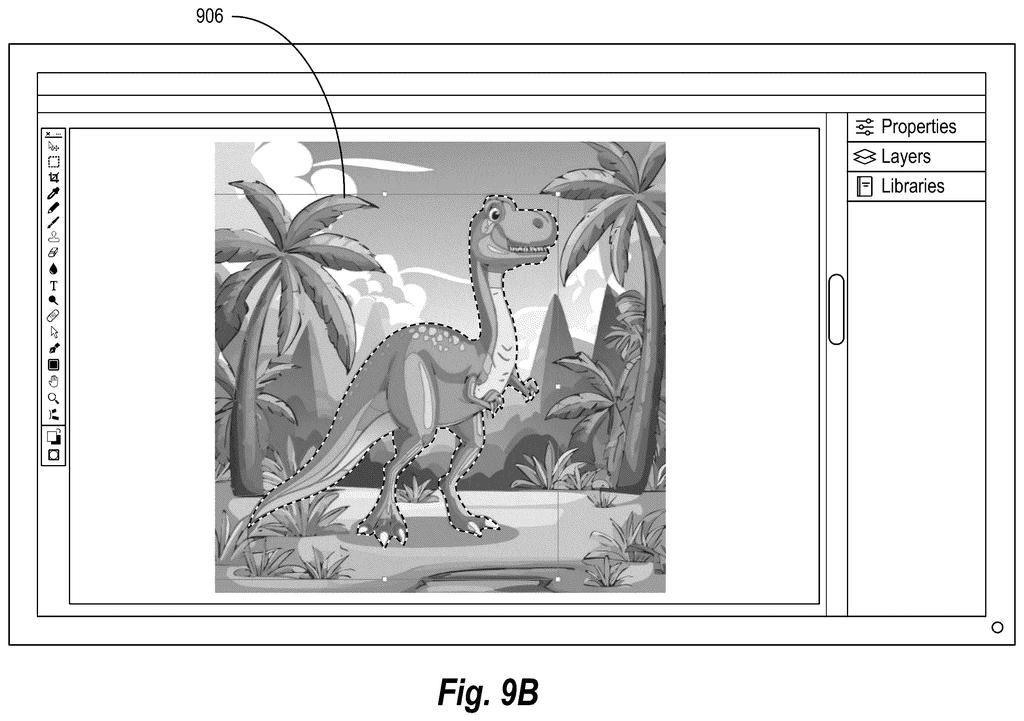
What Adobe's semantic shape-picker actually does for designers
Every time a designer opens a complex logo or illustration and tries to grab just one part of it, they face the same frustration: vector files are stacks of individual lines and shapes, and selecting the right group of them usually means clicking, shift-clicking, and hunting through a panel of cryptically named layers.
Adobe's new patent describes a system that lets you point at a region of an image and have AI figure out which underlying vector paths belong to that region. You indicate a spot or area; the system builds an understanding of what's there (say, a character's arm, or a car door), then automatically selects all the vector paths that make up that piece of the design.
The key idea is that the system understands meaning, not just coordinates. It knows you probably want the whole arm, not just the two paths your cursor happened to hover over. That's a qualitatively different kind of selection tool from anything in modern mainstream design software.
… generating, utilizing a semantic segmentation model, a semantic mask of a semantic region based on the portion indicated by the user input; selecting, utilizing a polyline model, a set of vector paths in the vector graphic corresponding to a location of the semantic mask; …
Translation: The system uses artificial intelligence to map out the exact area the user clicked and finds the underlying artwork lines.
How the polyline model maps an AI mask to real vector paths
The patent describes a two-stage pipeline. First, a semantic segmentation model (an AI trained to recognize what objects or regions are in an image) looks at the vector graphic and generates a "semantic mask" based on where the user points or clicks. Think of a mask as a highlighted zone that says: this blob of pixels belongs to one meaningful object.
Second, a polyline model takes that mask and maps it back onto the actual mathematical paths that make up the vector file. Vector graphics are not pixel images; they are instructions: draw a curve here, fill a shape there. The polyline model's job is to answer the question: which of these curve-and-fill instructions correspond to the region the mask identified?
The result is a proper vector selection: not a raster highlight, but the actual editable paths a designer would need to move, recolor, or delete that object.
- User points at part of the image
- Semantic segmentation model identifies the meaningful region
- Polyline model matches that region to specific vector paths
- Those paths are handed back as a usable, editable selection
The present disclosure relates to systems, methods, and non-transitory computer-readable media that selects a set of vector paths in a vector graphic.
Translation: This patent describes computer technology designed to automatically pick specific graphic paths in digital artwork.
What this means for Illustrator-style workflows and design tools
For working designers, the most direct payoff is time. Complex vector files, especially those exported from 3D tools or built up over years, can have hundreds of unlabeled paths. Finding the right ones manually is slow and error-prone. A tool that lets you point and say "that part" could cut a multi-minute task down to a single gesture.
The broader implication is that AI selection in design tools is moving from pixel-based images (where it already works reasonably well in apps like Photoshop) into the structured, mathematical world of vector graphics. That's a harder problem, because vector files don't have pixels to analyze directly. Adobe's long bet on AI-assisted design tools is visible across its recent filings, and this one pushes that work into territory that has stayed stubbornly manual.
Adobe's 22nd filing in the AI vision work we've tracked since May builds on earlier applications like one rewriting video frames and one fixing old photo corners.
Claim 1 here is broad. It covers any method that takes user input on a vector graphic, runs a semantic segmentation model to get a mask, uses a polyline model to find matching paths, and returns those paths as a selection. It does not specify which segmentation model, which polyline approach, or even what kind of user input triggers the process. That breadth means this claim, if granted, could cover a wide range of implementations, not just Adobe's specific engineering choices.
In practice, that scope could give Adobe leverage over competitors building similar AI-selection features into their own vector tools. Any design application that uses AI to identify a meaningful region and then automatically selects the underlying vector geometry would need to clear this claim.
What makes this more than a routine filing is the bridging problem it addresses: connecting pixel-level AI understanding (semantic masks live in the pixel world) to the path-level structure of a vector file. That translation step is genuinely hard, and the claim stakes out ownership of the entire approach, not just one way to do it.
There are more where this came from
We read every patent application Big Tech publishes and send you the ones worth knowing. Plain English, free, every week.
The drawings
19 drawing sheets from US 2026/0289848 A1 · click any drawing to enlarge


Want this weekly breakdown for a company we don't cover? Patentlyze Pro →
Be the first to weigh in