
Adobe Patents an AI System That Relights Portrait Photos to Match Any Scene
Got a great photo of someone but the lighting is all wrong for the scene you had in mind? Adobe has filed a patent for an AI system that can relight a portrait to match any lighting environment you specify, without a studio or a reshooot.
What Adobe's AI portrait relighting actually does
Have you ever taken a perfectly sharp, well-composed photo only to realize the lighting looks totally off for what you needed? Adobe's new patent tackles exactly that.
The idea is straightforward: you provide a photo of a person and tell the system what kind of lighting you want, and the AI produces a new version of the portrait that looks as if it was shot under those conditions. Want your headshot to look like it was taken in warm afternoon sunlight? Or in a softly lit studio? The system handles it.
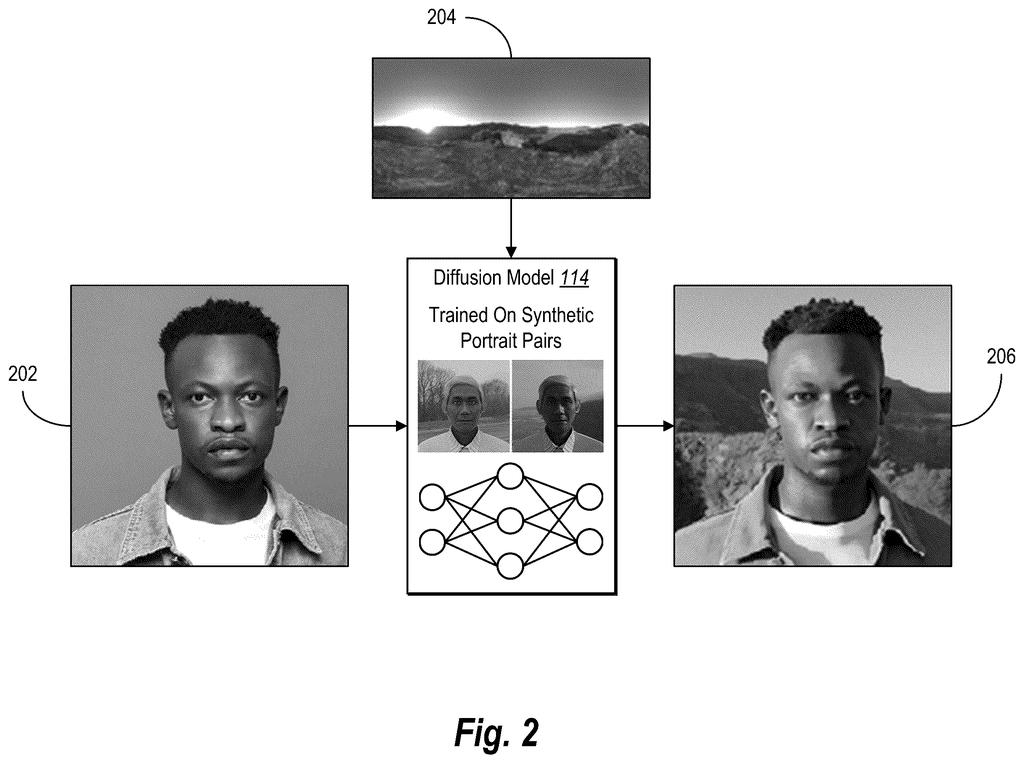
Rather than just slapping a filter on top, Adobe's approach uses a type of AI called a diffusion model (the same family of technology behind image generators like Stable Diffusion) to actually reconstruct the light falling on a person's face. The model was trained on synthetic, computer-generated images so that it learned precisely how light behaves on human subjects.
generating, utilizing a diffusion model, a first noised image based on a first digital image comprising a portrait of a subject and based on an environment map defining a new lighting scheme for the subject …
Translation: The AI creates a modified version of the original photo by applying a new set of digital lighting rules.
How the diffusion model blends two image streams
The patent describes a two-track process that runs inside a single diffusion model, which is an AI that works by gradually removing noise from a scrambled image until a coherent picture emerges.
- Track one takes the original portrait photo and an environment map (a 360-degree image that encodes where light is coming from and how bright it is) and produces a partially processed, noisy version of the image under the new lighting.
- Track two takes only the environment map and a text description of the subject (for example, 'a woman with short hair in a blue jacket') and generates a separate noisy image that represents how a person described that way would look under that lighting.
- The two noisy outputs are then combined and the diffusion model finishes generating a final, clean portrait that respects both the original person's appearance and the new lighting conditions.
The key insight is that blending the two streams before the final image is assembled lets the model preserve identity details from the original photo while pulling realistic lighting behavior from the text-and-environment track. The model was trained entirely on synthetic image data, meaning computer-generated portraits with known lighting conditions, so it learned the physics of light without needing a massive dataset of real, manually lit photographs.
What this means for photographers and content creators
For photographers, designers, and content creators, relighting a portrait after the fact has historically meant either hiring a retoucher or accepting the limitations of what filters can do. What Adobe is describing here would let you correct or completely reinvent the lighting on a portrait image at the editing stage, matching a headshot to a background, fixing a poorly lit corporate photo, or creating consistency across a set of images shot in different conditions.
The training approach is also worth noting. Because the system learned from synthetic data, Adobe can potentially improve it without the privacy and consent complications that come with training on photographs of real people. That could make it easier to roll out inside tools like Photoshop or Lightroom without legal friction.
This is the 35th Adobe filing we've tracked since May in the AI photo editing race, following one on new angles from one photo and one on cutting moving people from video.
Relighting a portrait used to mean reshooting or hours of careful manual editing, and most people just lived with a photo that felt slightly off for wherever it ended up. This patent lets someone swap in a new lighting scheme and get a result that looks like the photo was always taken that way.
The consistency matters more than it might seem. Because the system learned from synthetic images where every shadow and light source was precisely controlled, the results behave predictably rather than producing something that works once and fails the next time on a slightly different photo.
For portrait photographers, HR teams producing headshots at volume, or anyone who has ever wished a favorite photo fit a different context, the practical payoff is clear: you keep the photo you already like, and it travels with you.
There are more where this came from
We read every patent application Big Tech publishes and send you the ones worth knowing. Plain English, free, every week.
The drawings
17 drawing sheets from US 2026/0278919 A1 · click any drawing to enlarge


Want this weekly breakdown for a company we don't cover? Patentlyze Pro →