
Qualcomm Patents a Camera That Sharpens Its Focus Toward Any Sound It Hears
A Qualcomm patent describes a camera system that listens for sounds, guesses where your eyes are about to go, and sharpens that part of the image before you even look. It is essentially a camera that reads audio cues the way a seasoned photographer reads a room.
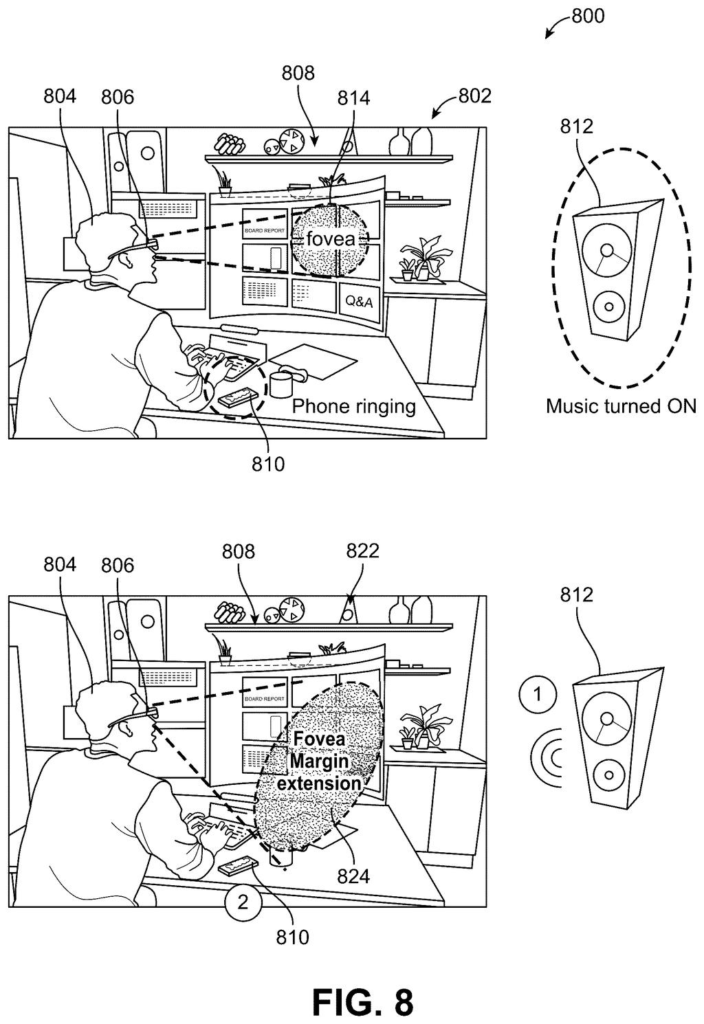
What Qualcomm's sound-guided camera focus actually does
Every time something loud happens nearby, your eyes snap toward it automatically. That reflex is deeply human, and your camera currently has no idea it is happening.
Qualcomm's new patent teaches a device to do the same thing. A microphone picks up a sound, the system figures out which direction it came from, calculates how likely you are to look that way, and if that probability is high enough, it tells the camera to treat that area as the most important part of the frame. The camera then puts its processing power there, sharpening that region while treating the rest of the image as less urgent.
The practical effect is that the device anticipates where you want sharp detail before you consciously decide to look. Instead of processing every pixel of a scene equally, it concentrates effort on the spot that is about to become interesting.
… determine a probability that a user of the device will look toward the sound source; based on the probability exceeding a threshold, determine a region of interest (ROI) of a field of view (FOV) of a camera of the device based on the direction …
Translation: The device guesses if you will turn to look at a noise, and zooms the camera there if it thinks you will.
How the chip links microphone direction to image processing
The system works in four linked steps. First, a microphone captures audio from the environment. The device then analyzes that audio to determine the direction of a sound source, using techniques like comparing the tiny time difference between a sound arriving at two separate microphones (a method called time-difference-of-arrival).
Second, the processor calculates a probability that the user will actually turn their gaze toward that sound. Not every noise earns attention; a car honking nearby is more likely to draw your eyes than a distant background hum. The system applies a threshold, and only sounds that cross it trigger the next step.
Third, the system maps that sound direction onto the camera's field of view to define a region of interest (ROI), a rectangular or shaped zone within the full frame that corresponds to where the sound came from.
- Image processing resources (sharpening, higher resolution encoding, noise reduction) concentrate on the ROI.
- Pixels outside the ROI receive lighter processing, saving compute and power.
- The ROI updates dynamically as new sounds arrive.
This approach is a version of foveated imaging, a technique borrowed from how human eyes work: maximum detail in the center of gaze, less everywhere else. Here, audio substitutes for an eye-tracker to predict where the center of gaze is about to land.
… determining a direction related to a sound source in an environment based on audio data captured by a microphone of a device in the environment …
Translation: The system uses the device microphone to figure out where a sound is coming from.
What this means for phones, glasses, and action cameras
For phone cameras and AR glasses, every millisecond of processing time and every milliwatt of power matters. By letting sound steer where the camera concentrates, a device can deliver sharper results on moving or unexpected subjects without demanding more battery or a faster chip. You get better video of the thing that just made noise without having to tap or swipe to refocus.
Qualcomm has been filing around sensor-fusion and perceptual computing for several years, and this patent fits that direction squarely. The approach also has obvious relevance for wearables and smart glasses, where there is no screen to tap and hands-free, attention-aware imaging is the whole point.
Qualcomm's 43rd filing we've tracked in the AR glasses race watchlist since July builds on earlier applications like per-viewer picture quality and mapping spaces with radio signals.
Claim 1 covers any device that listens for a sound, estimates how likely a user is to look toward it, and then sharpens the camera's focus on that area when the probability crosses a threshold. Nothing in the claim limits this to a phone or a specific chip. A dashcam, a tablet, an AR headset, any camera paired with a microphone could fall inside it.
That breadth matters because the trigger mechanism is the audio probability step, not eye-tracking or head movement. Any competing product that routes microphone direction data through a likelihood estimate before adjusting what the camera prioritizes would have a real problem clearing this claim.
The practical result for users would be invisible: a camera that improves its aim in the half-second after a sound occurs, no tapping required. The claim is wide enough that, if granted, it could give Qualcomm a meaningful toll position across a broad category of smart camera hardware.
There are more where this came from
We read every patent application Big Tech publishes and send you the ones worth knowing. Plain English, free, every week.
The drawings
20 drawing sheets from US 2026/0292357 A1 · click any drawing to enlarge


Want this weekly breakdown for a company we don't cover? Patentlyze Pro →
Be the first to weigh in