
Google Patents an AI Audio Generator That Runs at the Same Speed Regardless of Clip Length
Most AI audio systems slow down as clips get longer. Google is patenting an approach that generates audio in the same number of steps whether the output is one second or one minute.
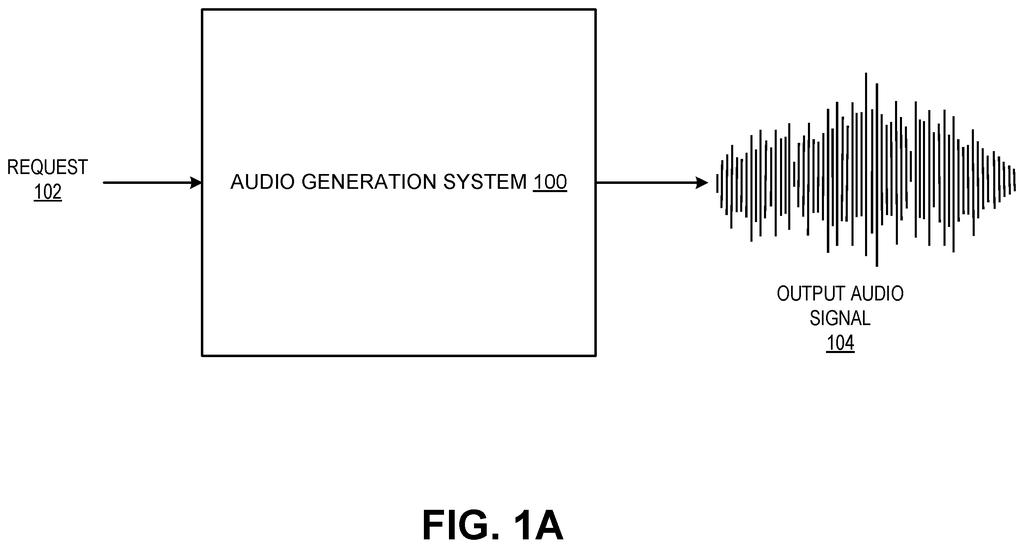
What Google's fixed-step audio generation actually does
Imagine asking an AI to compose a ten-second jingle, then a ten-minute soundtrack. With most AI audio tools today, the longer request takes proportionally longer to complete because the system builds audio one small piece at a time, from start to finish.
Google's patent describes a different approach. Instead of generating audio sequentially, the system treats an audio clip like a puzzle with some pieces missing. It looks at the whole puzzle at once and fills in all the blanks in a set number of rounds, regardless of how long the audio is.
The practical upshot: you could theoretically generate a short sound effect and a long piece of music in roughly the same amount of time. That kind of speed is important for applications where audio needs to be produced quickly, like voice assistants, game engines, or real-time content creation tools.
… processing the sequence of embeddings using a pooling layer of the neural network to generate a sequence of pooled embeddings, wherein each pooled embedding in the sequence of pooled embeddings results from pooling a respective plurality of embeddings from the sequence of embeddings; …
Translation: The system groups chunks of data together to make them easier to process.
How the neural network fills masked audio tokens in parallel
The core idea is called non-autoregressive decoding. Standard AI audio generators are "autoregressive," meaning they produce one token (a small chunk of audio data) at a time, each depending on the last, like typing a sentence one letter at a time. The longer the output, the more steps it takes.
Google's system flips that model. It starts with a sequence of audio tokens where some positions are masked (hidden or unknown), then uses a neural network to predict all the missing pieces simultaneously. The number of passes through the network stays constant no matter how many tokens are in the sequence.
The network itself has three notable stages:
- Embedding layer: converts each audio token into a numerical representation the network can work with.
- Pooling layer: compresses groups of those representations into shorter summaries, so the attention step doesn't have to process every single token individually (a practical efficiency trick).
- Attention block: uses self-attention (the same mechanism behind large language models) to let every summary "look at" every other summary before making predictions, capturing long-range patterns in the audio.
The network then maps those summaries back to individual token positions and outputs a prediction for each masked slot. Repeat that loop a fixed number of times, and you get the final audio.
In some implementations, the output audio signal can be generated by using a generative neural network in a number of iterations that is independent of the length of the output audio signal.
Translation: The AI creates audio clips using the exact same amount of computing steps no matter how long the final sound is.
What this means for real-time AI audio tools
For everyday users, the appeal is speed and scalability. AI tools that generate music, voice, or sound effects today can feel sluggish when you request anything longer than a few seconds. A system that doesn't slow down with length could make real-time audio generation practical in places it currently isn't, such as live video games, interactive voice applications, or on-device assistants.
For Google specifically, this fits a broader interest in making generative AI faster without simply throwing more computing power at it. Efficiency gains at the architecture level (the structure of how the model works) tend to be more durable than raw hardware scaling, so this kind of approach has staying power if it holds up in production.
Google's 47th filing in Voice & speech AI we've tracked since May follows applications like knowing when you've stopped talking and remembering what you asked for.
Autoregressive audio generation keeps outputs coherent by conditioning each new moment on everything before it, the way a musician listens while they play. Google's approach throws that out in favor of predicting everything at once, which is faster but removes the built-in safety net that keeps longer clips from sounding patchy.
The architecture tries to compensate by compressing audio into summary tokens before running attention across them. Compression always drops detail, and what gets lost in that step is exactly what the ear notices first: subtle timing, texture, the sense that a sound belongs to itself across time.
Speed matters enormously for any product that generates audio on demand, so the prize here is clear. Whether the quality holds up under that constraint is a question listening tests answer, not patent diagrams, and that gap between described method and shipped result is where this architecture will succeed or fail.
There are more where this came from
We read every patent application Big Tech publishes and send you the ones worth knowing. Plain English, free, every week.
The drawings
5 drawing sheets from US 2026/0290306 A1 · click any drawing to enlarge


Want this weekly breakdown for a company we don't cover? Patentlyze Pro →
Be the first to weigh in