
Nvidia Patents an AI Assistant That Remembers Your Preferences Across Conversations
Most AI chatbots forget everything the moment you close the window. Nvidia has filed a patent for a system that remembers what you tell it and pulls that information back in when it becomes relevant later.
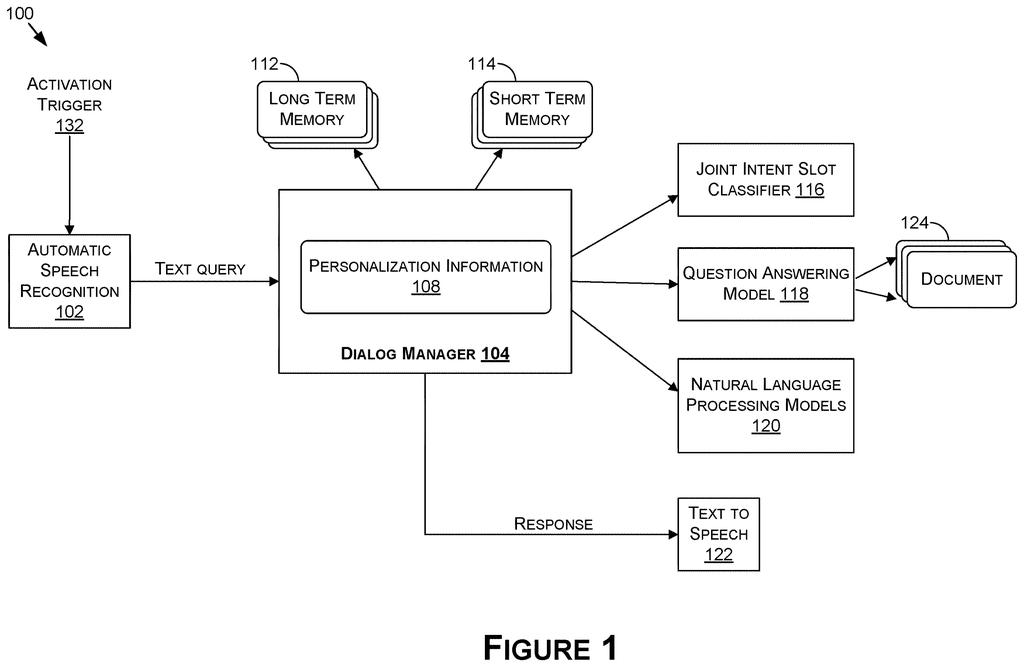
What Nvidia's conversational AI memory system actually does
A person tells a chatbot they're vegetarian. They close the app, come back a week later, and ask for a dinner recipe. The chatbot has no idea they're vegetarian. You've probably hit this wall.
Nvidia's patent describes a system designed to fix that. When you tell a conversational AI something personal, the system recognizes that instruction, saves it in a personal data store, and then checks that store later when you ask a question where that detail would matter. The AI figures out, from plain language, both when something is worth saving and when something saved is worth pulling back in.
The system searches two places: a tidy, structured database for fast lookups, and a looser, unstructured store for things that don't fit neatly into a table. If the structured database comes up empty, it digs into the unstructured one. The result is an AI that can give you answers shaped around your history, not just the question you typed.
determine, using one or more natural language processing (NLP) models, an intent expressed in a first query to a conversational artificial intelligence (AI) platform, the intent representing a user requested instruction to store personalization data derived from the first query in one or more data stores associated with a user …
Translation: The system figures out when you are telling it to remember something for later use.
How the system stores and retrieves your personal context
The patent describes a processor-level architecture where natural language processing (NLP) models do two separate jobs. First, when you send a message that expresses a preference or instruction ("I prefer morning meetings," "I'm allergic to shellfish"), the system classifies that as a storage intent and saves the relevant data to a personal store tied to your account.
Second, when you ask a follow-up question later, the same NLP models evaluate relevance: does anything in your personal store apply to what you just asked? If yes, the system incorporates that stored data when generating the response. The two steps are handled by the same underlying models but treated as distinct inference tasks.
Data is kept in two forms:
- Structured data: organized like a spreadsheet, fast to query (think: "user prefers X")
- Unstructured data: free-form notes or text, searched as a fallback when structured lookup fails
The claim does not specify which NLP architecture handles this, which means it is written broadly enough to cover a range of implementations, including large language models. The patent covers the decision loop itself, from detecting intent to storing data to checking relevance to generating the response, as a unified system.
… if data for a response to a query is not stored in a structured data structured, the conversational AI platform searches for the data in an unstructured data structure …
Translation: If the bot cannot find your saved info in organized files, it searches through raw notes instead.
What persistent AI memory means for everyday chatbot users
Every major AI assistant today treats each conversation as a blank slate unless the company has built explicit memory features on top. Nvidia's patent describes the underlying plumbing for making that memory automatic and language-driven. If your AI platform is built on something like this, it stops feeling like a search engine and starts behaving more like a colleague who actually paid attention last time you spoke.
Nvidia's bet on conversational AI infrastructure shows up clearly here. The company is less focused on the chatbot surface you see and more on the backend systems that make those chatbots useful in enterprise and developer environments. For you as a user, better memory means fewer times you have to re-explain yourself, and more answers that actually fit your situation.
Nvidia has filed its second application we've tracked since August in our AI assistants that remember you watchlist, following a speaker-memory patent.
Claim 1 covers any system that does three things: remembers what a user wanted to save during one conversation, judges how relevant that saved information is when a new question arrives, and uses it to shape the answer. No specific technology, industry, or application type is required. That is a very wide net.
If granted, this claim could give Nvidia leverage over a large share of enterprise chatbot products, because storing user preferences and pulling them up contextually is now a standard feature, not a specialty one.
The defensible core is the two-step loop: the system has to actively detect saving intent at one moment, then score relevance at a later moment. That specific sequence is narrow enough to argue in court, but broad enough to matter commercially across most modern assistant software.
There are more where this came from
We read every patent application Big Tech publishes and send you the ones worth knowing. Plain English, free, every week.
The drawings
7 drawing sheets from US 2026/0288790 A1 · click any drawing to enlarge


Want this weekly breakdown for a company we don't cover? Patentlyze Pro →
Be the first to weigh in