
Waymo Patents an AI That Stops Its Robotaxis From Blocking Traffic
One of the most complained-about behaviors of robotaxis is stopping in the wrong spot and snarling traffic. Waymo is now patenting an AI system that catches this problem in real time and moves the car before anyone gets stuck.
How Waymo's AI decides whether its cars are in the way
Imagine you're riding in a Waymo robotaxi and it pulls over to drop you off, right in the middle of a busy intersection, blocking a bus lane and two lanes of traffic. Nobody inside the car notices, because there's no driver to notice. That's the kind of situation this patent is designed to prevent.
Waymo's system uses the car's sensors (cameras, radar, lidar) to build a picture of everything around it, then feeds that picture into a generative AI model, the same kind of AI behind tools like ChatGPT, with a specific question: is this car blocking traffic right now? If the answer is yes, the car moves itself to a better spot without anyone telling it to.
The goal is to make the car aware of its own impact on the street around it, not just whether it can technically stop somewhere, but whether stopping there is actually causing a problem for other people.
generate a prompt for a generative artificial intelligence (AI) model, the prompt comprising: spatial data characterizing the driving environment …
Translation: The car builds an AI prompt using spatial data about its surroundings.
How the AI prompt judges a car's stopping position
The patent describes an autonomous vehicle equipped with a sensing system (cameras, lidar, radar) that continuously monitors the driving environment. When the vehicle stops or is about to stop, the system doesn't just check whether the spot is physically clear; it asks whether the vehicle is actively obstructing traffic.
To do that, the system packages up a spatial prompt for a generative AI model. That prompt includes either raw sensor data or a structured description of nearby objects (other cars, pedestrians, lane markings, bus stops) and their positions, plus a direct question asking the model to judge whether the vehicle is blocking traffic.
The generative AI model (think of it as a reasoning engine that can interpret complex scene descriptions in natural language or structured data) processes that prompt and returns a response. If the response says the vehicle is obstructing traffic, the vehicle's autonomous control system automatically repositions it.
What makes this different from a simpler rule-based approach is that a generative model can reason about context. A parked car in a bus lane at rush hour is different from the same car at midnight. Rather than hardcoding every possible scenario, Waymo is asking an AI to judge the situation the way a human dispatcher might.
… evaluation of suitability of stopping locations of a vehicle using a generative AI model.
Translation: The system uses generative AI to check if where it stopped is appropriate.
What this means for robotaxi riders and city streets
Robotaxis blocking traffic has been a real, documented problem in cities like San Francisco, where autonomous vehicles have stopped in the middle of streets and caused delays for buses and emergency vehicles. A system that catches this automatically, without a remote operator having to intervene, could reduce those incidents considerably.
For riders, it means fewer awkward drop-offs in bad spots. For city regulators who are already skeptical of robotaxi permits, it's the kind of operational improvement that could matter in licensing negotiations. Waymo's bet on full autonomy depends on the cars behaving like good citizens on real streets, not just passing closed-course tests, and this kind of self-correction is a concrete step in that direction.
Google's 57th filing we've tracked since May in our Waymo robotaxi sensing watchlist builds on earlier applications like predicting nearby drivers' moves and planning pull-overs near hidden spots.
The shortest path from this patent to a shipped feature is actually pretty short. Waymo's vehicles already have all the sensors described, and generative AI models are already being integrated into vehicle software stacks across the industry. There's no new hardware requirement here, just a new software loop connecting existing components.
The harder question is latency. Sending a scene description to a generative AI model and waiting for a response takes time, and in a city driving context, that window matters. The patent doesn't specify whether the model runs on-device or in the cloud, and that detail is everything for real-world reliability.
Still, the underlying idea is practical and addresses something people actually complain about. If Waymo can get the inference time low enough, this reads like a near-term software update rather than a long-horizon research project.
There are more where this came from
We read every patent application Big Tech publishes and send you the ones worth knowing. Plain English, free, every week.
The drawings
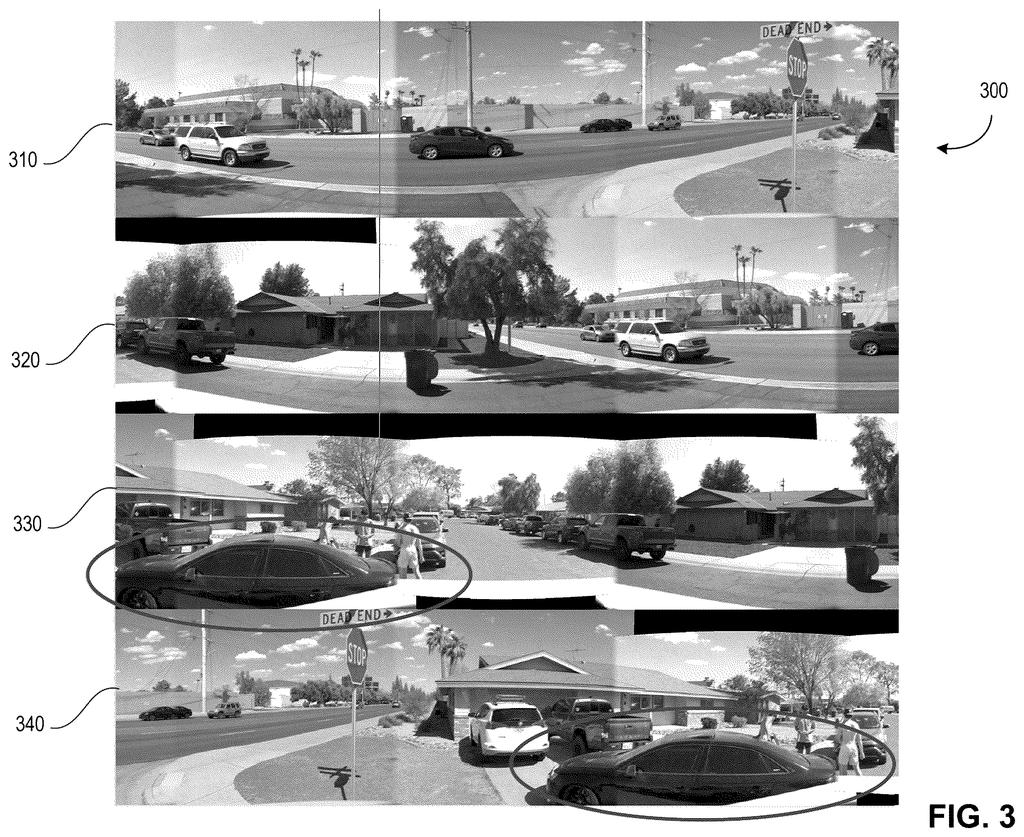
7 drawing sheets from US 2026/0285357 A1 · click any drawing to enlarge


Want this weekly breakdown for a company we don't cover? Patentlyze Pro →
Be the first to weigh in