
Apple Patents a System That Shows Different Apps Different Times Simultaneously
Your iPhone always knows what time it is — but Apple is patenting a way to lie to certain apps about it, deliberately and simultaneously, without touching the real system clock.
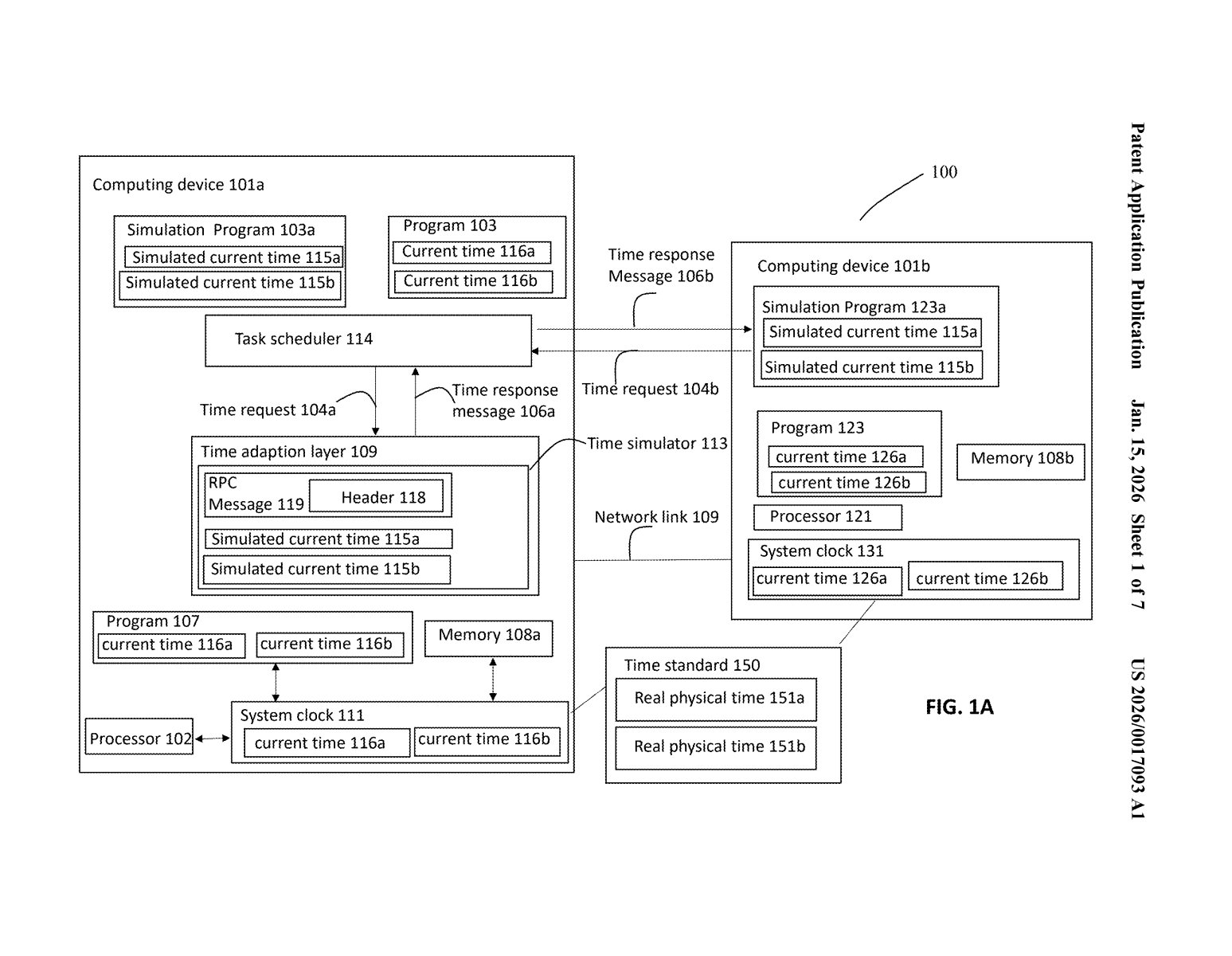
What Apple's simulated clock layer actually does
Imagine you're building a calendar app and you need to test what happens at midnight on New Year's Eve — but it's currently 2pm on a Tuesday in July. Normally, you'd have to manually change your device's clock, which breaks everything else running on the system. Apple's patent describes a smarter solution.
The idea is a "time adaptation layer" — a software middleman that sits between apps and the real system clock. The real clock keeps ticking normally. But certain apps can be handed a simulated time instead — say, December 31st at 11:59pm — while other apps on the same device still see the real current time.
This means two apps can be running at the same moment, each believing it's a completely different time, with neither one disrupting the other. It's a bit like running two clocks in parallel: one telling the truth, one telling a controlled fiction.
How Apple's time adaptation layer intercepts clock calls
The patent describes a computing device architecture with three key components working together:
- System clock — the device's real timekeeping hardware, always synced to actual physical time.
- Time adaptation layer (TAL) — a software layer operated by the processor that intercepts time requests from apps.
- Time simulator — a component inside the TAL that generates one or more simulated current times, which can be arbitrarily different from real time.
When Program A asks "what time is it?", the TAL passes it straight through to the real system clock. When Program B asks the same question at the exact same moment, the TAL intercepts and returns the simulated time instead. Both programs are running concurrently on the same processor; they just have different views of "now."
The claim language says the simulated time must be "substantially different" from real time — meaning this isn't about minor timezone offsets. This is designed for large temporal jumps, like simulating a future date or replaying a past one.
The architecture also implies multiple programs could each receive different simulated times simultaneously, since the TAL sits as a layer above the system clock and can route responses independently per process.
What this means for app testing and time-sensitive software
The most obvious use case is developer tooling — letting engineers test time-sensitive features (subscription renewals, notification scheduling, date-based UI logic) without forcing a device-wide clock change that breaks other running processes. Anyone who has ever manually set their Mac's clock to test a trial-expiration screen knows how clunky that workflow is.
But the deeper implication is for sandboxed app environments and enterprise device management. A managed device could, in theory, run compliance-sensitive apps in a temporally isolated sandbox — ensuring those apps behave as if operating in a specific regulatory time window. It could also have implications for app review automation, where Apple's own infrastructure might benefit from simulating time conditions at scale across many app instances simultaneously.
This is a genuinely clever piece of systems plumbing. It's not a consumer-facing feature you'll ever see in a Settings menu, but it solves a real and annoying problem for developers and QA pipelines. The elegance is in keeping the real clock untouched — the TAL approach is clean, composable, and could scale across Apple's entire developer toolchain from Xcode Simulator to TestFlight.
There are more where this came from
We read every patent application Big Tech publishes and send you the ones worth knowing. Plain English, free, every week.
Want this weekly breakdown for a company we don't cover? Patentlyze Pro →