
Google Patents a Fix for 3D Displays That Show Depth in the Wrong Order
When two objects share the same screen in a 3D display, the one that should appear closer can end up looking farther away, breaking the illusion entirely. Google has filed a patent for a method that reorders depth on the fly to prevent that from happening.
What Google's stereoscopic depth fix actually does
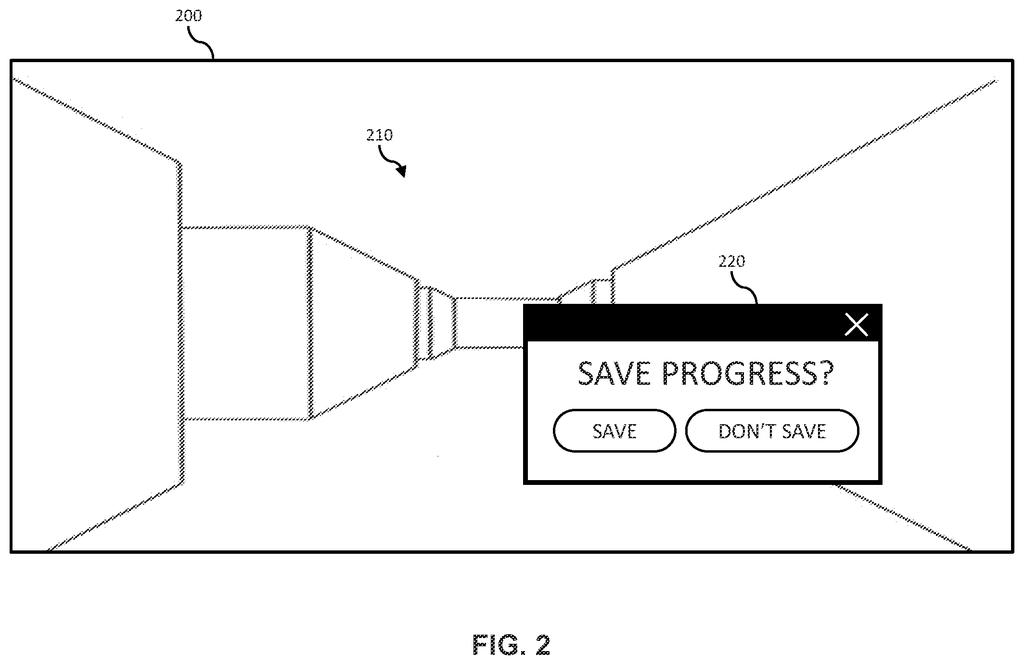
On a regular 2D screen, layering windows on top of each other is simple: one covers the other, and your brain accepts it. On a 3D display or augmented reality headset, though, depth is an extra dimension the screen has to get right. If a background image is set to appear closer to you than a foreground image sitting on top of it, your brain gets a contradictory signal and the illusion collapses.
That conflict is exactly what this patent targets. Google's approach detects when two separate apps are displaying images at incompatible depths, then adjusts the background app's apparent depth so it sits behind the foreground content, where it belongs. The user shouldn't notice the adjustment itself, only that the display looks correct.
Once the two images stop overlapping, the background app's depth setting goes back to where it was. The whole process is automatic, managed at the system level rather than requiring either app to know or care about the other.
providing a first interpupillary distance to a first application to render first stereoscopic images at a first stereoscopic depth based on the first interpupillary distance; providing a second interpupillary distance to a second application to render second stereoscopic images at a second stereoscopic depth based on the second interpupillary distance …
Translation: Apps are fed custom eye separation measurements to force objects to render at specific depths.
How Google adjusts interpupillary distance to reorder layers
In stereoscopic 3D, your left and right eyes see slightly different images. The gap between those two images (tied to a measurement called interpupillary distance, or IPD, which normally refers to the gap between your pupils) controls how close or far something appears to float. A smaller IPD value means the image appears closer; a larger value means it recedes into the background.
The patent describes a system where two applications each receive their own IPD value, independently controlling the depth at which their content appears. The problem arises when the background app's IPD value is smaller than the foreground app's, making the background content appear closer than the foreground content sitting on top of it. That's a depth conflict: the visual order and the perceived depth order contradict each other.
Google's method resolves this by feeding the background app a modified IPD value while the overlap is happening, pushing its apparent depth further back where it belongs. The system also factors in head-translation (the slight shift in perspective as you move your head side to side) to maintain realistic motion parallax, meaning objects still behave naturally as you move rather than appearing frozen or flat.
When the overlap ends, the background app's original IPD value is restored, returning its content to its intended depth position.
A depth conflict between objects displayed on a stereoscopic display occurs when a background object is rendered at a first depth that is smaller than a second depth of a foreground object overlaid on the background object.
Translation: Things that should be far away accidentally appear closer than the objects sitting directly in front of them.
What this means for AR headsets and 3D display users
If you use an AR headset or a 3D display where multiple apps run side by side, this kind of depth conflict is the thing that makes the experience feel broken without you necessarily knowing why. Your eyes send contradictory signals to your brain, and the result ranges from mild visual confusion to headache-inducing discomfort. A system-level fix means neither app has to be coded to handle it, which matters a lot when apps are built by different developers who don't coordinate with each other.
For Google, this is practical groundwork for any device where 3D content from multiple sources has to coexist, including its Android XR platform and headset partnerships. The fix is invisible when it works, which is exactly what you want from display plumbing.
Google's 44th filing we've tracked in our smart glasses display watchlist since May builds on work like the edge-to-edge waveguide and the head-motion stability fix.
When you watch a 3D video and a notification pops up on screen, your eyes suddenly disagree about what's close and what's far, and that friction is immediate and uncomfortable even if you can't name what caused it.
This fix works by adjusting where the background sits in space while something overlays it, then returning everything to normal once the overlap clears. You never touch a setting, and no app needs to ask permission from another.
For anyone using a stereoscopic display today, this means one fewer moment where the technology reminds you it isn't quite finished.
There are more where this came from
We read every patent application Big Tech publishes and send you the ones worth knowing. Plain English, free, every week.
The drawings
10 drawing sheets from US 2026/0303770 A1 · click any drawing to enlarge


Want this weekly breakdown for a company we don't cover? Patentlyze Pro →
Be the first to weigh in