
IBM Patents a System That Adjusts AI Prompts to Match How Different People Talk
Different people talk in different ways, and AI that ignores that tends to produce text that feels off. IBM has filed a patent for a system that measures how "surprising" AI-generated prompts are to a reader, then dials that up or down to match a specific audience's communication style.
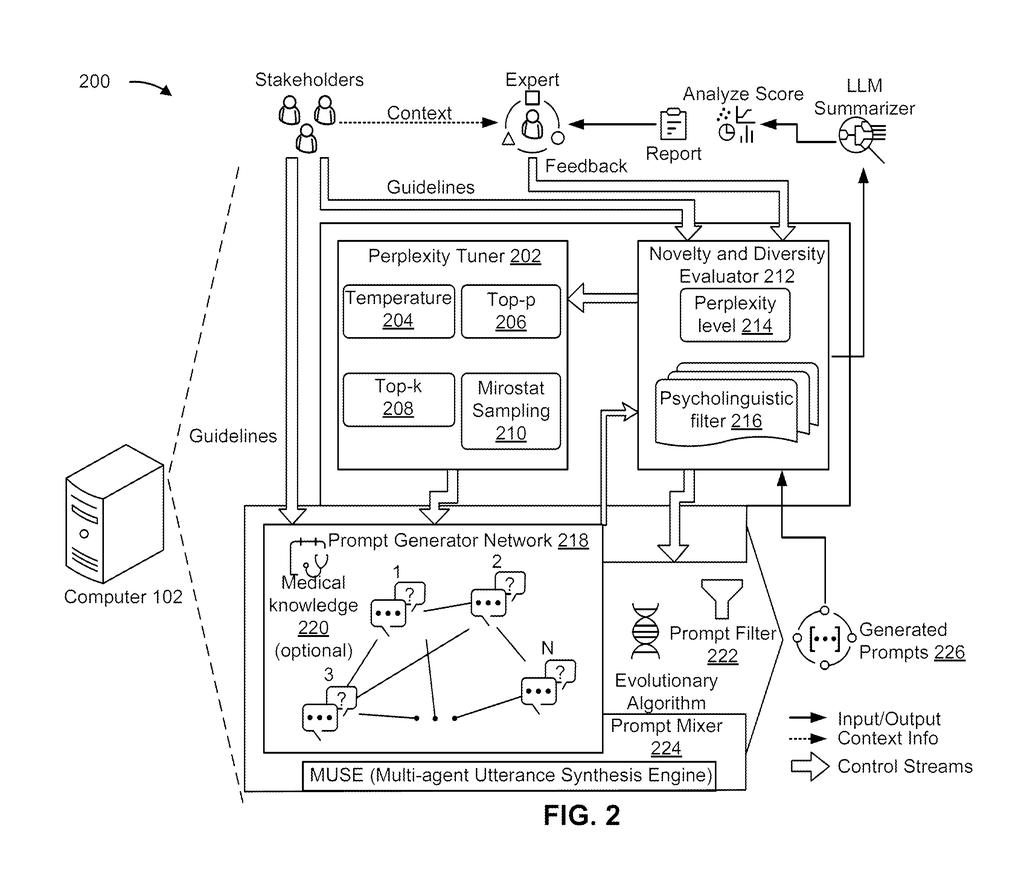
What IBM's communication-style AI prompt tuning actually does
Have you ever read something that felt like it was written for the wrong person? A legal notice explained like a children's book, or a casual explainer dressed up in stiff corporate language? That mismatch is a real problem when AI systems generate text meant for specific groups of people.
IBM's patent describes a way to fix that automatically. The system uses multiple AI language models to produce a variety of draft prompts, then measures a quality called "perplexity" for each one. Perplexity is essentially a score for how unexpected or confusing a piece of text would feel to a given reader. A high score means the words are surprising or hard to follow; a low score means they're predictable and easy.
By tuning that score up or down, the system tries to match the writing style of a target population, whether that's teenagers, medical professionals, or people who communicate in very informal ways. The goal is AI-generated content that actually fits how its intended audience speaks and reads.
generating, based on different large-language models (LLMs), prompts that are diverse; and adjusting a level of perplexity in the generated prompts to correspond to one or more communication styles of a target population.
Translation: The system creates varied AI prompts and tweaks how unpredictable the wording is to fit how specific groups of people actually talk.
How perplexity scores shape the generated prompts
The patent describes a two-step process. First, the system pulls from multiple large language models (LLMs), the kind of AI behind tools like ChatGPT, to generate a diverse pool of candidate prompts. Using more than one model helps ensure variety rather than a batch of text that all sounds identical.
Second, the system measures and adjusts the perplexity of those prompts. In AI and linguistics, perplexity is a statistical measure of how well a language model predicts a sequence of words. In plain terms: low perplexity means the text is smooth and predictable; high perplexity means the word choices are unexpected or complex. Think of it as a readability score with a more precise mathematical foundation.
The system then shifts that perplexity level to match the communication style of a target population. If the target audience uses simple, direct language, prompts get tuned toward lower perplexity. If the audience is technical or uses specialized vocabulary, prompts can be kept at a higher perplexity level.
- Multiple LLMs generate a diverse starting set of prompts
- Each prompt is scored for perplexity (how surprising its word choices are)
- The score is adjusted to align with the target audience's communication norms
What this means for AI tools aimed at specific audiences
If this approach works at scale, it could make AI-generated content meaningfully more useful in contexts where audience mismatch causes real harm. Think of public health communications that need to reach low-literacy communities, or customer service tools deployed across different regions with very different speech patterns. Right now, most AI text generation treats the audience as a constant. A system that actively accounts for who is reading would be a genuine shift in how these tools get deployed.
For everyday users, the practical question is whether the output actually becomes more natural. IBM keeps filing on language model customization and enterprise AI Perplexity is a well-understood metric in research, but turning it into a reliable real-world tuning dial for broad audience groups is an unsolved challenge, and the patent does not spell out how that gap gets closed.
IBM's 37th filing in our Language AI coverage since May adds to a run that includes one on drug molecule structure and one that rewrites prompts.
AI systems constantly generate text that feels wrong for its audience: too formal, too technical, too flat. That failure has real costs, from ignored public health messaging to customer instructions nobody follows to workplace communications that land badly across education levels or cultural backgrounds.
Adjusting how surprising or complex a piece of text feels is one lever for fixing that, but it is a fairly blunt one. Communication style involves vocabulary, rhythm, tone, and cultural register, and a single complexity score captures only a slice of all that.
The patent is also thin on how it defines or measures the "communication style" of a target population, which is where the hard work lives. This reads like an early claim on important territory rather than a finished answer to a well-scoped problem.
There are more where this came from
We read every patent application Big Tech publishes and send you the ones worth knowing. Plain English, free, every week.
The drawings
6 drawing sheets from US 2026/0300630 A1 · click any drawing to enlarge


Want this weekly breakdown for a company we don't cover? Patentlyze Pro →
Be the first to weigh in