
Sony Patents a System That Notices When Your Battery Isn't Charging, and Tells You
You plug in your phone, walk away, and assume it's charging, but the cable wasn't seated quite right, and you wake up to a dead battery. Sony has filed a patent for a system that would catch exactly that moment and tell you before it's too late.
What Sony's charging-intention detector actually does
Every time you plug in a device overnight, you're trusting that the connection holds and charging actually starts. Most of the time it does. But loose cables, dirty ports, power strips that weren't switched on, and finicky wireless pads all create situations where charging fails and you don't find out until you really need the battery.
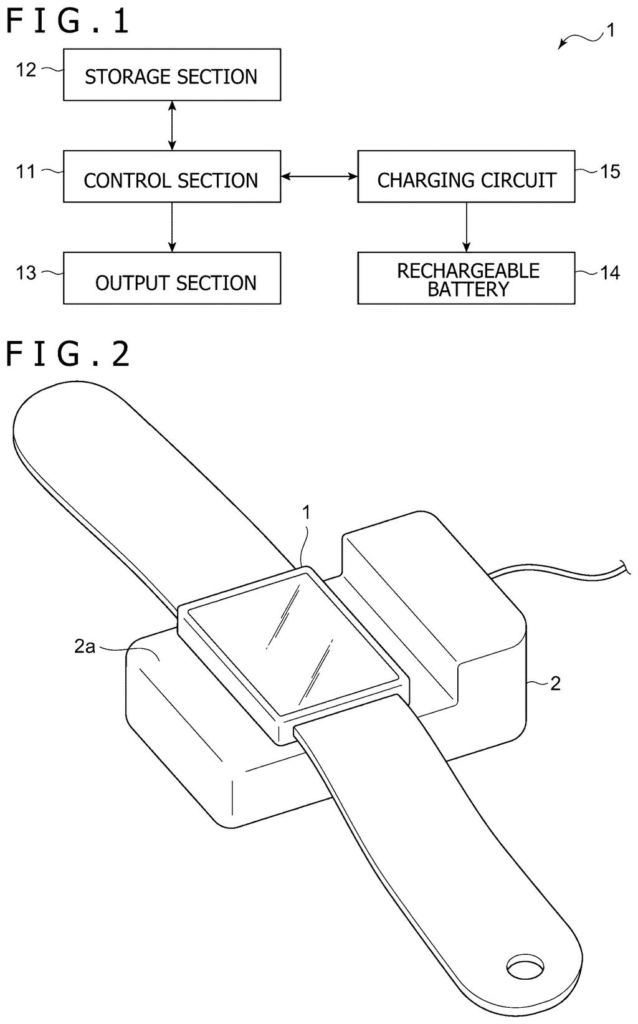
Sony's patent covers a system that monitors your battery's charging status and also reads the state of your device to figure out whether you intended to charge it. If it concludes that you did, maybe you plugged in a cable, set the device down in a docking spot, or performed some other action that signals charging intent, but the battery isn't actually charging, it sends you an alert.
The goal is simple: close the gap between what you think is happening and what's actually happening inside your device. No more discovering a flat battery at the worst possible moment because a connection you assumed was live never actually made contact.
… determining a user intent to continue charging the battery by the one or more processors; and responsive to determining the user intent, initiating notification of the interruption to the user.
Translation: The device figures out if you actually meant to charge your phone and alerts you if it stopped.
How the device infers you meant to charge it
The patent describes an electronic device that runs two parallel monitoring processes. First, it continuously tracks the charging status of its rechargeable battery, whether current is actually flowing into the battery. Second, it analyses the state of the device itself to estimate what the user intended to do.
That second part is the interesting piece. "Intention estimation" means the device isn't just watching the battery; it's watching contextual signals that suggest the user expected charging to begin. The exact signals aren't spelled out in the abstract or claim, but the concept covers situations where the surrounding context implies a charging expectation.
- Charging status monitoring, continuous check on whether the battery is receiving power
- Intent estimation, reading device state to infer whether the user expected charging
- Mismatch notification, alert sent when intent and actual status diverge
When those two signals conflict, intent detected, charging absent, the device notifies the user. The patent also covers the control method for this logic and the underlying software program, making it a fairly broad claim over the detect-infer-notify loop itself.
… estimates a user's intention of charging according to the status of the electronic device, and when the rechargeable battery is not being charged in a state where it is estimated that the user has the intention of charging, notifies the user of such a fact.
Translation: It guesses if you want your device charged and warns you if the power unexpectedly cuts out.
What this means for dead-battery frustration
The practical upside here is modest but real. Dead batteries caused by failed charging connections are an annoying, recurring problem, and most devices today give you no warning at all. A notification that fires within minutes of a failed connection could save you from a flat battery on a travel morning or a dead laptop in a meeting.
The tradeoff is false positives. Any system that guesses at user intent will sometimes guess wrong, and a device that pings you with "you forgot to charge!" when you deliberately set it aside unplugged will wear out your attention fast. How reliably Sony can infer intent without irritating users is the real design challenge, and the patent doesn't describe that precision in detail.
Sony's 11th filing we've tracked since May in our cell phone patent coverage follows ideas like paying via controller and a phone-clipped split pad.
The design accepts a specific bet: that a phone or tablet can reliably guess when you meant to start charging, based on how you're using it. That inference will sometimes be wrong, and a wrong alert, telling you the battery isn't charging when you already know why, trains you to ignore all future alerts. The cost is user trust, and it compounds quickly.
Whether the trade is worth it depends entirely on how tight that guessing logic is, and the patent says nothing concrete about that. A loose implementation turns a safety feature into background noise.
The underlying problem is real, a dead battery when you expected a full one is a small frustration that occasionally becomes a serious one. But the value here lives entirely in execution, not in the idea itself, which makes this read more like a defensive claim around a known problem than a signal of deep engineering ambition.
There are more where this came from
We read every patent application Big Tech publishes and send you the ones worth knowing. Plain English, free, every week.
The drawings
3 drawing sheets from US 2026/0302810 A1 · click any drawing to enlarge


Want this weekly breakdown for a company we don't cover? Patentlyze Pro →
Be the first to weigh in